
To guarantee your refrigeration stays reliable during outages, focus on calculating the total wattage of all units and multiply that by the expected outage duration to determine your backup capacity. Oversizing can waste money, while undersizing risks spoilage and equipment damage. Using proper math helps you choose the right system, especially when integrating renewable sources. Keep these calculations in mind to build a resilient setup—there’s more to learn if you keep going.

Get garden gear delivered free with Prime
- Fast, free delivery on millions of items
- Prime Video, Amazon Music and more included
- Member-only deals all year
Key Takeaways
- Calculate total wattage of refrigeration units and multiply by outage duration to determine required backup energy capacity.
- Properly size backup systems to prevent temperature fluctuations and spoilage during power outages.
- Use renewable sources like solar with batteries for stable, eco-friendly backup power solutions.
- Regular load calculations ensure backup capacity matches current and future refrigeration demands.
- Planning for scalability with math-driven assessments guarantees reliable, resilient backup systems as operations grow.
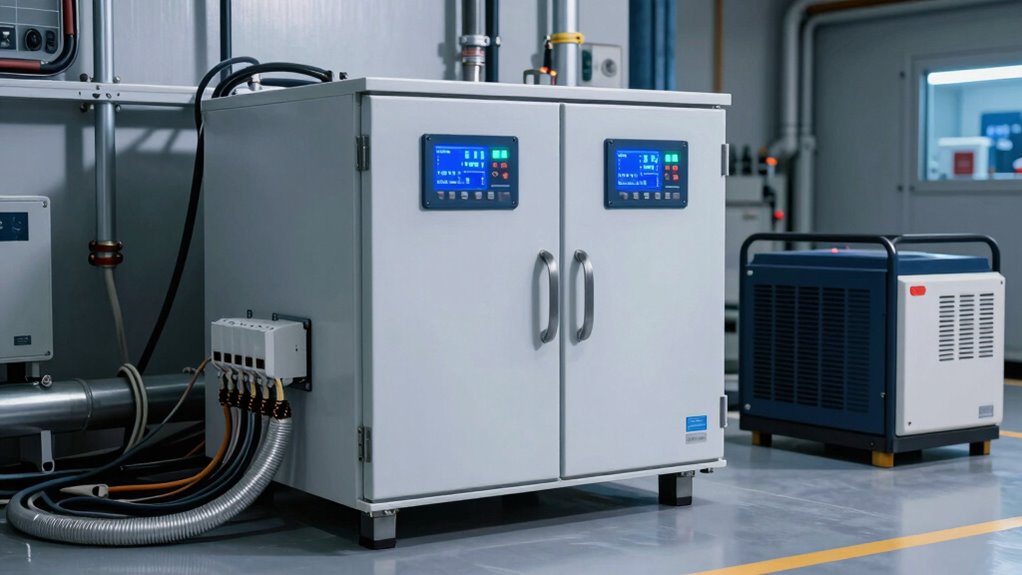
Power outages can threaten the safety and quality of refrigerated goods, making reliable backup solutions indispensable. When the power goes out unexpectedly, the temperature inside your refrigeration units can rise quickly, risking spoilage, loss, and potential health hazards. That’s why understanding the math behind backup power is essential — it’s not just about having a generator, but guaranteeing it can support your needs efficiently and sustainably. Incorporating renewable sources into your backup plan can enhance power stability, especially in areas where power outages are frequent or unpredictable. Solar panels, for instance, can be integrated with battery storage systems to provide a clean, reliable energy source that reduces dependence on traditional fuel-based generators. This approach not only promotes sustainability but also offers a more resilient solution during extended outages.
To determine the right backup power capacity, you need to calculate the total power consumption of your refrigeration equipment. This involves summing the wattage of all units that require backup, including compressors, fans, and control systems, then multiplying that by the duration of typical outages. For example, if your refrigeration units draw 1,000 watts each and you need to sustain them for at least 12 hours, your backup system must deliver at least 12,000 watt-hours of energy. This math is fundamental because undersizing your backup capacity could lead to temperature fluctuations, risking spoilage, while oversizing could result in unnecessary costs. Additionally, understanding the power stability provided by your backup system is crucial to prevent damage to sensitive components. Properly assessing your energy needs ensures that your backup system is both effective and cost-efficient. Evaluating your load calculations helps optimize the size and type of backup system needed for your specific refrigeration setup.
Power stability is another critical factor. It’s not enough to have a backup source that can meet your immediate needs; the power must be consistent and stable to prevent equipment damage or malfunction. Renewable energy systems, when paired with proper inverters and battery management, can provide smoother power delivery, reducing fluctuations that may harm sensitive refrigeration components. Additionally, considering the efficiency of your backup system helps you optimize energy use and extend runtime. Modern battery storage, especially lithium-ion, offers high efficiency and quick response times, ensuring your refrigeration stays within safe temperature ranges during outages. Understanding the math that matters most behind backup power calculations empowers you to make informed decisions that balance cost, capacity, and reliability.
Finally, planning for future growth is indispensable. As your refrigeration needs expand, your backup power calculations should adapt accordingly. Incorporating renewable sources not only supports current demands but also allows for scalable solutions that grow with your operations. When you understand the math behind your backup power requirements—factoring in load, duration, and power stability—you guarantee your refrigeration remains reliable, safe, and environmentally friendly, no matter what disruptions come your way.
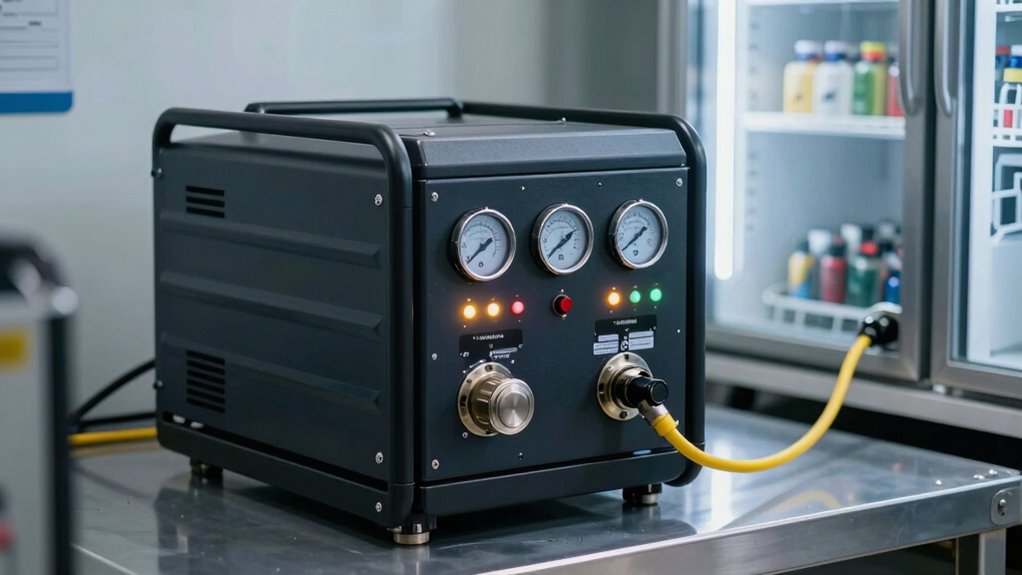
refrigeration backup power generator
As an affiliate, we earn on qualifying purchases.
As an affiliate, we earn on qualifying purchases.
Frequently Asked Questions
How Long Can a Backup Power Supply Keep Refrigeration Units Cold?
A backup power supply can keep refrigeration units cold for several hours, depending on its power capacity and the unit’s energy needs. To estimate runtime, you divide the backup’s watt-hours by the refrigerator’s power consumption in watts. For example, a 1,000Wh battery running a 100W fridge might last around 10 hours. Always consider your specific setup to get an accurate runtime estimation.
What Are the Most Cost-Effective Backup Power Options for Refrigeration?
You should consider energy storage options like deep-cycle batteries or flywheels, which are cost-effective for backup power. These systems store power during normal operation and activate during outages, ensuring continuous refrigeration. Effective power management is essential; it helps optimize energy use and extend backup duration. Investing in scalable solutions allows you to balance initial costs with long-term savings, making these options the most economical for maintaining refrigeration during power disruptions.
How Do Temperature Fluctuations Affect Backup Power System Performance?
Temperature fluctuations can greatly impact your backup power system’s performance. When temperatures vary, power stability becomes compromised, especially since refrigeration systems are highly temperature-sensitive. Sudden shifts can cause system strain, reduce efficiency, or lead to failure. To guarantee reliable backup power, you need systems that adapt to temperature changes, maintaining consistent power output and protecting your refrigeration’s critical temperature range.
Can Renewable Energy Sources Be Used for Backup Refrigeration Power?
Yes, you can use renewable energy sources for backup refrigeration power. By integrating solar or wind power, you embrace eco-friendly solutions and enhance renewable integration. These sources provide sustainable backup options, reducing reliance on traditional fuels and lowering carbon footprints. With proper energy storage systems, your refrigeration units stay operational during outages, ensuring food safety and efficiency while supporting environmentally conscious practices.
What Safety Considerations Are Important for Backup Power Systems?
You should prioritize safety considerations, especially regarding battery capacity and power stability. Guarantee your backup system has adequate battery capacity to handle peak loads and prevent failures. Regularly inspect and maintain connections to avoid short circuits or overheating. Also, incorporate safety devices like circuit breakers and alarms to detect power instability early. These steps protect both your equipment and personnel, ensuring reliable refrigeration backup without risking electrical hazards.
solar battery backup system for refrigeration
As an affiliate, we earn on qualifying purchases.
As an affiliate, we earn on qualifying purchases.
Conclusion
Ensuring your refrigeration has backup power isn’t just smart—it’s essential. Did you know that power outages can cause up to 20% of perishable food to spoil, leading to significant losses? By understanding the math behind backup systems, you can make smarter choices to protect your inventory. Don’t wait for an outage to realize its impact—invest in reliable backup power now and keep your refrigeration running smoothly, no matter what.
refrigeration unit power consumption monitor
As an affiliate, we earn on qualifying purchases.
As an affiliate, we earn on qualifying purchases.
home solar energy storage batteries
As an affiliate, we earn on qualifying purchases.
As an affiliate, we earn on qualifying purchases.
Halloween Picks
halloween
As an affiliate, we earn on qualifying purchases.