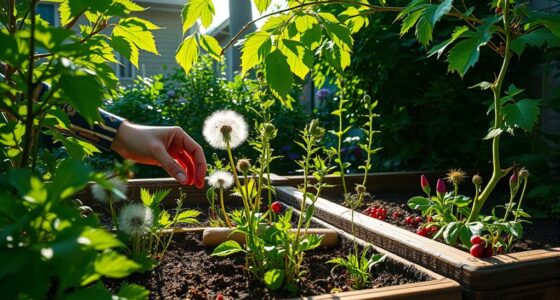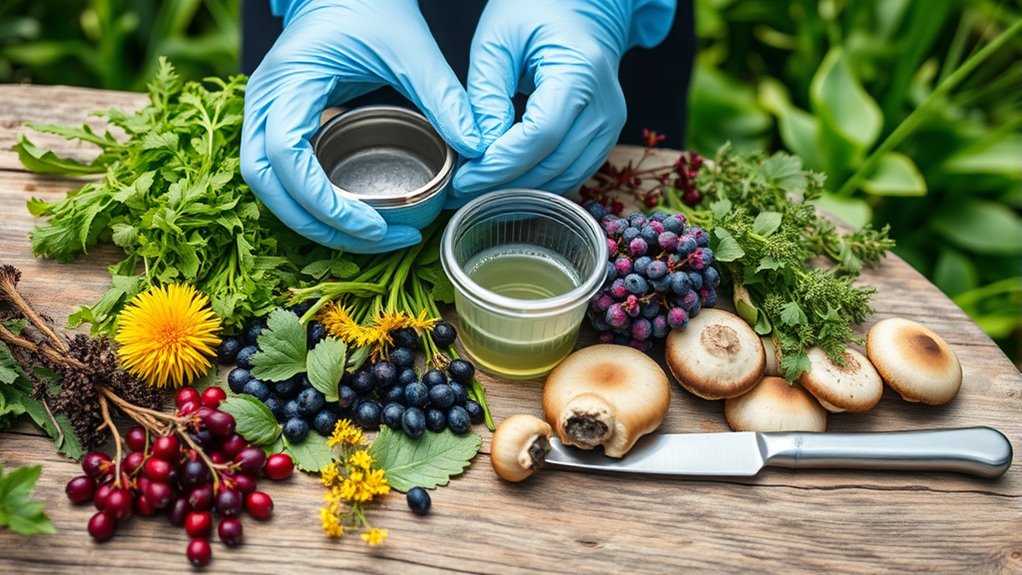

To safely taste wild foods, follow strict protocols: verify identification using reliable guides or experts, noting key physical traits and habitat clues. Start with a tiny sample, wait at least 15 minutes for reactions, and avoid foods with uncertain identification. Always wash your hands and tools, gather from clean areas, and document your findings. Maintaining these safety habits helps prevent poisoning. Discover more essential steps to make certain your wild food adventures remain safe and enjoyable.

Get garden gear delivered free with Prime
- Fast, free delivery on millions of items
- Prime Video, Amazon Music and more included
- Member-only deals all year
Key Takeaways
- Use verified resources and expert consultation to accurately identify wild foods before tasting.
- Conduct a tiny taste test, wait at least 15 minutes, and monitor for adverse reactions.
- Only sample foods from clean, pollution-free environments away from roads and industrial areas.
- Sanitize hands, tools, and containers before and after handling wild foods to prevent contamination.
- Continuously educate yourself on local flora and fungi, adhering to safety protocols and responsible practices.
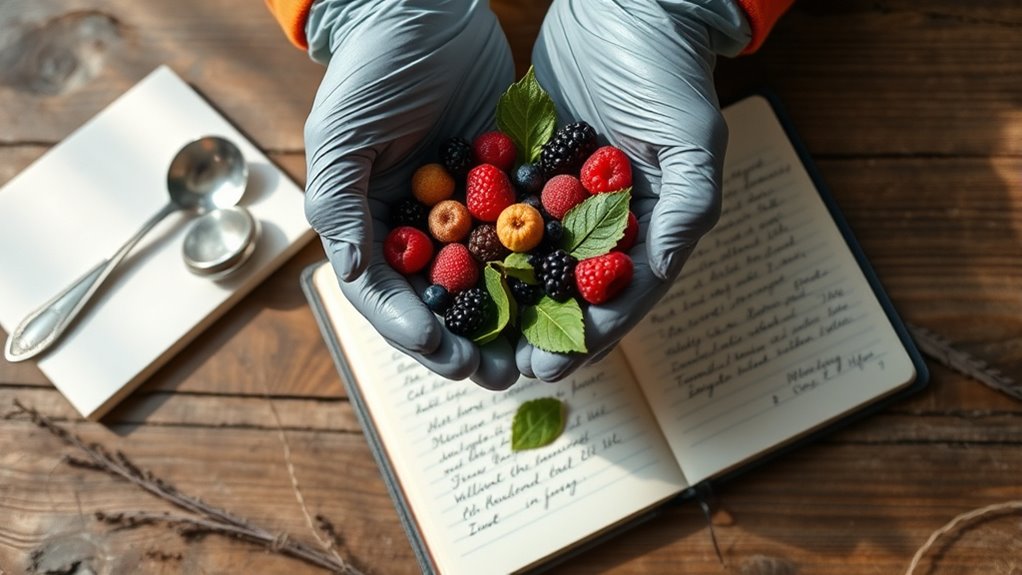
When exploring wild foods, following standardized taste-testing protocols guarantees consistent and accurate results. This approach is vital because wild foods can be tricky to identify, and mistakes can lead to serious health risks. To make certain you’re correctly identifying edible plants and fungi, you need to pay close attention to your identification accuracy. Proper identification isn’t just about recognizing a plant’s appearance; it involves understanding key characteristics, habitats, and distinguishing features. Using a reliable field guide or consulting an experienced forager can help verify your findings. Remember, even small misidentifications can have severe consequences, so taking the time to confirm what you’re tasting is essential. Implementing safety guidelines during taste-testing helps minimize potential dangers. For instance, always start with a tiny sample—no more than a nibble—to see how your body reacts before consuming more. It’s wise to wait at least 15 minutes after the initial taste to check for any adverse symptoms like itching, swelling, or nausea. If you experience any negative effects, seek medical attention immediately and avoid eating the food again. Safety guidelines also recommend avoiding foods with uncertain identification, especially if they resemble toxic look-alikes. Never rely solely on taste to identify wild foods; physical characteristics and habitat clues are equally important. If you’re unsure about a particular plant or fungi, it’s better to leave it alone than risk poisoning yourself. Proper sanitation is another safety measure—wash your hands and any tools or containers used during taste-testing to prevent cross-contamination. Additionally, always gather wild foods from clean, pollution-free environments, avoiding areas near roads, industrial sites, or agricultural runoff, where chemicals can accumulate. Once you’ve confirmed identification and followed safety guidelines, keep detailed records of what you’ve tested, including photographs, descriptions, and locations. This documentation can be invaluable for future reference and learning. Remember, even with strict protocols, wild food taste-testing should be approached with respect and caution. Educate yourself continuously about local flora and fungi, and never be complacent about safety. The goal isn’t just to enjoy wild foods but to do so responsibly, ensuring your health and well-being. Incorporating these practices into your routine, and emphasizing the importance of accurate identification, will help develop a safer, more confident approach to wild food tasting. Adhering to standardized protocols not only enhances your identification accuracy but also reinforces your safety habits, making your wild food adventures both enjoyable and secure.
Frequently Asked Questions
How Can I Identify Edible Wild Foods Safely?
To identify edible wild foods safely, focus on accurate plant identification by using reliable field guides and local expert advice. Always perform toxicity testing by researching known toxic look-alikes and conducting small taste tests, if you’re confident in your identification. Avoid assumptions based on appearance alone, and never eat anything you’re unsure about. Practice caution, and remember that proper identification and toxicity testing are essential to prevent poisoning.
What Should I Do if I Suspect Poisoning?
If you suspect poisoning, act immediately. Recognize poison symptoms like nausea, vomiting, dizziness, or difficulty breathing. Call emergency procedures or seek urgent medical help right away. Do not try to induce vomiting unless instructed by a professional. Keep a sample of the suspected food or plant, and provide medical responders with details. Your quick action can prevent serious harm, so stay calm and follow emergency procedures without delay.
Are There Specific Tools Recommended for Tasting Wild Foods?
You don’t need fancy tasting utensils for sampling wild foods, but using clean, non-reactive utensils like stainless steel or glass guarantees safety and accurate taste. Rely on simple sampling techniques, such as small bites or tiny sips, to prevent overconsumption. Avoid metal or contaminated tools to reduce risks. Remember, proper utensils and careful techniques help you enjoy wild foods safely and confidently, minimizing potential hazards.
Can Children Participate in Wild Food Testing?
Children can participate in wild food testing if you guarantee proper child supervision and adhere to tasting age limits. Always monitor them closely, making sure they only try foods suitable for their age and skill level. It’s crucial to introduce new flavors gradually, watch for any allergic reactions, and educate them about safe foraging. By following these guidelines, you create a safe, enjoyable experience for kids exploring wild foods.
How Do I Store Wild Foods After Tasting?
Storing wild foods after tasting is essential to keep them fresh and safe. You should use airtight storage containers to prevent spoilage and contamination. For delicate items, refrigerate promptly, ensuring they are wrapped or sealed tightly. For longer storage, consider freezing in proper containers to preserve their flavor and nutrients. Remember, proper food preservation techniques can turn a fleeting wild food experience into a lasting treasure, protecting it from the chaos of spoilage!
Conclusion
Think of these protocols as your trusted compass through a dense forest of wild foods. Just as a seasoned explorer respects the terrain and surveys carefully before proceeding, you should follow each step diligently. With vigilance and preparation, you navigate the unknown safely, uncovering hidden treasures without risking harm. By respecting the process, you become a mindful forager—transforming an uncertain wilderness into a bountiful, safe harvest. Trust the map, stay alert, and enjoy the journey.
Fall yard work Picks
leaf blowers
As an affiliate, we earn on qualifying purchases.