Before foraging for wild foods, it’s crucial to identify your allergies through testing, such as skin prick or blood tests, to prevent serious reactions. Consulting healthcare professionals can guide you on safe practices and help you recognize allergenic plants. Always start with small amounts and carry emergency medication if needed. Being aware of the allergenic properties of wild foods and practicing proper identification reduces risks. To stay safe and informed, discover more ways to protect yourself during foraging.
Key Takeaways
- Consult healthcare professionals for allergy testing before foraging to identify sensitivities to wild foods.
- Recognize that natural wild foods can still cause allergic reactions; proper identification is essential.
- Carry emergency medication like epinephrine if you have known severe allergies to certain wild plants.
- Start with small amounts of wild foods to monitor for potential allergic reactions during initial consumption.
- Educate yourself on common allergenic wild plants to prevent accidental ingestion and health emergencies.
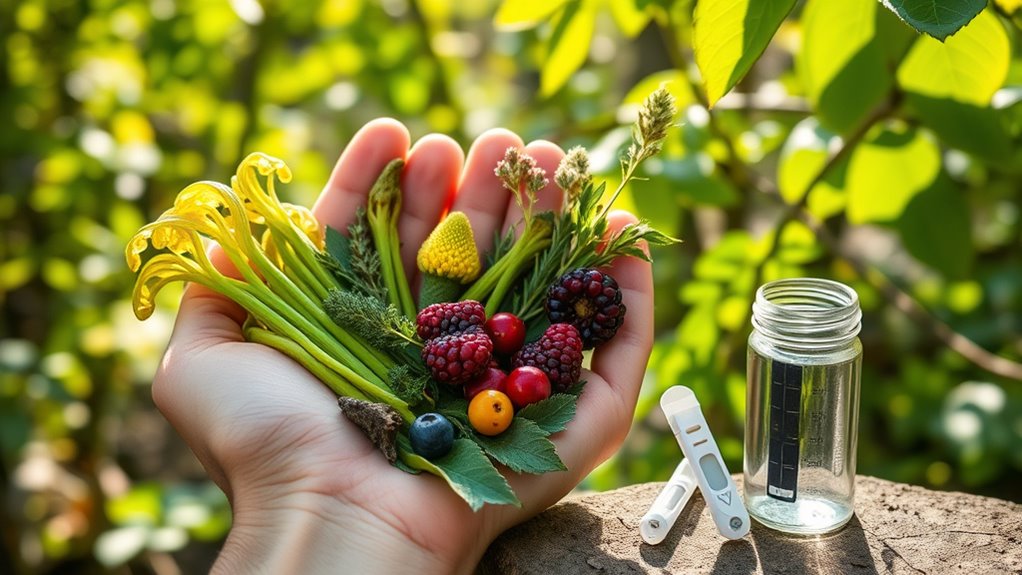
Have you ever wondered if foraging for wild foods could trigger allergies? It’s a valid concern, especially since wild plants and fungi can sometimes provoke unexpected reactions. When you venture into foraging, safety should be your top priority, and that includes understanding how allergies work and taking steps to protect yourself. One of the most important measures is allergy testing, which helps identify specific sensitivities before you start collecting wild edibles. Without proper testing, you might unknowingly put yourself at risk of an allergic reaction, which can range from mild discomfort to severe anaphylaxis.
Before you even step into the woods, it’s wise to consult with a healthcare professional about allergy testing. This process usually involves skin prick tests or blood tests to determine if you have sensitivities to certain plants, nuts, or fungi often found in wild foods. Knowing your allergies allows you to make informed decisions about what you can safely forage and consume. For instance, if you’re allergic to certain types of wild berries or fungi, you’ll know to avoid them altogether. This proactive approach can prevent dangerous reactions and save you from potential health emergencies.
Foraging safety doesn’t just mean avoiding poisonous plants; it also involves understanding your own body’s responses. Even if you’re confident in your identification skills, allergies can sometimes develop unexpectedly. It’s essential to start with small amounts when trying new wild foods, especially if you’re unsure about your sensitivities. Always carry an epinephrine auto-injector if you’ve been diagnosed with severe allergies, and inform your friends or fellow foragers about your condition. Additionally, practicing proper identification and harvesting techniques reduces the risk of accidental ingestion of toxic or allergenic plants.
Remember that natural doesn’t always mean safe. Many wild foods contain compounds that can trigger allergic responses or irritate sensitive skin and mucous membranes. Foraging safety includes not only correctly identifying edible plants but also understanding their potential allergenic properties. If you’re new to foraging, consider joining guided foraging walks or workshops with experienced foragers who can teach you about safe harvesting practices and common allergenic plants to watch out for.
Frequently Asked Questions
Can Wild Foods Cause Delayed Allergic Reactions?
Yes, wild foods can cause delayed allergic reactions. You might experience symptoms hours or even days after consuming them, which can be confusing. Wild food poisoning can also mimic allergies, making it tricky to identify the cause. If you’re prone to seasonal allergies, be cautious, as wild foods could trigger unexpected reactions. Always test new wild foods carefully, and consult a healthcare professional if you suspect a delayed allergic response.
How Do I Identify Wild Foods Safely for Allergy Testing?
You can identify wild foods safely by thoroughly researching each plant or mushroom before harvesting. Use reliable guides, attend wild food harvesting workshops, and consult experts when possible. Always practice allergy risk awareness—try small amounts first and monitor for reactions. Remember, even familiar wild foods can cause allergies, so testing with medical supervision is vital. This approach helps ensure your wild food adventures are both safe and enjoyable.
Are There Specific Symptoms Indicating a Wild Food Allergy?
Wild food symptoms often include itching, swelling, or rash around your mouth and face, which are allergy indicators. You might also experience stomach pain, nausea, or difficulty breathing. Pay close attention to these wild food symptoms after trying something new. If you notice any of these signs, stop eating the food immediately and seek medical help. Recognizing allergy indicators early helps prevent severe reactions.
How Long Should I Wait After Testing Wild Foods for Reactions?
Timing considerations are vital after testing wild foods for reactions. You should wait at least 48 to 72 hours before trying another new wild food, allowing your body to respond fully. This pause acts like a sentinel, guarding your health. Follow testing protocols carefully, and consult an allergy specialist for personalized guidance. Rushing this process is like rushing into a storm—wait, observe, and stay safe.
Can Cross-Reactivity Occur Between Wild Foods and Common Allergens?
Yes, cross-reactivity can occur between wild foods and common allergens. This happens when your immune system mistakes proteins in wild foods for those in familiar allergens, triggering a reaction. If you’re allergic to certain foods or pollens, be cautious, as wild foods may contain similar proteins. Always consult with an allergist before trying wild foods, especially if you have known allergies, to avoid unexpected cross reactivity.
Conclusion
As you venture into wild foods, remember that hidden allergies can strike unexpectedly. A single bite might trigger a reaction you didn’t see coming, transforming a curious exploration into a dangerous surprise. Always test carefully and stay alert — nature’s bounty can be a gift or a gamble. So, before you bite into that mysterious leaf or berry, ask yourself: are you truly prepared for what could happen next? The wild’s secrets are waiting.