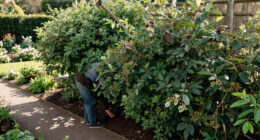
To harden your home against weather and security threats, focus on reinforcing windows with impact-resistant glass or security film, and install perimeter fencing with sturdy gates and lighting. These measures help prevent damage from storms, deter intruders, and mark property boundaries clearly. Adding natural barriers like thorny bushes can further enhance security. Implementing these steps strengthens your home’s resilience and safety. Keep exploring to discover even more ways to protect your property effectively.

Get garden gear delivered free with Prime
- Fast, free delivery on millions of items
- Prime Video, Amazon Music and more included
- Member-only deals all year
Key Takeaways
- Implement window reinforcement with impact-resistant glass or security film to prevent breakage from storms and intruders.
- Install perimeter fencing and natural barriers to define property boundaries and deter unauthorized access.
- Use security sensors on windows and doors to alert homeowners of forced entry or tampering.
- Combine fencing with security lighting and surveillance cameras for comprehensive property protection.
- Proactively strengthen home structure through additional measures like storm shutters and reinforced entry points.

Have you ever wondered how to better protect your home from threats like severe weather, intruders, or fire? One effective way is through home hardening, which involves making strategic improvements to increase your property’s resilience. Two key components are window reinforcement and perimeter fencing. These upgrades serve as strong barriers that can deter intruders, shield against storms, and help contain or prevent damage.
Starting with window reinforcement, your windows are often the first point of entry for burglars and the most vulnerable during storms. Reinforcing them means installing impact-resistant glass or adding security film, which strengthens the glass and prevents shattering. This not only makes it harder for intruders to break in but also protects your home from flying debris during high winds or hailstorms. Additionally, consider installing window sensors connected to a security system; these can alert you immediately if someone tries to force an entry. Reinforced windows act as a dual line of defense, providing peace of mind and minimizing damage from severe weather.
Reinforcing windows with impact-resistant glass or security film enhances safety and storm resilience.
Perimeter fencing is another essential element of home hardening. A sturdy fence defines your property boundary and acts as a first physical barrier against intruders. It doesn’t have to be overly elaborate—simply a high, solid fence or a combination of fencing and natural barriers like thorny bushes can be effective. The key is making access difficult enough to deter would-be trespassers. Well-maintained fencing also helps mark your property clearly, reducing conflicts with neighbors and giving you control over who approaches your home. In storm-prone areas, fencing can also serve as a windbreak, reducing the wind’s force on your house and minimizing damage. When combined with locked gates and security lighting, perimeter fencing becomes part of a comprehensive security plan that makes unauthorized entry considerably more challenging. Incorporating security measures like surveillance cameras can further enhance your home’s defenses.
Incorporating both window reinforcement and perimeter fencing into your home security strategy doesn’t just protect your belongings; it creates a tough, resilient barrier against various threats. These measures work together to improve your home’s overall durability, whether facing a hurricane, a break-in attempt, or even a fire. Think of them as foundational steps—small investments that pay off by markedly boosting your safety and peace of mind. By proactively strengthening your home’s defenses, you’re not just reacting to threats—you’re preventing many of them from ever reaching you. Properly reinforced windows and secure fencing are essential elements in creating a resilient home environment that can withstand whatever nature or intruders throw your way.
Frequently Asked Questions
How Often Should I Inspect My Home for Vulnerabilities?
You should perform an inspection for vulnerabilities every three to six months, depending on your local weather conditions and recent storms. Regular vulnerability assessments help you catch issues early, like loose shingles or broken windows, which could compromise your home’s safety. Make it a routine to check entry points, roofing, and drainage systems. Staying proactive guarantees your home remains secure and resilient against weather and security threats.
Are There Specific Materials Best for Weatherproofing?
Imagine your home wrapped in a shield of sturdy materials; that’s what the right weatherproofing does. Opt for materials with high durability, like fiber cement siding or metal roofing, which withstand storms and temperature swings. Use insulation techniques like spray foam or foam board to seal gaps. These choices protect against moisture, wind, and cold, creating a resilient barrier that keeps your home safe and cozy year-round.
What Security Measures Are Most Cost-Effective?
You can boost your home’s security with affordable upgrades and DIY solutions. Install sturdy deadbolt locks and reinforce doors with strike plates to deter intruders. Use motion-activated lights around entry points to increase visibility and reduce hiding spots. Secure windows with affordable locks or shatter-proof film. These cost-effective measures don’t require expert help and substantially enhance your safety, giving you peace of mind without breaking the bank.
Can DIY Upgrades Match Professional Home Hardening?
Think of DIY upgrades as building a sturdy sandcastle—great if you pick the right materials and follow precise steps. While DIY can match some professional home hardening, it depends on your skill level and material selection. Professionals bring expertise and access to advanced materials, ensuring maximum protection. If you’re confident and choose quality supplies, your DIY efforts can be effective, but for top-tier security, consulting a pro might be your best move.
How Do Weather Patterns Influence Security Priorities?
Weather patterns directly influence your security priorities by highlighting climate resilience needs and hazard preparedness. For example, frequent storms or heavy rainfall mean you should reinforce windows and drainage systems. Hot, dry conditions require fire-resistant landscaping, while snow and ice call for sturdy roofing and heating safeguards. By understanding local weather trends, you can adapt your home hardening efforts to better withstand specific hazards, ensuring your safety and property protection year-round.
Conclusion
By hardening your home against weather and security threats, you notably reduce the risk of damage and intrusion. Some believe these measures are overly costly or unnecessary, but evidence shows that well-implemented hardening strategies protect your property and peace of mind. Investing in sturdy doors, reinforced windows, and proper drainage can save you money and stress in the long run. Don’t wait for a storm or break-in—take action now and prove the theory wrong.
Fall Picks
fall essentials
As an affiliate, we earn on qualifying purchases.