
TL;DR

Get garden gear delivered free — and shop member deals
- Fast, free delivery on millions of items
- Access to Prime Big Deal Days deals on October 6–7
- Prime Video, Amazon Music and more included
An Ideal Home report outlines five October jobs for rose growers: remove diseased leaves, lightly tidy suitable plants, tie in climbing and rambling stems, stop feeding, and plant new roses. The advice is based on comments from rose specialists; exact timing and pruning needs vary by rose type and local conditions.
Ideal Home has set out five jobs for rose growers to do in October, advising them to remove diseased leaves, make only light trims where appropriate, tie in climbing stems, stop feeding and plant new roses. The recommendations, based on advice from Harkness Roses founder Philip Harkness and plants specialist Paul Parker, are intended to help gardeners prepare plants for winter and spring growth.
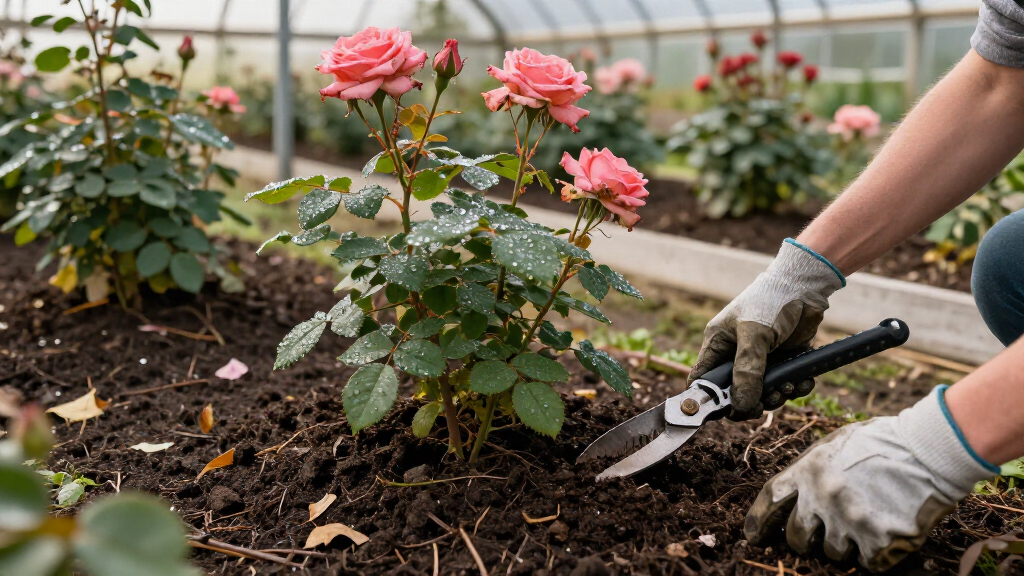
The first recommendation is to collect leaves showing signs of disease, including black spot or rust, both from the plant and from the ground around it, and dispose of them. Harkness told Ideal Home that October is a good time to remove affected foliage. The article also mentions fungicide and aphid treatments, but gardeners should follow the product label and use any required protective equipment; it does not recommend a specific treatment as necessary for every rose.
For pruning, the advice is to avoid a hard cut in October. If a rose has finished producing flower buds, Harkness suggests a light autumn trim, focusing on dead, damaged or diseased growth. Parker advises leaving the main framework of climbing roses intact and cutting only troublesome side shoots. Long shoots that could be caught by wind may be shortened, but the article says the main pruning period is later in the colder months.
October is also presented as a suitable time to tie in long new stems on climbers and ramblers while they remain pliable. Harkness says gardeners can bend and secure them into the desired position. The final two tasks are to stop feeding roses so they are not encouraged to make soft late growth, and to plant new roses. The report describes autumn and winter as a traditional planting period, with newly planted roots able to establish before spring.
Preparing Roses for Winter
These jobs address different risks as rose growth slows: diseased foliage can be removed, exposed stems can be secured against wind, and late feeding can be avoided. For gardeners, the practical value is in distinguishing light seasonal care from hard pruning; cutting too heavily at the wrong time can remove framework that should remain until the appropriate pruning period.
The advice also offers a planting window for people considering new roses. Establishing roots before spring growth may give a plant a head start, according to Harkness, although results depend on the rose, soil and local weather. The recommendations are guidance rather than a guarantee of next year’s flowering.
As an affiliate, we earn on qualifying purchases.
October’s Place in Rose Care
The Ideal Home report frames October as the point when roses are winding down after the growing season, rather than as a time to stop caring for them. Its five suggestions combine sanitation, limited pruning, training, feeding decisions and planting. Those actions are not interchangeable: climbing and rambling roses need attention to their long stems, while the light-trim advice applies only where flowers have finished and should not be read as a call for a general hard prune.
For planting, the report distinguishes container-grown roses from bare-root plants. Containers offer a plant that is already growing in a pot, while bare-root roses are described as generally cheaper. Harkness says the traditional planting period runs from October to Christmas. The source does not provide separate instructions for every rose variety or climate.
““It is a good time of year to collect the diseased leaves from the ground and from the plants and dispose of them.””
— Philip Harkness, founder of Harkness Roses, quoted by Ideal Home
As an affiliate, we earn on qualifying purchases.
Advice Depends on Rose Type
The report does not set out separate October instructions for every rose variety, growing region or weather pattern. It also gives no detailed thresholds for deciding when a plant has finished flowering or how much to trim in a particular case. Gardeners should treat the pruning advice as conditional: avoid hard pruning in October, and check guidance specific to their rose type if uncertain.
The article mentions purchased disease treatments but does not assess their suitability, effectiveness or risks in individual gardens. It also does not specify a disposal method for diseased leaves beyond collecting and disposing of them. No outcome data are provided to show how much these tasks affect flowering the following year.
As an affiliate, we earn on qualifying purchases.
Tasks Before Winter Arrives
Gardeners following the report can start by checking foliage and clearing affected leaves, then assess whether a finished rose needs only a light tidy. Climbers and ramblers can be checked for long, vulnerable stems to tie in, while feeding can stop as growth slows. Anyone planting should select a rose suited to their site and follow the supplier’s planting directions.
Further pruning should be planned for the colder-season window appropriate to the rose and local conditions. The report sets out no later milestone or follow-up data; the next practical step is to monitor plants through winter and assess new growth when spring begins.
As an affiliate, we earn on qualifying purchases.
Key Questions
Should roses be hard-pruned in October?
No. The report advises against hard pruning in October. It suggests a light trim only for plants with no more flower buds, concentrating on dead, damaged or diseased growth.
What should I do about black spot or rust?
Collect affected leaves from the plant and the ground and dispose of them, as Harkness advises. If using a treatment, follow its label and any protective-equipment instructions; the report does not say every rose needs chemical treatment.
Can I tie in climbing roses during October?
Yes. Harkness says October is a suitable time to tie in pliable new long shoots on climbing and rambling roses. Parker advises keeping the main framework intact and limiting cuts to troublesome side shoots.
Should I fertilize roses in October?
The report recommends stopping feeds as growth winds down. Harkness says continued feeding may encourage soft new growth that can be vulnerable to frost.
Is October a good time to plant roses?
The report describes autumn as a traditional planting period, extending from October to Christmas. It says container-grown roses and bare-root roses are options, but local conditions and the supplier’s planting instructions still matter.
Source: rss
Halloween Picks
halloween
As an affiliate, we earn on qualifying purchases.