
TL;DR

Get garden gear delivered free with Prime
- Fast, free delivery on millions of items
- Prime Video, Amazon Music and more included
- Member-only deals all year
Floating row covers protect plants on cold nights by holding some of the heat released by soil and limiting frost settling directly on crops. Grow Organic says they work best when secured to the ground, but covers alone may not protect plants during a windy, severe freeze.
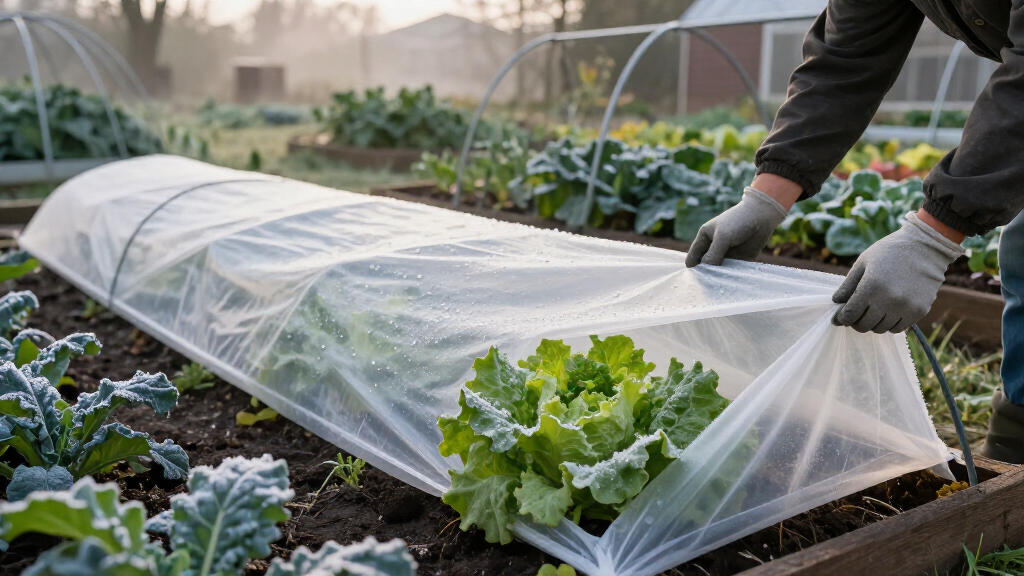
Floating row covers can reduce frost damage by creating a sheltered microclimate over garden crops, trapping some heat released from the soil and keeping frost from settling directly on leaves, according to a Grow Organic report. The protection is most relevant on calm, clear nights; the report cautions that a cover alone may not be enough when strong winds bring a severe freeze.
The method relies in part on the soil’s daily temperature cycle: soil absorbs warmth during daylight and releases it after dark. A cover draped over plants can help retain some of that warmth near the crop rather than allowing it to dissipate as quickly. The report describes this as creating a more stable microclimate, not as generating heat or guaranteeing that plants will avoid damage.
For the cover to work as intended, Grow Organic advises gardeners to extend it to the ground and secure the edges with soil, bricks or other weights. Gaps can let warmer air escape and cold air reach plants. The report also recommends choosing cover weight for the conditions: lightweight fabric, including Agribon AG-15 or AG-19, is presented for light frosts, while heavier materials such as AG-50 or AG-70 are suggested for more severe cold.
Grow Organic says mulch beneath a cover can help soil retain warmth, and advises removing covers during warmer daytime conditions to limit overheating. For colder or windy weather, the report suggests adding insulation, using multiple layers or combining covers with other methods. These are gardening recommendations from the report, not a guarantee of a particular temperature increase or crop survival rate.
Matching Covers to Cold Conditions
For gardeners, the distinction between a light overnight frost and a wind-driven freeze affects whether a simple fabric cover is likely to be adequate. A cover can help preserve the heat already stored in the soil, but the report describes a different challenge when a mass of cold air moves in with strong winds: conditions can cool rapidly, reducing the warmth available to protect plants.
Using suitable cover weight, closing gaps at ground level and adding mulch may help reduce exposure for crops such as kale, carrots and spinach, which the report identifies as winter-garden plants. The practical value is extending the period in which crops can remain in the garden, while recognizing that severe weather can exceed what a row cover can handle.
floating row covers for frost protection
As an affiliate, we earn on qualifying purchases.
As an affiliate, we earn on qualifying purchases.
Frost Versus Wind-Driven Freeze
Grow Organic distinguishes a radiation frost from an advective freeze. In its explanation, radiation frost is associated with clear skies and calm winds: ground that warmed during the day loses heat overnight, and surface temperatures fall. The report identifies floating row covers, low tunnels and mulch as options for these conditions.
An advective freeze, by contrast, occurs when cold air moves into an area and is often accompanied by stronger winds. The supplied report says this can be harder to counter because the incoming air replaces warmth. It lists heavier or doubled covers, plastic mulch, water containers and traditional incandescent Christmas lights as possible additional measures. The report does not provide measured performance data or specific temperature ratings for these methods.
“Drape covers all the way to the ground to prevent warm air from escaping.”
— Grow Organic report
As an affiliate, we earn on qualifying purchases.
Limits of the Available Guidance
The supplied report does not state the publication date, provide controlled test results or specify how many degrees of frost protection each fabric weight offers. It also does not identify a universal minimum temperature at which a particular cover will fail; results can vary with the crop, soil conditions, wind and how tightly the cover is secured.
Its suggested add-on methods are not accompanied by comparative measurements or detailed safety instructions. The report also does not clarify how long covers should remain over plants in changing conditions. Gardeners should treat the recommendations as general guidance and check local forecasts and product instructions for their own crops and materials.
garden soil mulch for warmth retention
As an affiliate, we earn on qualifying purchases.
As an affiliate, we earn on qualifying purchases.
Check Forecasts and Cover Fit
The report’s practical next steps are to check the overnight forecast, choose a fabric suited to the expected cold, and secure the edges before temperatures drop. Gardeners can add mulch or another layer when conditions warrant, then remove or vent covers when daytime temperatures rise to reduce overheating. The source provides no announced follow-up study or scheduled update, so no further development is specified.
As an affiliate, we earn on qualifying purchases.
Key Questions
How do floating row covers help during frost?
They create a sheltered space over plants that can retain some heat released by soil and reduce direct frost exposure. They do not create heat on their own.
Should a row cover reach the ground?
Yes. Grow Organic advises draping the cover to the ground and securing its edges with soil, bricks or weights to reduce openings where warmer air can escape.
Which row cover weight should I use?
The report associates lightweight covers such as Agribon AG-15 and AG-19 with light frosts, and heavier AG-50 or AG-70 covers with more severe cold. It gives no guaranteed temperature ratings.
Will one row cover protect plants during a hard freeze?
Not necessarily. The report says row covers alone may not be enough during extreme cold, particularly when strong winds bring in a mass of cold air. It suggests adding layers or other insulation, but offers no performance guarantee.
Source: rss
Fall yard work Picks
leaf blowers
As an affiliate, we earn on qualifying purchases.