
TL;DR

Get garden gear delivered free with Prime
- Fast, free delivery on millions of items
- Prime Video, Amazon Music and more included
- Member-only deals all year
A Homes and Gardens report describes a DIY fall porch planter made by hollowing out a pumpkin, drilling drainage holes and planting chrysanthemums or other seasonal flowers in it. The design can be composted after use, but the report does not provide testing or evidence for how long the pumpkin remains sound or how much it changes watering needs.
Homes and Gardens has highlighted a DIY fall porch planter made by hollowing out a pumpkin, adding drainage holes and planting it with chrysanthemums or other seasonal flowers. The idea turns a familiar seasonal decoration into a temporary planting container, though the report offers no independent testing of how long the pumpkin lasts or how it affects plant growth.
The report’s writer says the project took about 20 minutes and cost less than $5 in her case. Those figures describe her personal attempt, not a verified typical cost or time estimate; materials, pumpkin size and plant choice can change both. The suggested supplies are a suitably sized pumpkin, carving tools, a drill, potting soil and fall flowers.
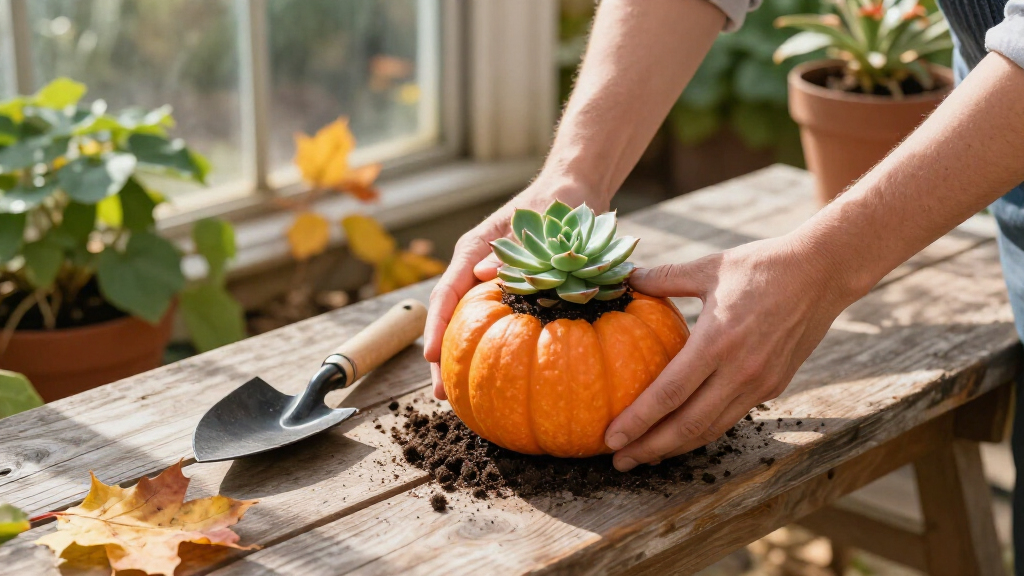
To make the planter, the pumpkin is opened at the top, with the cut made at an angle so the lid is easier to lift. After the pulp and seeds are removed, the report recommends scraping the interior and drilling one to three holes in the bottom. Potting soil and plants are then added, with more soil used to secure the planting. The article says the writer used red chrysanthemums.
For a fuller arrangement, the report suggests combining plants of different heights and grouping the planted pumpkin with decorative pumpkins or other porch decor. It names celosia and marigolds as possible companions to chrysanthemums. The writer says the pumpkin can be composted when the display comes down; the source does not specify a disposal schedule or conditions for composting.
A Seasonal Display That Can Be Composted
The idea gives porch decorators a way to combine fall flowers and pumpkin displays in one object, rather than setting a standard nursery pot among seasonal decorations. It may appeal to people who want a short-term display and already have access to a carving pumpkin, soil and flowers. The reported under-$5 cost is the writer’s experience, not a price guarantee.
The report also presents the pumpkin as a potentially compostable alternative to a permanent decorative planter. That does not mean it will remain intact for a full season: a carved pumpkin is organic material, and its useful life outdoors will depend on its condition and local weather. The article provides no comparison with conventional pots or evidence that the pumpkin produces better plant growth.
Its practical advice is straightforward: drainage matters. The report warns that excess moisture can leave plants in soggy soil and contribute to root rot. A pumpkin’s flesh may retain moisture, the writer says, but that observation is not accompanied by measurements or watering guidance. Gardeners should check soil conditions rather than assume rainfall or the pumpkin will meet a plant’s water needs.
As an affiliate, we earn on qualifying purchases.
From Carving Pumpkin to Planter
The Homes and Gardens report frames the planter as an alternative to a conventional carved jack-o’-lantern and as a way to blend Halloween planting with fall porch decor. It credits a TikTok video from the account @jeffandlaurenshow as inspiration for the approach. The report does not establish when the video was posted or how widely the idea has spread, so it is best understood as a featured DIY trend rather than a measured surge in popularity.
In the writer’s version, a red chrysanthemum went into the pumpkin. The report also describes using larger pumpkins for more layered arrangements and suggests positioning taller plants toward the back and smaller ones toward the front. These are styling suggestions from the article, not rules for every plant or container.
The report says reusable pumpkin-shaped planters are also available, including products sold through Wayfair, for people seeking a similar look that lasts longer. That distinction matters: a carved pumpkin is a temporary organic container, while a manufactured planter can be kept and reused. The article does not compare the products’ costs, materials or environmental effects.
““It’s a fall DIY that took me just 20 minutes to do and cost less than $5.””
— Homes and Gardens writer
As an affiliate, we earn on qualifying purchases.
Lifespan and Watering Remain Unclear
The report does not say how many days or weeks a carved pumpkin planter will remain usable, or how its lifespan changes with temperature, rain and the pumpkin’s condition. It also does not give a tested watering schedule. Although the writer says the flesh can help retain moisture, the amount of moisture retained and its effect on different flowers are not established in the source.
The project’s price and completion time are personal estimates. The report does not itemize its spending or clarify whether the total includes the pumpkin, tools, soil and plants. It also offers no controlled comparison of plant health in a pumpkin versus a conventional pot. Claims about broader popularity are similarly unquantified: one featured TikTok video is cited, but no audience or trend data is provided.
As an affiliate, we earn on qualifying purchases.
Check Drainage Before Planting
Anyone trying the project can follow the report’s basic sequence: choose a pumpkin with enough room for the plant’s roots, hollow it out, make drainage holes, add potting soil and position the flowers. The next practical step is to monitor the soil and the pumpkin as the display sits outdoors; the source does not identify a fixed replacement date or guarantee that it will last through the season.
The report gives no announced follow-up study or new development. Its immediate takeaway is a seasonal DIY option, with duration, cost and watering effects still unverified. Readers considering a longer-lasting version can compare reusable pumpkin-shaped planters, while those using a real pumpkin can compost it when it is no longer suitable for display, subject to local composting guidance.
drainage hole drill bit for pumpkins
As an affiliate, we earn on qualifying purchases.
As an affiliate, we earn on qualifying purchases.
Key Questions
How do you make a pumpkin plant pot?
Cut and lift the top, remove the pulp and seeds, scrape the inside, then drill one to three drainage holes in the base. Add potting soil, position the flowers and use more soil to secure them.
Which flowers does the report suggest?
The writer used red chrysanthemums. The report also names celosia and marigolds as possible choices for a layered fall display.
Does a pumpkin planter keep plants hydrated?
The report says pumpkin flesh can retain moisture, but it provides no measurements or watering trial. Check the soil and water according to the plants’ needs rather than relying on that claim.
How long will a pumpkin planter last?
The source does not give a lifespan. It will depend on factors such as the pumpkin’s condition and outdoor weather, so the planter should be checked as the display remains outside.
Can the pumpkin be composted afterward?
The report says the pumpkin can be composted when the display is taken down. Follow local composting guidance and remove any non-compostable materials before disposal.
Source: rss
Fall yard work Picks
leaf blowers
As an affiliate, we earn on qualifying purchases.