
TL;DR

Get garden gear delivered free with Prime
- Fast, free delivery on millions of items
- Prime Video, Amazon Music and more included
- Member-only deals all year
A Planet Natural report compares leaves, compost, cardboard and opaque tarps as fall alternatives when it is too late to establish a cover crop. Each can protect a bed or ease spring work, but none fully replaces the active roots of a living cover crop.
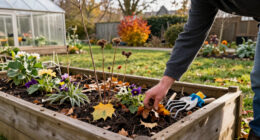
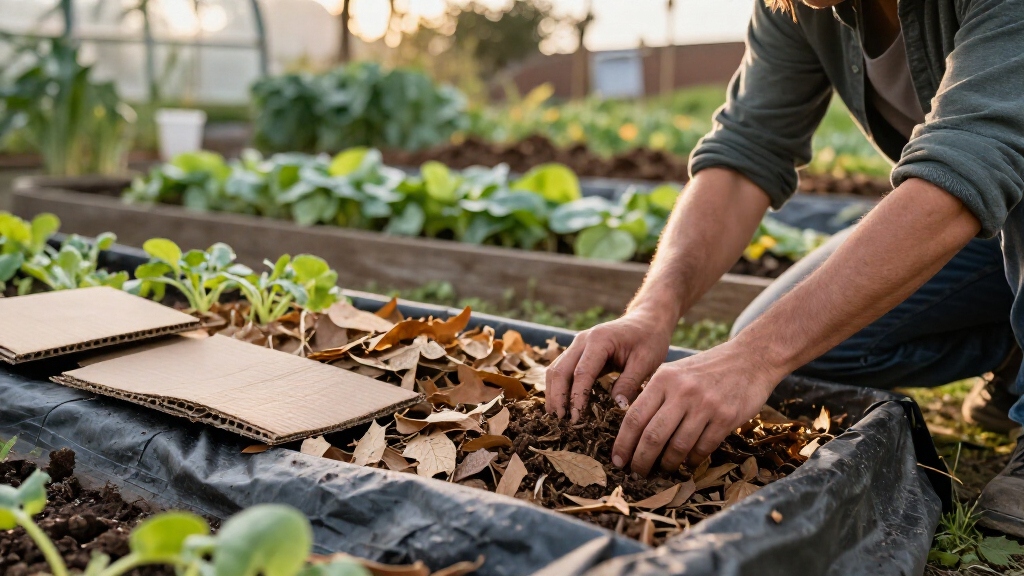
Shredded leaves are presented as a low-cost winter blanket for cleared beds, especially when spring planting is flexible. They help shield soil from weather and add organic material as they break down. Whole leaves may mat when wet, while dry leaves can blow away; shredding, moistening after spreading or edging the bed can help. A leaf layer can shade soil and reduce some weed growth, but it will not eliminate weed seeds or reliably stop perennial weeds.
Finished compost adds organic matter and can leave a bed ready for spring planting, particularly where soil needs improvement or a heavy-feeding crop is planned. The report advises a moderate application: deep layers can be costly, and repeated large additions without soil testing can raise nutrient levels, especially phosphorus. Compost alone is not a reliable fix for established perennial weeds.
Plain, unwaxed cardboard can help smother grass or small annual weeds when establishing a new bed. The report recommends overlapping seams, wetting the cardboard and covering it with organic material. Remove tape, labels, plastic, staples and glossy pieces. It is less suitable for an already clear bed, and aggressive perennial weeds may grow through gaps or return at the edges. An opaque tarp can exclude light and suppress weeds, but the supplied report excerpt ends before giving its full instructions or tradeoffs.
Choosing Cover for Spring Plans
The choice affects both how well soil is protected over winter and how much work a gardener faces when planting resumes. Leaves may suit a bed that will remain empty until late spring; a tarp may be more useful where spring weeds are the chief concern and planting must start early. Cardboard has a narrower role in converting small areas of lawn or annual weeds, while compost is best directed to beds that need organic matter.
These materials do not replace the full role of a cover crop. According to the report, living plants keep roots active, protect soil from rain and wind, and take up leftover nutrients. Surface covers can shield the soil and simplify spring preparation, but they do not maintain living roots or provide every benefit of an established crop.
As an affiliate, we earn on qualifying purchases.
When the Cover Crop Window Closes
Cover crops need time to establish before winter. The report describes a common late-summer or fall problem: a garden bed is cleared, temperatures begin to fall, and the remaining time may be too short for seed to form a useful stand. In that situation, leaving soil bare is not the only option, but the fallback should match the bed’s next use.
Planet Natural suggests weighing three factors: whether winter weather could make the soil blow, wash or crust; whether spring weeds are the larger concern; and how soon the next crop must be planted. Local supply and cost also matter: readily available leaves may be a more practical cover than purchased compost when the bed mainly needs winter protection.
garden compost for soil improvement
As an affiliate, we earn on qualifying purchases.
As an affiliate, we earn on qualifying purchases.
Tarp Guidance Is Incomplete
The supplied source text stops mid-sentence in its tarp section, after stating that an opaque tarp excludes light and should be laid over moist soil and secured. Its full recommendations, limitations and suggested timing are therefore not available in the provided material. The source also gives no publication date, location-specific guidance, soil test results or measurements for application depths.
Results will depend on local weather, the weeds present, material quality and the timing of spring planting. The report does not claim that any one option works best for every bed.
As an affiliate, we earn on qualifying purchases.
Match Materials to Planting Dates
Gardeners can begin by deciding when the bed will be planted and whether the immediate priority is soil cover, weed suppression or added organic matter. They can then use a suitable locally available material, following the report’s preparation guidance for leaves, compost or cardboard. Where nutrient levels are uncertain, a soil test can help guide compost use.
For tarp use, consult the complete Planet Natural report or local extension guidance before setting a schedule; the supplied excerpt does not include the full instructions. In spring, remove or move the cover as needed for planting, then reassess what the bed needs for the growing season.
As an affiliate, we earn on qualifying purchases.
Key Questions
Do these materials replace a cover crop?
No. The report says surface covers can protect soil and make spring preparation easier, but they do not fully duplicate living roots, which help protect soil and take up leftover nutrients.
Which option suits a bed that will not be planted until late spring?
Shredded leaves may suit a cleared bed with a flexible planting date, particularly where leaves are abundant. They can be raked aside for planting and returned around established seedlings as light mulch.
Can cardboard smother persistent weeds?
The report cautions that cardboard is not a good solution for aggressive perennial weeds such as bindweed or bermudagrass. They may exploit seams or edges, or return beside the bed.
How much compost should go on an empty bed?
The source recommends a moderate layer, rather than deep additions. Repeated large applications without a soil test can raise nutrient levels, particularly phosphorus.
What does the report say about using a tarp?
In the supplied excerpt, it says an opaque tarp excludes light and should be laid over moist soil and secured tightly. The excerpt cuts off before the full directions and tradeoffs, so it does not establish a complete tarp schedule.
Source: rss
Fall Picks
fall essentials
As an affiliate, we earn on qualifying purchases.