TL;DR

Get garden gear delivered free with Prime
- Fast, free delivery on millions of items
- Prime Video, Amazon Music and more included
- Member-only deals all year
Experts recommend specific pruning methods to improve tomato plant health and increase harvest size. Proper pruning reduces disease risk and enhances airflow. This guidance aims to help gardeners maximize their tomato yields.
Experts agree that proper pruning of tomato plants is essential for promoting healthier growth and achieving larger harvests. This advice, based on recent horticultural research and experienced gardener insights, aims to help both amateur and professional growers optimize their tomato yields this season.
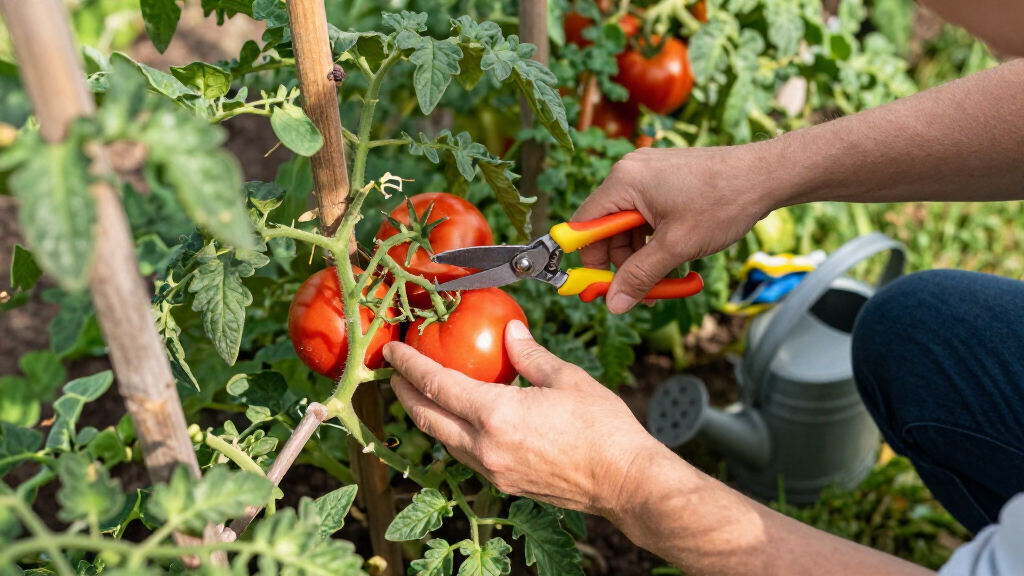
Recent guidance from horticultural specialists emphasizes that strategic pruning removes unnecessary or diseased foliage, improves airflow, and directs plant energy toward fruit production. Experts recommend removing suckers—small shoots that develop between the main stem and branches—particularly in indeterminate varieties, to control plant size and prevent disease. Additionally, pruning lower leaves and any yellowed or damaged foliage reduces the risk of fungal infections such as blight, which can devastate tomato crops. These practices are supported by recent studies indicating that well-pruned plants are less prone to pests and diseases, and produce larger, more consistent fruit yields. The advice also underscores the importance of using clean tools and pruning at the right times, typically when plants are actively growing but before fruit set peaks.Why Proper Pruning Can Transform Your Tomato Harvest
Effective pruning directly impacts plant health by reducing disease susceptibility and improving airflow, which is crucial in preventing common tomato problems like blight and pests. By focusing plant energy on developing fruit rather than excess foliage, gardeners can expect bigger, more flavorful tomatoes. This guidance is especially valuable amid increasing concerns about plant diseases and climate-related stresses that threaten crop yields. Implementing these expert-recommended pruning techniques can lead to more reliable harvests and reduce the need for chemical interventions, making gardening more sustainable and productive for both hobbyists and commercial growers.As an affiliate, we earn on qualifying purchases.
Recent Advances in Tomato Pruning Techniques and Recommendations
Traditionally, tomato pruning has been a standard practice among experienced gardeners, but recent research and extension service updates have refined these methods. Studies from agricultural universities highlight that removing suckers and unnecessary foliage not only improves plant health but also enhances fruit quality. The current advice builds on decades of experience, integrating new findings about disease prevention and plant physiology. The trend toward more precise pruning aligns with broader efforts to increase organic and sustainable gardening practices, especially in the face of climate challenges that exacerbate plant stress and disease risk.“Strategic pruning is one of the most effective ways to improve tomato plant health and maximize fruit production. Removing suckers and damaged leaves allows the plant to focus its energy on developing high-quality tomatoes.”
— Dr. Lisa Monroe, horticulture researcher
As an affiliate, we earn on qualifying purchases.
Unanswered Questions About Optimal Pruning Timing and Techniques
While experts agree on the general principles of pruning, specific timing and methods may vary depending on tomato variety, local climate, and growing conditions. It is not yet clear whether certain pruning techniques are universally superior across all environments, and ongoing studies aim to refine these recommendations further. Additionally, some gardeners question the best approach for pruning determinate varieties, which naturally have a more compact growth habit, and whether pruning might impact their yield differently.As an affiliate, we earn on qualifying purchases.
Next Steps for Gardeners and Researchers on Tomato Pruning
Researchers plan to conduct further studies to determine the most effective pruning schedules tailored to different climates and tomato varieties. Meanwhile, gardening experts recommend that growers experiment with pruning methods suited to their specific conditions and observe results over multiple seasons. Extension services and horticultural organizations are expected to release updated guidelines as new research becomes available. Gardeners are encouraged to document their practices and share outcomes to contribute to ongoing knowledge development.plant disease prevention gardening tools
As an affiliate, we earn on qualifying purchases.
As an affiliate, we earn on qualifying purchases.
Key Questions
When is the best time to prune tomato plants?
Most experts recommend pruning when the plants are actively growing, typically in early to mid-summer, before the onset of heavy fruiting. It’s best to prune in the morning or late afternoon to avoid heat stress on the plants.
Should I prune determinate or indeterminate tomato varieties differently?
Yes. Indeterminate varieties benefit from more extensive pruning, including sucker removal, to control size and improve airflow. Determinate varieties are more compact and may require minimal pruning, mainly removing damaged or yellowed leaves.
What tools should I use for pruning tomatoes?
Use clean, sharp pruning shears or scissors to prevent disease transmission. Disinfect tools between cuts, especially if you notice signs of disease, to maintain plant health.
Will pruning reduce my overall tomato yield?
Proper pruning, when done correctly, generally increases overall yield by promoting healthier plants and larger fruit size. Over-pruning or improper techniques can, however, reduce total production, so following recommended practices is important.
Are there any risks associated with pruning tomatoes?
Risks include potential damage to the plant if pruning is done improperly or at the wrong time, which can stress the plant or reduce fruit set. Using clean tools and avoiding excessive pruning helps mitigate these risks.
Source: rss
Fall yard work Picks
leaf blowers
As an affiliate, we earn on qualifying purchases.