
TL;DR

Get garden gear delivered free with Prime
- Fast, free delivery on millions of items
- Prime Video, Amazon Music and more included
- Member-only deals all year
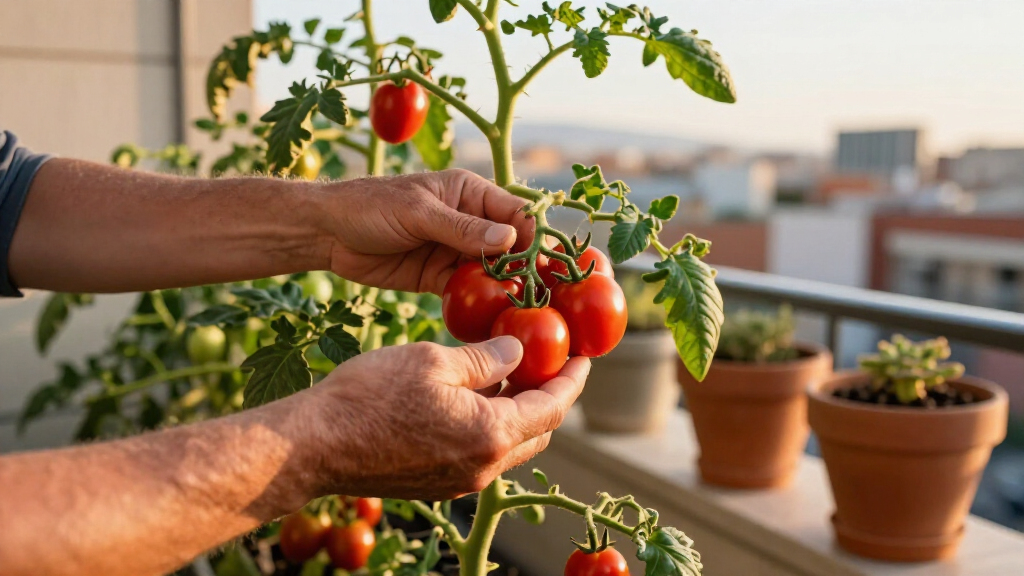
A recent study indicates that Barcelona’s municipal rooftops could produce up to 31% of the tomatoes consumed in the city. This finding underscores the potential for urban agriculture to contribute to local food security. The development is based on preliminary research and has yet to be implemented at scale.
Recent research from the Autonomous University of Barcelona suggests that up to 31% of the tomatoes consumed in Barcelona could be produced on municipal rooftops.
This potential highlights an innovative approach to urban agriculture that could enhance local food security and reduce dependency on external supply chains. The study’s findings are preliminary and have not yet been translated into policy or large-scale implementation.
The study, conducted by researchers at the Autonomous University of Barcelona, estimates that if rooftops across the city were utilized for tomato cultivation, they could supply nearly a third of the city’s consumption. This calculation is based on the total available rooftop area, current agricultural yields, and consumption data.
Barcelona has approximately 12 million square meters of rooftop space, much of which is currently unused or underutilized. The research team analyzed the potential for vertical farming and container-based cultivation methods suited for urban environments. They concluded that with appropriate infrastructure, climate control, and irrigation systems, rooftop farms could produce significant quantities of tomatoes.
However, the study emphasizes that this is a theoretical estimate; practical implementation would require overcoming logistical, regulatory, and technical challenges. Local authorities and urban planners have yet to formally adopt or fund such initiatives, and the actual yield would depend on factors like crop management and weather conditions.
Potential Impact on Urban Food Security and Sustainability
This research underscores the potential for urban agriculture to contribute substantially to local food supplies, especially in densely populated cities like Barcelona. If scaled, rooftop tomato farms could reduce the city’s reliance on imported produce, lower transportation emissions, and promote sustainable practices.
Moreover, integrating agriculture into urban infrastructure could foster community engagement, create green jobs, and improve air quality. The concept aligns with broader trends toward sustainable urban development and resilience against supply chain disruptions.
However, the actual impact remains uncertain until pilot projects demonstrate feasibility and economic viability. Policymakers and stakeholders will need to evaluate the costs, benefits, and environmental considerations before moving forward.
urban rooftop tomato gardening kit
As an affiliate, we earn on qualifying purchases.
As an affiliate, we earn on qualifying purchases.
Barcelona’s Urban Agriculture Initiatives and Rooftop Potential
Barcelona has been exploring various urban greening and sustainability initiatives over recent years, including green roofs, community gardens, and local food programs. The city’s dense core and high population density make it an ideal candidate for innovative solutions like rooftop farming.
Previous pilot projects have shown promise in other cities, demonstrating that rooftop gardens can support small-scale vegetable and herb production. However, large-scale cultivation of crops like tomatoes has not yet been realized in Barcelona. The current research builds on these efforts by providing a comprehensive estimate of potential yield based on available rooftop space.
While the idea of city-grown tomatoes is gaining interest, it remains at the conceptual stage. Urban planners and environmental groups are watching developments closely, as the success of such projects could influence future policies on land use and sustainability.
vertical farming indoor grow lights
As an affiliate, we earn on qualifying purchases.
As an affiliate, we earn on qualifying purchases.
Practical Challenges and Unconfirmed Implementation Plans
While the study presents an optimistic estimate, it remains uncertain whether such rooftop cultivation can be practically implemented at scale. Challenges include securing funding, navigating building regulations, installing necessary infrastructure, and managing pests and weather conditions.
There are no current official plans to develop rooftop tomato farms in Barcelona, and the feasibility of scaling this concept remains untested. Further pilot projects and feasibility studies are needed to confirm whether the theoretical yield can be achieved in practice.
Additionally, the potential environmental impact, economic costs, and community acceptance are still under assessment, making the project’s future uncertain.
As an affiliate, we earn on qualifying purchases.
Next Steps for Urban Agriculture in Barcelona
Researchers and city officials are expected to conduct pilot projects to test the practical aspects of rooftop tomato cultivation. These initiatives will explore the technical, regulatory, and economic challenges involved.
If successful, Barcelona could develop a framework for integrating rooftop farming into urban planning policies, possibly leading to city-wide programs supporting local food production.
Further research will also assess the environmental benefits and community engagement potential of such initiatives, shaping future sustainability strategies.
urban agriculture irrigation systems
As an affiliate, we earn on qualifying purchases.
As an affiliate, we earn on qualifying purchases.
Key Questions
Could rooftop tomato farming supply all of Barcelona’s tomato needs?
Based on current estimates, rooftop cultivation could supply up to 31% of the city’s tomato consumption. Full self-sufficiency would require additional sources or larger-scale farms.
What are the main challenges to implementing rooftop farms in Barcelona?
Key challenges include infrastructure costs, building regulations, climate control, pest management, and ensuring economic viability. Pilot projects are needed to address these issues.
Has Barcelona officially committed to rooftop farming projects?
There are no current official policies or large-scale projects; the research remains in the preliminary stage, and further feasibility studies are required.
Would rooftop farms impact city aesthetics or property values?
Potentially, rooftop gardens could enhance urban aesthetics and property appeal. However, this depends on design, maintenance, and community acceptance, which are still under discussion.
How soon could rooftop tomato farms become a reality in Barcelona?
If pilot projects prove successful, it could take several years for broader implementation, depending on funding, regulations, and infrastructure development.
Source: local
Halloween Picks
halloween
As an affiliate, we earn on qualifying purchases.