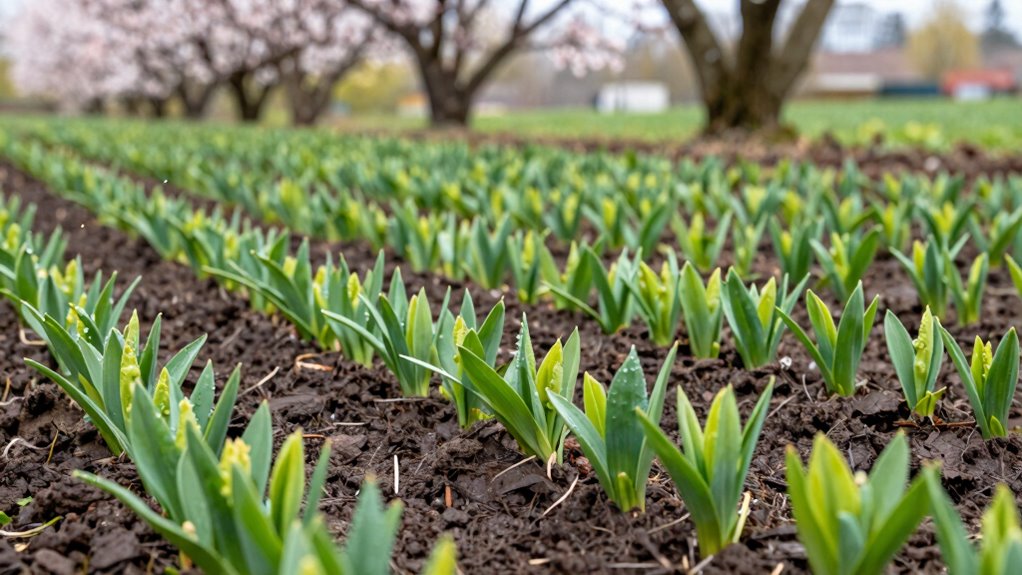

To track the first spring greens, focus on their natural growth waves by observing specific habitats like meadows, forest edges, and roadside verges, where they thrive in moist, sunny spots. Watch for early sprouts of wild garlic and chives, which appear first, followed by dandelions and chickweed. Timing depends on local climate and weather patterns, so stay attentive to seasonal changes. If you want to master the art of spotting these seasonal waves, there’s more to discover below.

Get garden gear delivered free with Prime
- Fast, free delivery on millions of items
- Prime Video, Amazon Music and more included
- Member-only deals all year
Key Takeaways
- Monitor local habitats like meadows and forest edges for early signs of wild garlic and chives.
- Track seasonal progression to anticipate when dandelion leaves and chickweed begin to emerge.
- Use plant identification guides and local expert advice to accurately recognize edible greens.
- Observe weather patterns; warm, sunny periods accelerate plant growth, signaling readiness for harvest.
- Harvest greens early in the season, during morning hours, for peak flavor and tenderness.

Have you noticed how spring greens are flooding markets in waves? It’s like nature is putting on a show, offering fresh, vibrant leaves just as you’re ready to embrace the new season. If you’re enthusiastic to harvest your own wild edibles, understanding foraging tips and harvest timing can make all the difference. Tracking these early greens requires a keen eye and a bit of patience, but the rewards are well worth it.
Start by learning the landscapes where spring greens thrive. Many wild edibles, such as wild garlic, dandelions, and chickweed, prefer moist, sunny areas like meadows, forest edges, and roadside verges. As the season progresses, these plants sprout in sequence, so timing is everything. Keep a mental or physical calendar of the local climate and plant emergence. Typically, you’ll see wild garlic and chives popping up first, followed by tender dandelion leaves and chickweed. Knowing the typical harvest timing helps you anticipate when each green will be at its peak for flavor and nutritional value.
Learn the seasonal sequence of wild greens to harvest them at their best.
Foraging tips are vital to avoid confusion and guarantee safety. Always identify plants accurately, using reliable guides or local expert advice. Many edible greens have look-alikes that can be toxic, so take your time to distinguish them. For example, look for the unique smell of wild garlic or the jagged edges of dandelion leaves. Harvest only what you need, leaving enough behind for the plant to continue thriving and for wildlife to enjoy. Use scissors or your hands carefully to clip the greens, avoiding damage to the root systems, which helps sustain the plants for future foraging. Being aware of plant identification is essential to ensure safety and success in your foraging endeavors. Additionally, understanding the biodiversity of your local area can help you discover new edible species and support the ecosystem’s health. It’s also beneficial to familiarize yourself with plant growth cycles, as they provide clues for optimal harvesting times. Recognizing the seasonal patterns of plant emergence can further enhance your foraging success and help you stay in tune with nature’s flow.
Timing your harvest is essential. The best time to pick spring greens is when they’re young, tender, and full of flavor. As plants mature, their leaves tend to become tougher or bitter. Check daily once you notice the first shoots—early morning is often the best time to gather greens, as they’re crisp and fresh. Keep in mind that weather influences harvest timing; a warm, sunny spell accelerates growth, while cold snaps may delay it. Staying observant and adapting to these cues ensures you catch the greens at their prime.
wild edible plant identification guide
As an affiliate, we earn on qualifying purchases.
As an affiliate, we earn on qualifying purchases.
Frequently Asked Questions
Which Spring Greens Are Most Resistant to Pests?
You’ll find that pest-resistant varieties like kale, Swiss chard, and spinach often stand up better against pests. To boost their resilience, use organic pest control methods such as neem oil or beneficial insects. These techniques help protect your greens without chemicals, ensuring a healthy harvest. Regular monitoring and early intervention also keep pests at bay. By choosing pest-resistant varieties and practicing organic pest control, you’ll enjoy fresh greens throughout spring.
How Do Weather Changes Affect Spring Green Availability?
Weather changes can turn your garden into a roller coaster ride, affecting spring green availability. Climate variability influences temperature and rainfall, which directly impact growth, while soil moisture levels determine plant health. Hotter, drier spells may stunt greens, while cooler, wetter periods boost growth. By tracking weather patterns and maintaining consistent soil moisture, you can predict and optimize your greens’ emergence, ensuring a steady harvest despite nature’s unpredictable mood swings.
Are Organic Spring Greens Worth the Extra Cost?
Organic spring greens are worth the extra cost if you prioritize pesticide-free produce and environmental sustainability. With organic certification, you get assurance that the greens meet strict standards. While they often cost more when you do a cost comparison, many find the health benefits and better taste justify the price. If you value quality and eco-friendly farming, investing in organic greens can be a worthwhile choice.
How Can I Extend the Shelf Life of Fresh Greens?
To extend the shelf life of fresh greens, start with proper storage tips. Keep them in a breathable container or perforated bag in the refrigerator’s crisper drawer. To maintain hydration, wrap the greens in a damp paper towel before storing, which helps prevent wilting. Avoid washing until you’re ready to eat, as excess moisture can speed spoilage. Regularly check for wilted leaves and remove them promptly.
What Are the Signs of Freshness in Spring Greens?
Imagine a lush, vibrant tapestry—your spring greens. Freshness signs include crisp, tender leaves with bright, vivid colors, and a fresh aroma. Look for firm stems and avoid wilting or yellowing edges. Harvesting tips like picking young, tender leaves guarantee peak nutritional benefits. When greens look lively and smell fresh, you’re enjoying the true essence of spring’s bounty and maximizing their healthful qualities.
foraging scissors for wild greens
As an affiliate, we earn on qualifying purchases.
As an affiliate, we earn on qualifying purchases.
Conclusion
As spring greens flood in like a tidal wave, you can’t help but feel swept up in the excitement. Keep your eyes peeled, your basket ready, because these vibrant edibles arrive faster than you can blink! With each new wave, your garden and plate burst into life, turning every meal into a celebration. So stay alert, embrace the abundance, and ride this unstoppable green wave — it’s a season you’ll never want to miss!
wild garlic and chives plant identification
As an affiliate, we earn on qualifying purchases.
As an affiliate, we earn on qualifying purchases.
wild edible greens harvesting tools
As an affiliate, we earn on qualifying purchases.
As an affiliate, we earn on qualifying purchases.
Fall Picks
fall essentials
As an affiliate, we earn on qualifying purchases.