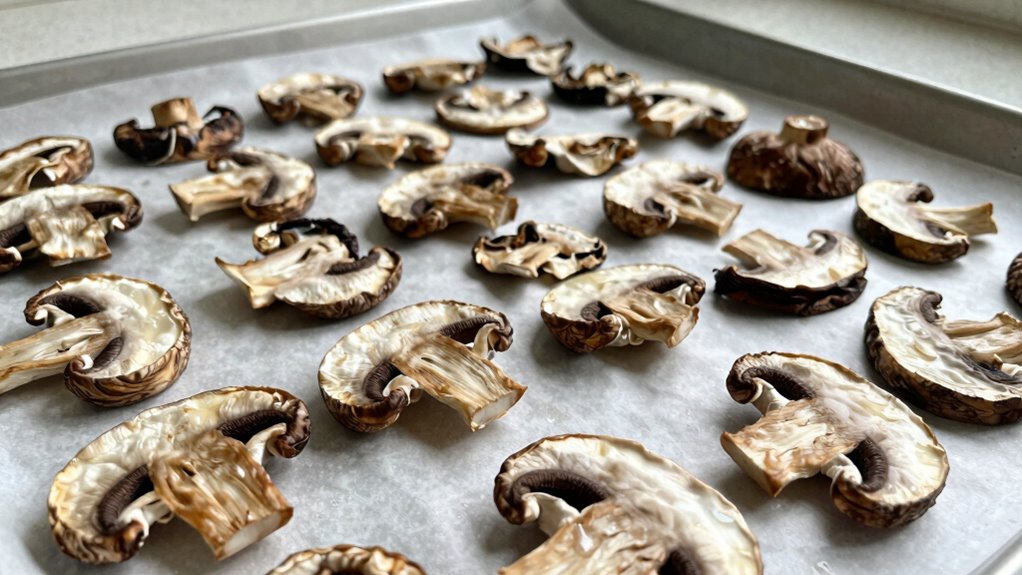

If your mushroom slices dry unevenly, it’s likely because of inconsistent thickness, poor airflow, or environmental factors like humidity. Thicker parts retain more water, while thinner areas dry faster, leading to uneven moisture removal. To rectify this, slice mushrooms uniformly, arrange them in a single layer without overlapping, and guarantee proper airflow with fans or dehydrators. Controlling temperature and humidity helps create a consistent drying environment. Keep going to learn more tips for perfect results.

Get garden gear delivered free — and shop member deals
- Fast, free delivery on millions of items
- Access to Prime Big Deal Days deals on October 6–7
- Prime Video, Amazon Music and more included
Key Takeaways
- Uneven drying occurs due to inconsistent mushroom slice thickness and moisture distribution.
- Inadequate airflow or temperature fluctuations cause certain areas to dry faster.
- Overlapping slices or improper arrangement traps moisture, leading to uneven results.
- Flipping or rotating slices during drying promotes uniform moisture removal.
- Maintaining controlled environment conditions ensures consistent drying and prevents mold.
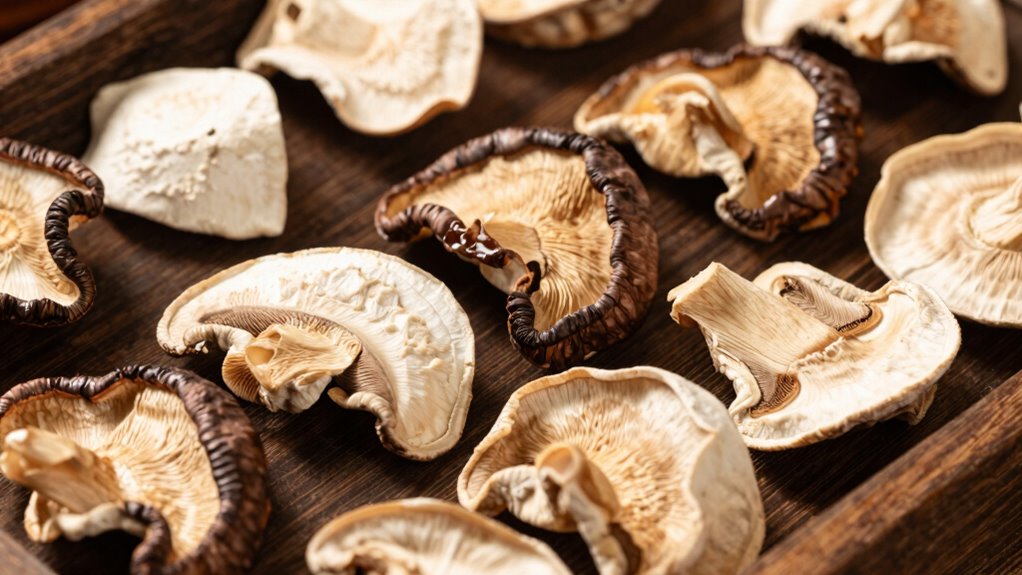
If you’ve ever noticed that your mushroom slices dry unevenly, you’re not alone. This common issue often comes down to how fungus dehydration happens and how effectively you manage moisture during the drying process. When drying mushrooms, uneven drying occurs because moisture isn’t evenly removed from all parts of the slices. Thicker areas tend to retain more water, while thinner parts dry out faster. This inconsistency can lead to slices that are crispy on some edges but still damp in the center, which affects both shelf life and flavor. To prevent this, understanding moisture control is essential.
Fungus dehydration is a natural process, but it becomes problematic when moisture isn’t evenly eliminated. Mushrooms contain a high water content—up to 90%—which makes them prone to uneven drying if not handled correctly. If moisture remains in the slices, it can lead to mold growth or spoilage during storage. That’s why controlling the environment during drying is crucial. Proper airflow, temperature, and humidity levels ensure that moisture escapes uniformly from all parts of the mushroom slices. Without these controls, some areas dry faster, leaving behind pockets of residual moisture that compromise the quality of your dried product. Additionally, understanding the moisture removal process helps optimize drying techniques for better results. Being aware of the dehydration process can help you troubleshoot issues more effectively.
To fix uneven drying caused by moisture control issues, start by slicing your mushrooms uniformly. Thin, even slices allow for more consistent moisture removal. Next, arrange the slices in a single layer on your drying tray, ensuring they don’t overlap or touch. Overlapping slices trap moisture and hinder airflow, leading to uneven dehydration. Adjust the drying temperature so it’s not too high—around 135°F (57°C) is ideal—since excessive heat can cause rapid drying on the surface while trapping moisture inside. Maintaining good airflow is vital; use a fan or a dehydrator with a reliable airflow system to circulate air evenly across all slices. This promotes uniform fungus dehydration by encouraging moisture to escape from every part of the mushroom slices at the same rate.
Additionally, monitor humidity levels in your drying environment. Too much humidity slows down drying, especially in areas with higher moisture content, while too little can cause the outer layers to become overly brittle. Using a dehumidifier or drying in a well-ventilated space helps maintain optimal conditions. Incorporating proper drying techniques can further enhance moisture removal and prevent uneven results. Regularly check your slices during the drying process, flipping or rotating them if necessary to ensure even exposure to airflow. These steps collectively improve moisture control, leading to evenly dried mushroom slices that are crisp, shelf-stable, and flavorful. The key is consistency—by managing fungus dehydration carefully and maintaining proper moisture control, you’ll produce perfectly dried mushrooms every time.
As an affiliate, we earn on qualifying purchases.
Frequently Asked Questions
Can the Type of Mushroom Affect Drying Unevenness?
Yes, the type of mushroom can affect drying unevenness. Different mushroom varieties have varying water content and textures, which influence how they dry with different drying techniques. For example, thicker or more porous mushrooms may dry unevenly if not sliced uniformly or if the drying method isn’t suitable. To achieve even drying, you should consider the specific mushroom variety and adjust your drying techniques accordingly, ensuring consistent slices and proper airflow.
Does Humidity Impact Mushroom Drying Consistency?
Ever notice how your mushroom drying process feels like a coincidence? Humidity definitely impacts drying consistency because it influences moisture levels. When humidity isn’t controlled, moisture can linger in some slices while others dry too quickly, leading to uneven results. By maintaining proper humidity control, you guarantee each mushroom slice dries evenly, preventing excess moisture retention or over-drying. This simple step makes your drying process more predictable and your mushrooms perfectly crisp.
Are There Specific Storage Tips to Prevent Uneven Drying?
To prevent uneven drying, store your mushroom slices in airtight storage containers that maintain consistent conditions. Keep the containers in a cool, dry place with stable temperature control to avoid fluctuations that cause uneven moisture loss. Avoid direct sunlight or high humidity areas. Proper storage guarantees even drying, preserves flavor, and extends shelf life, making your mushrooms ready whenever you need them.
How Does Mushroom Freshness Influence Drying?
Did you know that mushrooms lose about 10% of their weight as water daily? Freshness greatly impacts drying; fresher mushrooms have better texture and flavor retention. When you dry them, their mushroom texture stays intact longer, and flavor is preserved more effectively. If mushrooms are starting to spoil, uneven drying occurs because moisture content varies. Keeping mushrooms fresh guarantees consistent drying, preserving their quality and making your dried slices more uniform.
Is Air Circulation Crucial During Drying?
Yes, air circulation is essential during drying because it directly impacts drying speed and evenness. Proper air flow helps remove moisture consistently from all mushroom slices, preventing uneven drying. Without good air circulation, some slices may dry too quickly or too slowly, leading to uneven results. To guarantee ideal drying, use a fan or place slices in a well-ventilated area, maintaining steady airflow for the best outcome.
kitchen fan for drying herbs and mushrooms
As an affiliate, we earn on qualifying purchases.
As an affiliate, we earn on qualifying purchases.
Conclusion
Now that you understand why mushroom slices dry unevenly, you can take control. Imagine the disappointment of biting into a perfectly cooked mushroom only to find it unevenly dried, ruining your dish. But with the right techniques, you can turn this frustration into satisfaction. Embrace the knowledge, fix the problem, and enjoy consistently delicious, evenly dried mushrooms. After all, precision in preparation transforms a simple ingredient into a culinary delight, making every meal memorable.
As an affiliate, we earn on qualifying purchases.
mushroom slicing and drying tools
As an affiliate, we earn on qualifying purchases.
As an affiliate, we earn on qualifying purchases.
Fall yard work Picks
leaf blowers
As an affiliate, we earn on qualifying purchases.