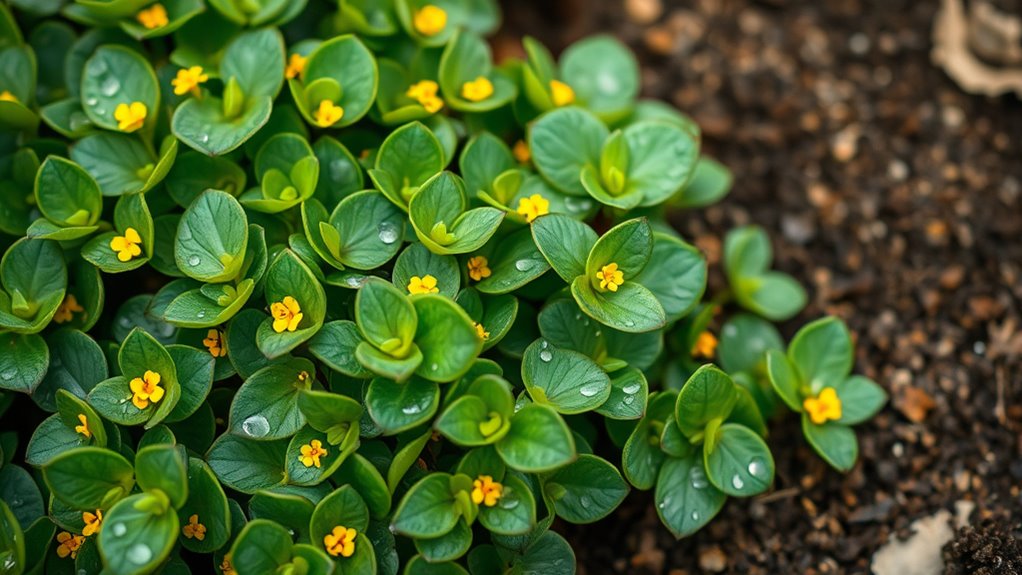

Purslane is a low-growing, succulent groundcover known for its water-retentive leaves rich in omega-3, vitamins, and antioxidants. To identify it, look for thick, smooth, oval leaves with reddish edges and yellow star-shaped flowers. Be cautious, as lookalikes like spurge have milky sap and are toxic, while decorative succulents aren’t edible. Recognizing these subtle differences helps you safely enjoy purslane’s nutritious benefits—if you’d like tips on telling them apart, keep exploring this guide.
Key Takeaways
- Purslane is a low-growing, succulent groundcover with smooth, fleshy leaves and yellow star-shaped flowers, rich in omega-3s and nutrients.
- Lookalikes like spurge contain milky sap and are toxic, so correct identification is essential for safety and edibility.
- Differentiating purslane from succulents like sedum or ice plant involves examining leaf texture, flower shape, and growth habits.
- Purslane’s dense, spreading growth suppresses weeds and enhances soil moisture, making it an ideal sustainable groundcover.
- Proper identification ensures safe use as an edible, nutrient-dense groundcover while avoiding toxic lookalikes.
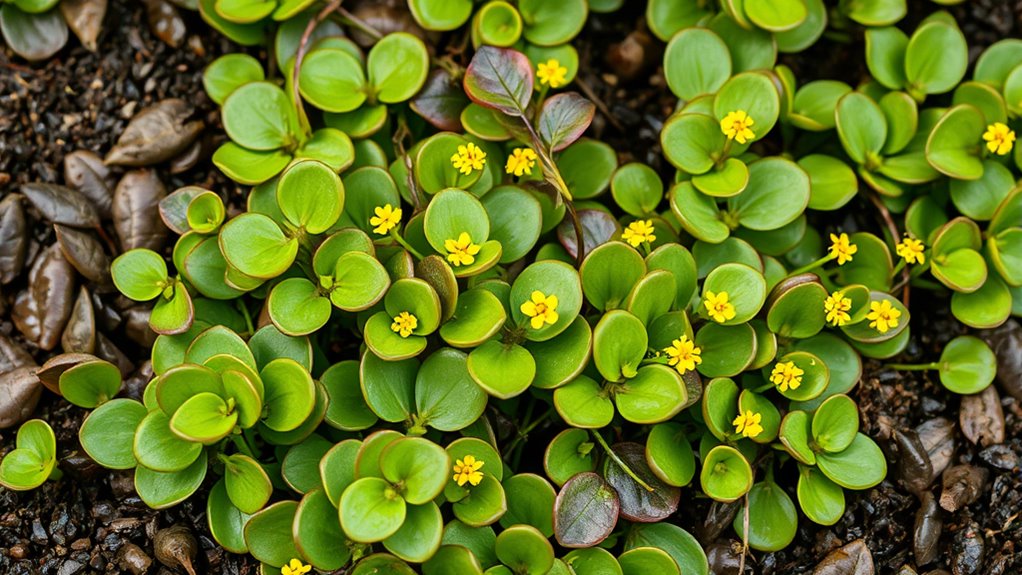
If you’re considering using purslane as a groundcover, it’s important to know how to identify it and distinguish it from lookalikes. Purslane is a low-growing, succulent plant that spreads quickly, making it an excellent choice for a resilient, edible groundcover. Its thick, fleshy leaves are oval-shaped, smooth, and often have a reddish tint along the edges. When you see these vibrant, water-retentive leaves, you’re likely looking at purslane. It produces small, star-shaped yellow flowers that bloom in the warmer months, adding a cheerful touch to your landscape. Recognizing these features helps you confirm you’re dealing with purslane and not a similar-looking plant.
There are a few plants that might seem alike but aren’t suitable choices for groundcover or edibility. For example, some lookalikes like spurge or certain weeds might share the fleshy leaves or sprawling habit, but they can be toxic or undesirable in your garden. Spurge, in particular, has milky sap that can irritate your skin and pose health risks if ingested. It’s essential to learn the subtle differences—like leaf shape, flower structure, and growth patterns—to avoid confusion and ensure safety. Purslane’s succulent alternatives, such as sedum or ice plant, might resemble purslane in appearance, but they typically aren’t edible and serve more decorative purposes. Distinguishing purslane from these succulent alternatives is critical if you’re interested in creating an edible groundcover.
Using purslane as an edible groundcover offers the advantage of combining beauty with nutrition. Its leaves are rich in omega-3 fatty acids, vitamins, and antioxidants, making it a nutritious addition to salads or smoothies. When planted intentionally, purslane spreads evenly across the ground, forming a dense mat that suppresses weeds and conserves soil moisture. Its drought-tolerance and low maintenance qualities make it an ideal choice for sustainable gardening. In contrast, non-edible succulent alternatives might require different care routines and don’t provide the same nutritional benefits.
Frequently Asked Questions
Can Purslane Be Cultivated Indoors Successfully?
Yes, you can cultivate purslane indoors successfully. Just guarantee you place it in a sunny spot or use grow lights for adequate light. Indoor gardening of purslane requires good drainage and regular watering, but avoid overwatering to prevent pests. Keep an eye out for pests and manage them promptly with natural methods. With proper care, purslane thrives indoors, offering a nutritious, omega-rich groundcover right in your home.
How Does Purslane Affect Soil Health Long-Term?
You’ll find purslane enhances soil health long-term by promoting soil enrichment and supporting nutrient cycling. Its deep roots break up compacted soil, improving aeration and water retention. Additionally, purslane adds organic matter as it decomposes, boosting soil fertility. By encouraging beneficial microbes, purslane helps sustain a healthy soil ecosystem, making it a valuable groundcover that benefits your garden’s long-term productivity and overall soil robustness.
Are There Any Pests Specific to Purslane?
You’ll find purslane is quite pest resistant, making pest management easier. While it’s generally not prone to specific pests, aphids and spider mites might occasionally bother it. To keep it healthy, monitor regularly and use natural pest control methods when needed. Its pest-resistant nature means you won’t need heavy chemical treatments, helping you maintain a sustainable garden while enjoying this nutritious groundcover.
Can Purslane Be Used as Livestock Feed?
Yes, you can use purslane as livestock feed. It offers excellent livestock nutrition due to its high omega-3 content and can serve as a nutritious forage alternative. Incorporate purslane into your grazing options to diversify your forage and provide a healthy, nutrient-rich supplement for your animals. Its fast growth makes it a practical, sustainable choice for livestock owners seeking versatile forage alternatives.
Is Purslane Toxic to Pets or Children?
Purslane is generally safe for pets and children, with no widespread toxicity concerns. Remarkably, purslane contains high levels of omega-3 fatty acids, which benefit humans and animals alike. However, while most pets won’t be harmed, ingestion in large quantities may cause mild gastrointestinal upset. To ensure pet safety, it’s best to monitor your children and pets around purslane and consult your vet if you notice unusual symptoms.
Conclusion
You’ve now learned how purslane stands out as an omega-rich groundcover, with its juicy leaves and distinctive lookalikes. Did you know that purslane contains more omega-3 fatty acids than many common greens? Keep an eye out for lookalikes to avoid confusion, but remember, harvesting the real purslane can boost your nutrition effortlessly. Embrace this resilient plant in your garden—it’s a small step toward healthier eating and sustainable living.