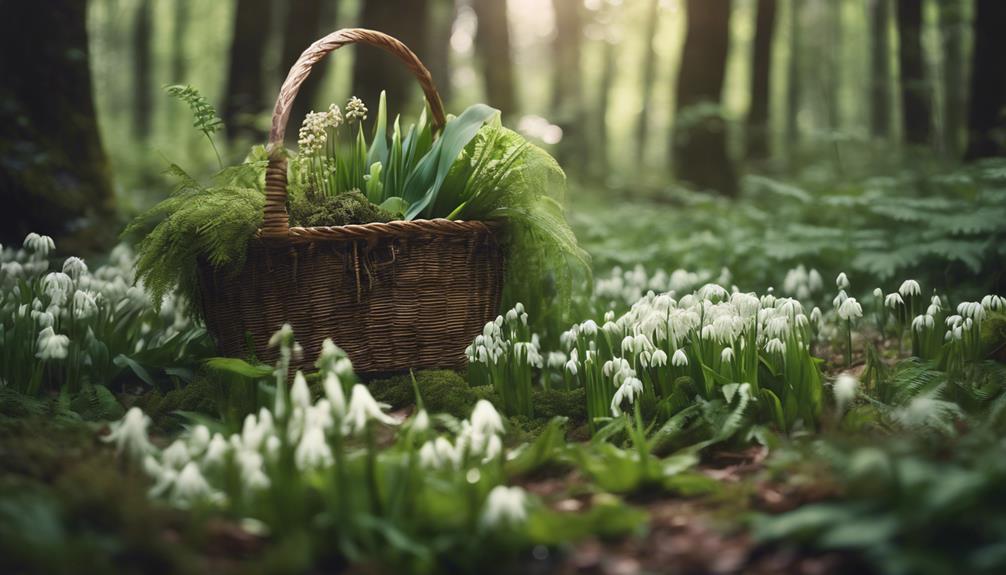
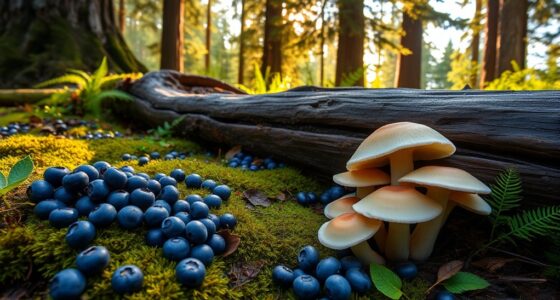
Your choice of forest impacts the mushroom species you find because different forests offer unique conditions like soil chemistry, moisture, and organic material. Forest types such as deciduous or coniferous influence nutrients and acidity levels, shaping which fungi can thrive. Microclimates and availability of decaying plant matter also affect diversity. Exploring these environments reveals how habitat factors determine fungal communities, and if you keep exploring, you’ll discover even more about what shapes mushroom diversity.

Get garden gear delivered free with Prime
- Fast, free delivery on millions of items
- Prime Video, Amazon Music and more included
- Member-only deals all year
Key Takeaways
- Different forest types create unique microclimates that influence which fungi species can thrive.
- The availability of organic material, like decaying leaves or wood, varies by forest type, affecting fungi growth.
- Soil chemistry, such as acidity levels, differs among forests, shaping the fungal community composition.
- Moisture levels and temperature stability in various forests determine the diversity and distribution of mushrooms.
- Symbiotic relationships, like mycorrhizae, depend on specific plant and soil types, influencing fungal presence across habitats.
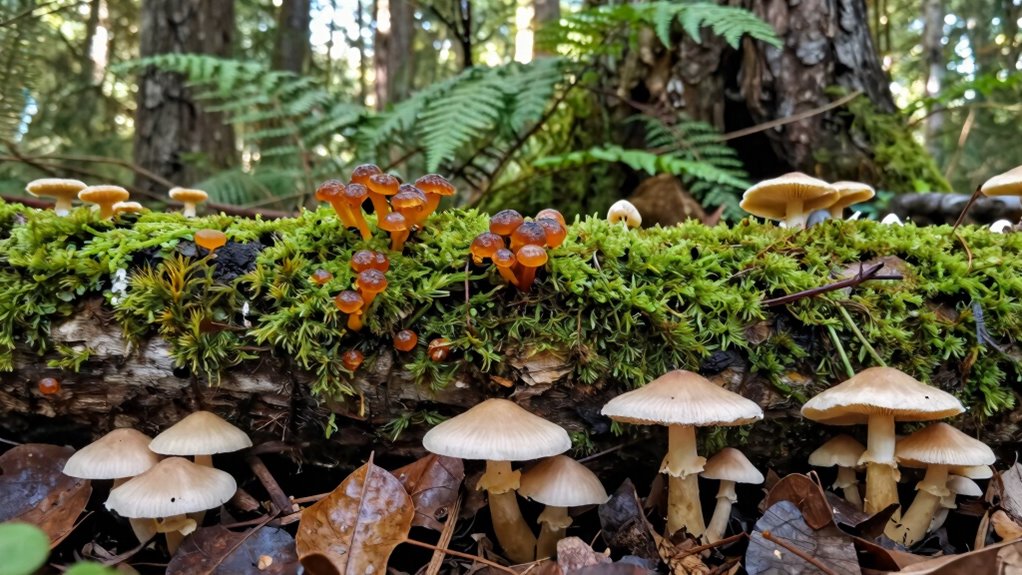
Mushrooms thrive in a variety of habitats, each offering the right combination of moisture, temperature, and organic material they need to grow. As you explore different environments, you’ll notice how the specific conditions shape the types of fungi present. Forests, for instance, are rich with diverse mushroom species because they provide ample organic matter and stable microclimates. Within these ecosystems, fungi often engage in fungal symbiosis, forming mutualistic relationships with trees and plants. This partnership benefits both: the fungi receive carbohydrates produced by their plant partners, and in turn, they enhance the plant’s access to nutrients. Such symbiosis is especially common in mycorrhizal fungi, which colonize plant roots, facilitating nutrient exchange and boosting plant health. This relationship plays a fundamental role in soil nutrient cycling, helping decompose organic material and releasing nutrients like nitrogen and phosphorus back into the soil. These nutrients are then available not just for fungi but also for the plants, creating a balanced, thriving environment. Additionally, the types of fungi present can vary significantly depending on the specific forest type, reflecting how environmental factors influence fungal communities. Different microclimates within forests further influence the diversity and distribution of fungi, demonstrating the importance of small-scale habitat conditions.
Your choice of habitat influences the type of organic material available for fungi to decompose. In deciduous forests, fallen leaves and decaying wood provide a rich source of organic matter, supporting saprotrophic fungi that specialize in breaking down complex organic compounds. These fungi act as natural recyclers, transforming dead plant matter into simpler nutrients, which are then absorbed into the soil. This process is essential for soil nutrient cycling, replenishing the soil’s fertility and supporting plant growth. In coniferous forests, the acidic soil conditions favor different fungal communities, often involving species adapted to decompose conifer needles and woody debris. These fungi contribute notably to nutrient cycling, ensuring that even in more acidic, less fertile soils, essential minerals are made accessible for plant uptake. Moreover, the soil chemistry of a habitat directly influences which fungi can thrive there, further shaping the community composition. Recognizing these influences helps explain the variation in fungal species abundance and diversity across different environments.
You’ll also notice that habitat characteristics, such as moisture levels and temperature stability, influence mushroom diversity. Wet, shaded areas promote the growth of fungi that require higher moisture, while drier, exposed habitats support a different set of species. The type of forest—whether it’s a tropical rainforest, temperate woodland, or boreal forest—creates unique conditions for fungi to thrive. Each habitat fosters particular fungal communities, influencing the overall dynamics of soil nutrient cycling and the nature of fungal symbiosis. Understanding these relationships helps you appreciate how fungi are integral to ecosystem health, constantly recycling nutrients and maintaining the delicate balance necessary for lush, vibrant forests. Recognizing how environmental factors shape fungal communities enhances our understanding of ecosystem resilience and biodiversity.
As an affiliate, we earn on qualifying purchases.
Frequently Asked Questions
How Do Mushrooms Adapt to Different Forest Environments?
You notice mushrooms adapt to different environments through unique traits that suit each forest type. Their mycelium networks extend underground, helping them absorb nutrients efficiently. They also modify spore dispersal methods—some release spores into wind, others rely on animals or water. These adaptations guarantee mushrooms survive and reproduce across varied forest habitats, allowing them to thrive whether in dense rainforests, dry woodlands, or temperate forests.
Are Certain Mushrooms Exclusive to Specific Forest Types?
Yes, certain mushrooms are exclusive to specific forest types because of their unique mycorrhizal relationships. You’ll find some species only in coniferous forests, while others thrive in deciduous environments. These fungi rely on fungal dispersal mechanisms and form symbiotic bonds with particular trees, which limits their habitat. So, by understanding these relationships, you can predict where specific mushrooms are likely to grow based on the forest type.
How Does Climate Influence Mushroom Distribution Across Habitats?
Ever wonder how climate shapes where mushrooms grow? Climate influences mushroom distribution by creating specific conditions in different climate zones and microclimate variations. You’ll find certain fungi thriving in moist, cooler microclimates, while others prefer warmer, drier areas. Changes in temperature and humidity directly impact spore germination and growth, making climate a key factor in where you discover diverse mushroom species across various habitats.
Can Mushrooms From One Habitat Survive in Another?
You can’t easily transplant mushrooms from one habitat to another because their survival depends on specific conditions and relationships. Mushroom cultivation often requires mimicking natural environments, including soil and climate, while fungal symbiosis is essential for many wild species. When moved to unsuitable habitats, they struggle to thrive, as they rely on established relationships and conditions found in their original environment.
What Role Do Animals Play in Mushroom Habitat Distribution?
Animals actively assist in mushroom habitat distribution through their behaviors. They break barriers, helping fungi spread via fungal dispersal, especially by carrying spores in their fur or digestive systems. In mycorrhizal partnerships, animals aid in transferring spores between trees, fostering fungal growth in diverse environments. Their movements, munching, and migrating manage the migration of mushrooms, making animals pivotal players in shaping fungi’s fascinating and fluctuating habitats.
As an affiliate, we earn on qualifying purchases.
Conclusion
Understanding mushroom habitats reveals how forest types influence what fungi thrive there. You might be surprised to learn that over 70% of mushroom species are specialized to specific environments, making habitat knowledge essential for foragers and ecologists alike. By respecting these natural niches, you help preserve biodiversity and guarantee these fascinating organisms continue to flourish. So, next time you explore a forest, remember that each mushroom’s presence tells a story of its unique habitat and role in the ecosystem.
As an affiliate, we earn on qualifying purchases.
As an affiliate, we earn on qualifying purchases.
Fall yard work Picks
leaf blowers
As an affiliate, we earn on qualifying purchases.