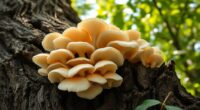
When identifying porcini and other boletes, pay close attention to pore surface features like color, size, and texture. Check how pores change when bruised—edible porcini usually don’t stain blue and may turn yellow or brown, while toxic variants often stain blue quickly. Observe flesh color changes and overall cap shape for clues. If you continue exploring, you’ll discover how to spot safe mushrooms and avoid dangerous look-alikes with confidence.

Get garden gear delivered free with Prime
- Fast, free delivery on millions of items
- Prime Video, Amazon Music and more included
- Member-only deals all year
Key Takeaways
- Edible porcini typically have pores that turn yellow or brown when bruised, unlike toxic boletes that stain blue.
- Pore size, color, and staining reactions are critical identification features for differentiating boletes.
- Color changes upon cutting or bruising help distinguish safe edible species from look-alikes and toxic varieties.
- Always verify morphological features with reputable guides and seek expert confirmation before consumption.
- Relying solely on visual cues can be risky; cautious foraging and expert consultation are essential for safety.

Boletes are a fascinating group of mushrooms known for their distinctive pores and color-changing properties. When you encounter these mushrooms in the wild, it’s essential to approach them with caution, especially if you’re considering eating them. Proper edibility assessment starts with thorough morphological identification. You need to carefully examine features such as cap shape, color, pore surface, stem characteristics, and any color changes when the mushroom is cut or bruised. These details help distinguish edible boletes like porcini from toxic or inedible look-alikes. Remember, relying solely on visual cues without proper knowledge can be dangerous, as some poisonous boletes closely resemble edible ones.
Careful morphological identification is essential before consuming wild boletes to avoid toxic look-alikes.
To accurately identify a bolete, start by observing the pore surface beneath the cap. Unlike gills, boletes have a spongy layer of pores that can vary in size, color, and texture. Noticing whether the pores are small or large, and whether they bruise or stain when pressed, provides vital clues. Many edible boletes, including porcini, have pores that turn yellow or brown when bruised, but some toxic varieties stain blue or exhibit other color changes. Paying attention to these staining reactions is essential in the identification process, as they can indicate toxicity. Always cross-reference your findings with reputable field guides or mushroom identification resources to confirm your identification.
In addition to observing physical features, you should perform a thorough edibility assessment. This involves noting any color changes in the flesh when cut, the odor, and the habitat where the mushroom was found. While morphological identification provides a solid foundation, it’s not foolproof; some inedible or toxic boletes look remarkably similar to edible ones. Hence, it’s wise to seek expert confirmation before consuming wild boletes. Remember, even experienced foragers sometimes mistake toxic mushrooms for edible ones, so err on the side of caution.
Color changes when the mushroom is bruised or cut are especially telling. For instance, porcini generally don’t stain blue and have a robust, nutty aroma, making them a favorite edible bolete. Conversely, some toxic boletes stain blue rapidly and have unpleasant odors. Always handle each specimen carefully, and if you’re uncertain about its identity or edibility, it’s best to avoid consuming it. When in doubt, consult local mycological societies or experts who can assist with accurate identification. Ultimately, a combination of meticulous morphological identification and a cautious edibility assessment guarantees you enjoy wild boletes safely and responsibly. Additionally, understanding the neurological and psychological aspects of mushroom foraging can help develop a more cautious approach, especially when dealing with mushrooms that have confusing features.
Frequently Asked Questions
Can Boletes Be Cultivated Commercially for Consumption?
Yes, boletes can be cultivated commercially, but you should be aware of cultivation challenges like maintaining the right symbiotic relationships with trees and controlling environmental conditions. These factors make large-scale production complex. While some efforts show promise, the commercial viability remains limited due to these hurdles. If you’re considering cultivation, be prepared for a long-term investment and ongoing research to optimize yields and quality.
How Do Boletes Differ From Other Edible Mushroom Families?
Imagine a world where fungi tell their secrets through spore color and pore surface. Boletes differ from other edible mushroom families because they have a spore color that ranges from olive to brown, and a sponge-like pore surface instead of gills. These features help you identify them easily and distinguish them from others like Agaricus or Amanita. Their unique structures make boletes a fascinating and flavorful choice.
Are There Any Boletes That Are Toxic Even When Cooked?
Yes, some boletes can be toxic even when cooked, so you should always be cautious. Toxicity concerns arise because certain species contain harmful compounds that may not break down fully with cooking. While many boletes are safe after cooking, avoid consuming any that stain red or blue, as these are often signs of toxicity. Always identify your mushrooms thoroughly to prevent health risks.
What Are the Best Methods for Preserving Boletes?
To preserve boletes, you should use drying techniques like air drying, oven drying at low heat, or using a food dehydrator to retain flavor and texture. Freezing methods work well too—clean and slice the mushrooms, then blanch briefly before placing them in airtight containers or freezer bags. Both methods help extend shelf life, making it easy to enjoy your boletes months later while maintaining their quality.
How Can I Distinguish Boletes From Look-Alike Species in the Wild?
Think of boletes as your mushroom allies, with spore color and cap texture as their secret signals. You can distinguish them by checking if the spore print is olive or brown, unlike look-alikes with different colors. Feel the cap—boletes usually have a firm, fleshy texture, whereas look-alikes might be slimy or brittle. Observe pores closely; true boletes have tiny, sponge-like pores, not gills or large pores.
Conclusion
Did you know that over 1,000 boletes species exist worldwide? By paying close attention to staining, pore color, and other identifying features, you can enjoy these fungi safely. Always remember, misidentifying a bolete can lead to serious health issues, so take your time and double-check. With proper knowledge, you’ll confidently explore the fascinating world of porcini and boletes, savoring their delicious flavors while staying safe. Happy foraging!
Halloween Picks
halloween
As an affiliate, we earn on qualifying purchases.