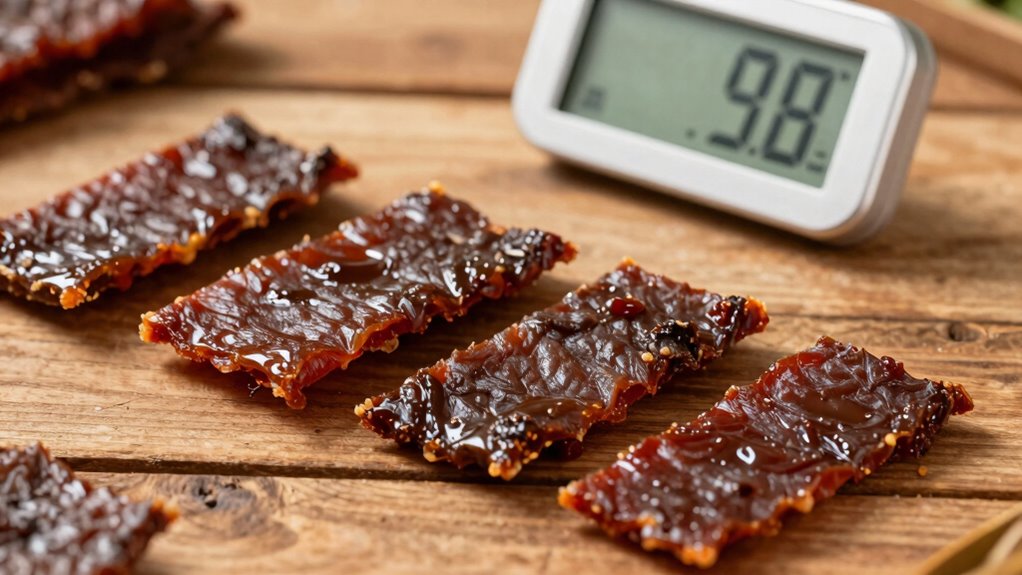

To make safe jerky, you need to reach specific internal temperatures: 160°F for beef and pork, and 165°F for poultry. Using a reliable thermometer helps you control the heat accurately, ensuring bacteria are killed. Proper heating also locks in flavor and prevents tough or bland results. Achieving these temperatures is key to safe, flavorful jerky with a long shelf life. Keep going if you want to master the exact numbers and best practices for perfect jerky safety.

Get garden gear delivered free with Prime
- Fast, free delivery on millions of items
- Prime Video, Amazon Music and more included
- Member-only deals all year
Key Takeaways
- Cook beef, pork, and other meats to an internal temperature of 160°F (71°C).
- Ensure poultry reaches a safe internal temperature of 165°F (74°C).
- Using a reliable thermometer guarantees accurate temperature control during jerky preparation.
- Properly cooked jerky must be dried thoroughly to inhibit mold and bacterial growth.
- Maintaining recommended temperatures preserves flavor, texture, and extends shelf life.

When making jerky at home, ensuring it reaches the right safety temperatures is essential to prevent foodborne illnesses. But hitting those temperatures isn’t just about safety—it also plays a crucial role in flavor preservation and shelf stability. By cooking your jerky to the proper internal temperature, you can lock in flavors and keep your snack safe to store for weeks or even months without refrigeration.
The key temperature for safely preparing jerky is 160°F (71°C) for beef, pork, or other meats, and 165°F (74°C) if you’re using poultry. Reaching these temperatures kills off harmful bacteria like Salmonella or E. coli, which can be present in raw meats. Using a reliable food thermometer** ensures you’re cooking your jerky to the precise temperature needed, giving you peace of mind about safety and quality. Maintaining proper cooking temperatures is also essential for ensuring the meat’s texture remains optimal. Proper temperature control during preparation is critical for food safety** and quality.
Maintaining the correct temperature during the drying process also helps preserve the flavor of your jerky. Overcooking or undercooking can alter the taste, making it either too tough or too soft. When you cook it to the right internal temperature before drying, you retain the natural flavors and prevent the meat from becoming overly dry or bland. Proper temperature control ensures the spices and marinades stay intact, giving your jerky that robust, savory taste you’re aiming for.
Shelf stability is another critical aspect influenced by proper temperature control. Once your jerky reaches the recommended internal temperature, it can be dried thoroughly to remove moisture, which is vital for keeping bacteria at bay. When the moisture content is low and the temperature is sufficient, your jerky becomes less hospitable to mold and bacteria, extending its shelf life. This means you can store it safely in airtight containers without refrigeration, making it an ideal snack for camping, hiking, or long-term pantry storage.
In addition, understanding the safe cooking temperatures for different meats is crucial in ensuring your jerky remains both tasty and safe. In short, paying close attention to safety temperatures during jerky preparation isn’t just about avoiding illness; it’s about preserving flavor and ensuring your jerky stays good for weeks or months. Using a thermometer, maintaining the correct temperature, and drying it thoroughly are the best ways to achieve this balance. When you master these steps, you’ll enjoy flavorful, safe jerky that stays fresh and delicious for a long time.
digital food thermometer for jerky
As an affiliate, we earn on qualifying purchases.
As an affiliate, we earn on qualifying purchases.
Frequently Asked Questions
Can Homemade Jerky Be Safely Dried Without a Thermometer?
You can dry homemade jerky safely without a thermometer if you follow proper meat preservation and food safety standards. Start by preheating your oven or dehydrator to at least 160°F (71°C) to kill bacteria. Make certain the jerky reaches this temperature during drying, and check for proper texture and dryness. While a thermometer is ideal, careful observation and following safety guidelines help prevent foodborne illnesses and ensure your jerky is safe to eat.
How Long Can Jerky Be Stored Safely at Room Temperature?
You can typically store jerky at room temperature for about 1 to 2 months if kept in a cool, dry place. An interesting statistic shows that jerky stored in 60-70% humidity can last longer without spoilage. Proper storage humidity is essential, as it helps preserve jerky’s flavor variations and prevents mold growth. Keep it in an airtight container, and enjoy your jerky safely within this period.
Does the Thickness of Meat Affect the Safety Temperature?
Yes, meat thickness affects the safety temperature because thicker pieces need higher temperatures to guarantee thorough drying and kill bacteria. When making jerky, you should adjust your oven or dehydrator to reach at least 160°F for thicker cuts, while thinner slices can be safely dried at slightly lower temperatures. Properly monitoring meat thickness helps maintain food safety and reduces the risk of contamination in your jerky.
Are There Specific Temperature Guidelines for Different Jerky Flavors?
Think of flavor-specific guidelines as spices in a stew—each adds a unique twist. While the core safety temperature remains steady at 160°F for beef jerky, temperature variations might be needed for different flavors like turkey or game meats. Always follow recommended guidelines to guarantee safety without sacrificing taste. Adjusting temperatures for flavor profiles is key, but safety standards stay firm to keep your jerky both delicious and safe.
How Can I Tell if Jerky Is Safe to Eat Without a Thermometer?
You can tell if jerky is safe to eat by checking its texture and color. Proper meat curing techniques and consistent drying usually guarantee safety, even without a thermometer. Look for jerky that’s dry, firm, and has a uniform color, with no signs of mold or sliminess. Remember, different jerky flavor variations might affect appearance, but safety relies on thorough dehydration and proper curing practices. When in doubt, cook it longer.
meat internal temperature thermometer
As an affiliate, we earn on qualifying purchases.
As an affiliate, we earn on qualifying purchases.
Conclusion
To keep your jerky safe, always guarantee it reaches the recommended internal temperature of 160°F. For example, imagine preparing homemade jerky and skipping this step—you’re risking foodborne illness. By monitoring the temperature carefully, you can enjoy your snack without worry. Remember, the right safety temperatures aren’t just numbers—they’re your best defense against harmful bacteria. Stick to these guidelines, and your jerky will be both delicious and safe to eat every time.
jerky drying and curing thermometer
As an affiliate, we earn on qualifying purchases.
As an affiliate, we earn on qualifying purchases.
As an affiliate, we earn on qualifying purchases.
Halloween Picks
halloween
As an affiliate, we earn on qualifying purchases.