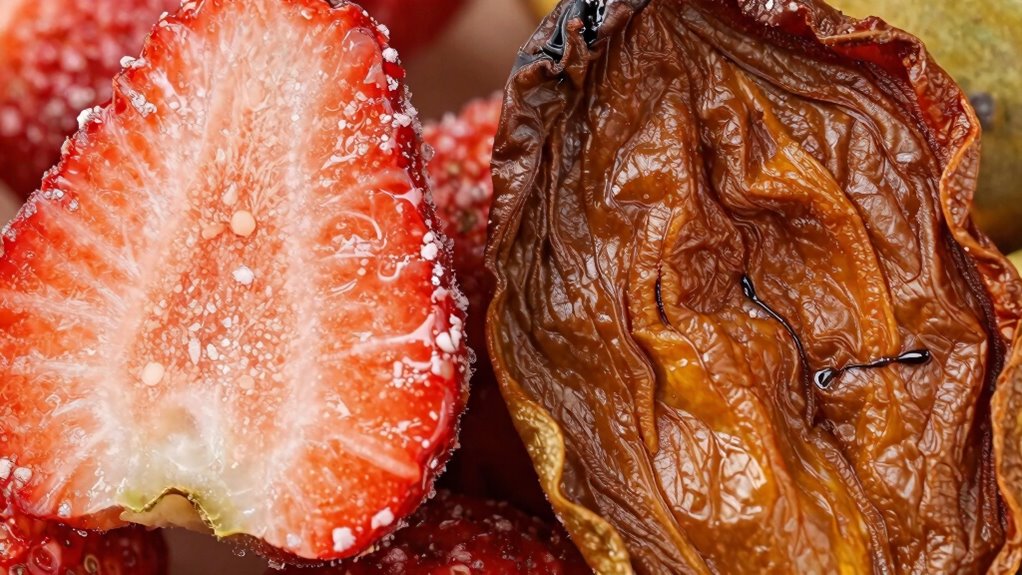

Freeze drying removes moisture through sublimation at low temperatures, preserving the original structure and keeping foods light, crispy, and crunchy, which results in a longer shelf life—up to 25 years. Dehydrating uses heat to eliminate moisture, causing foods to become chewy or leathery, with a shorter shelf life of 1 to 5 years. These different processes explain why textures and longevity vary so much—stick with the details to get the full picture.
Key Takeaways
- Freeze drying preserves original texture and moisture, resulting in a light, crispy product, unlike the leathery texture of dehydrated foods.
- The sublimation process in freeze drying removes nearly all moisture, significantly extending shelf life compared to dehydration.
- Dehydration uses heat, which can degrade nutrients and cause slight flavor and texture changes, reducing shelf stability.
- Freeze-dried foods are less prone to microbial growth due to minimal residual moisture, enhancing long-term storage potential.
- Dehydrated foods have higher residual moisture content, limiting shelf life and increasing spoilage risk over time.
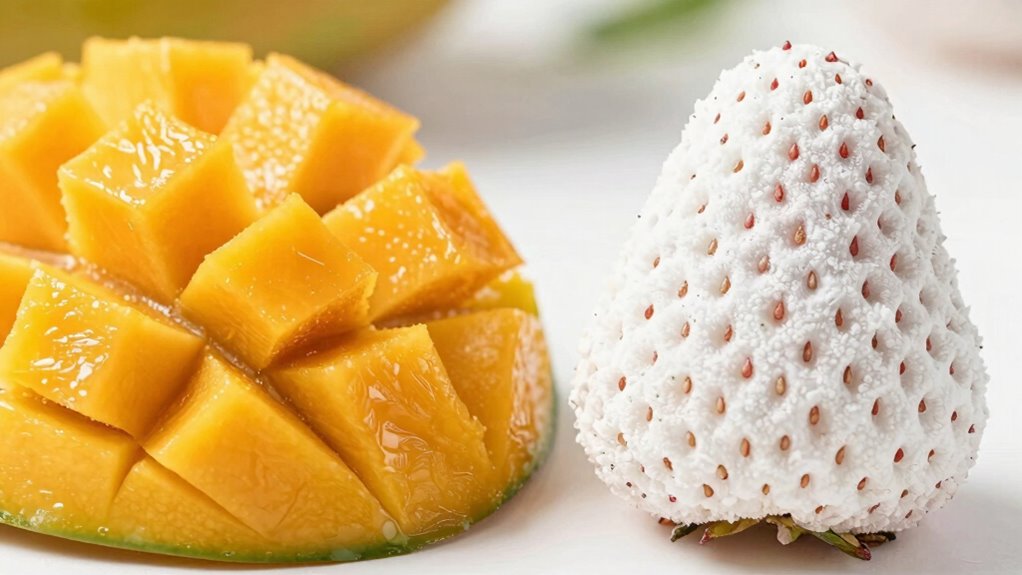
When it comes to preserving food, freeze drying and dehydrating are two popular methods, but they work very differently. Understanding these differences helps you choose the right technique based on what matters most—whether it’s flavor, nutrients, or shelf life. Freeze drying involves freezing the food first, then reducing the surrounding pressure, which causes the frozen water in the food to sublimate directly from ice to vapor. This process is gentle and preserves the food’s original structure, flavor, and nutrients more effectively than dehydration. As a result, freeze-dried foods tend to retain much of their initial flavor and nutrient content, making them ideal for long-term storage and quick rehydration.
Dehydrating, on the other hand, uses heat to remove moisture from food. By exposing it to low humidity and controlled heat, you effectively dry out the food, but this process can slightly alter the flavor and degrade some nutrients over time. The heat involved in dehydration can cause volatile flavor compounds to evaporate and may break down sensitive nutrients, such as vitamin C and certain antioxidants. So, while dehydrated foods are lightweight, shelf-stable, and easy to prepare, they often lose some of their original flavor nuances and nutritional potency compared to freeze-dried options.
When considering flavor preservation, freeze drying generally wins. Because it maintains the structure and moisture content more faithfully, the flavors stay closer to what they were when fresh. You’ll notice that freeze-dried fruits taste fresher, more vibrant, and closer to their original form. Dehydrated foods might develop a more concentrated flavor as moisture leaves, but they can also taste less fresh or slightly different from their original state. Nutrient retention is another key factor. Freeze drying preserves most vitamins, minerals, and enzymes because it exposes food to minimal heat, whereas dehydration’s heat can cause some nutrient loss.
Shelf life is another critical difference. Freeze-dried foods last longer—sometimes up to 25 years—because the removal of moisture prevents microbial growth and spoilage. Dehydrated foods, while still shelf-stable, usually last about 1 to 5 years, depending on storage conditions. The texture also varies significantly: freeze-dried foods are light, airy, and crispy, making them ideal for snacks or rehydration in recipes. Dehydrated foods tend to be chewy or leathery, which might be preferred for certain uses but less so if you want a fresh-like bite. Additionally, freeze drying involves a complex process, which requires specialized equipment to achieve such long shelf life and texture preservation.
As an affiliate, we earn on qualifying purchases.
Frequently Asked Questions
How Does Freeze Drying Affect Nutrient Retention Compared to Dehydration?
Freeze drying considerably benefits nutrient preservation and vitamin retention compared to dehydration. It removes moisture through sublimation, which minimizes heat exposure and nutrient loss. This process helps you retain more vitamins and antioxidants, ensuring your food stays more nutritious and fresh. Dehydration, on the other hand, often involves heat that can degrade sensitive nutrients, leading to lower nutrient quality over time. So, freeze drying keeps your food’s nutrients more intact.
Is Freeze Drying Suitable for All Food Types?
Freeze drying isn’t suitable for all food types. You should consider the food’s structure and moisture content for effective preservation. Fruits and herbs work well because they maintain flavor and nutrients, but foods with high fat or oil content, like cheese or certain meats, may not freeze dry effectively. When comparing textures, freeze-dried foods stay crisp and light, making them ideal for long-term storage and quick rehydration.
What Equipment Is Required for Home Freeze Drying?
Like Da Vinci’s precision, your home freeze drying setup requires specific tools. You’ll need a dedicated home freeze dryer, which comes in various options suited for different batch sizes. These machines typically include a vacuum chamber, a refrigeration system, and a control panel. Some freeze dryer options are compact and designed for home use, making them accessible for food preservation enthusiasts. Investing in quality equipment guarantees efficient freeze drying at home.
How Do Costs Compare Between Freeze Drying and Dehydrating?
The cost comparison shows freeze drying usually has a higher equipment investment, often costing thousands of dollars, while dehydrating is more budget-friendly with simple appliances or even oven use. Operating costs for freeze drying can be higher due to energy needs, but it offers longer shelf life and better texture. Dehydrating saves money upfront but may require more frequent replacements or adjustments for ideal results over time.
Can Freeze-Dried Foods Be Rehydrated Better Than Dehydrated Ones?
You might think freeze-dried foods rehydrate better, and you’re right. Thanks to advanced rehydration techniques, freeze-dried items often restore their original Texture preservation more effectively than dehydrated foods. When you rehydrate, the porous structure of freeze-dried foods absorbs water quickly, maintaining the food’s integrity and flavor. This makes them ideal for recipes or meals where texture matters, giving you a more satisfying and authentic eating experience.
food dehydrator for fruits and vegetables
As an affiliate, we earn on qualifying purchases.
As an affiliate, we earn on qualifying purchases.
Conclusion
So, when choosing between freeze drying and dehydrating, consider what matters most to you—whether it’s texture, shelf life, or ease. Freeze drying preserves freshness and shape, while dehydrating offers simplicity and cost-efficiency. Each process has its strengths and trade-offs, so weigh your needs carefully. Whether you prioritize flavor, longevity, or convenience, understanding these differences helps you make smarter food preservation choices and enjoy your favorite foods longer and better.
long-term food storage freeze dried
As an affiliate, we earn on qualifying purchases.
As an affiliate, we earn on qualifying purchases.
As an affiliate, we earn on qualifying purchases.