To track batches, locations, and dates like a scientist, use a precise labeling system with clear, durable labels that include purchase or prep dates, expiration info, batch numbers, and storage conditions. Organize your items systematically to facilitate quick inventory checks and stock rotation. Regularly update labels when adding or using items, and make certain labels resist moisture or spills. Keep refining your system to maximize efficiency and food safety, and you’ll uncover more useful strategies along the way.
Key Takeaways
- Use standardized labels that include batch numbers, storage locations, and critical dates to ensure precise tracking.
- Implement color-coded or symbol-based labels for quick identification of storage conditions and expiration status.
- Maintain an organized inventory system that records batch info, storage areas, and dates for efficient audits and recalls.
- Regularly update labels with new batch info, location changes, and expiration dates to keep tracking accurate.
- Employ digital or barcode systems to scan and log batch, location, and date data for enhanced scientific precision.
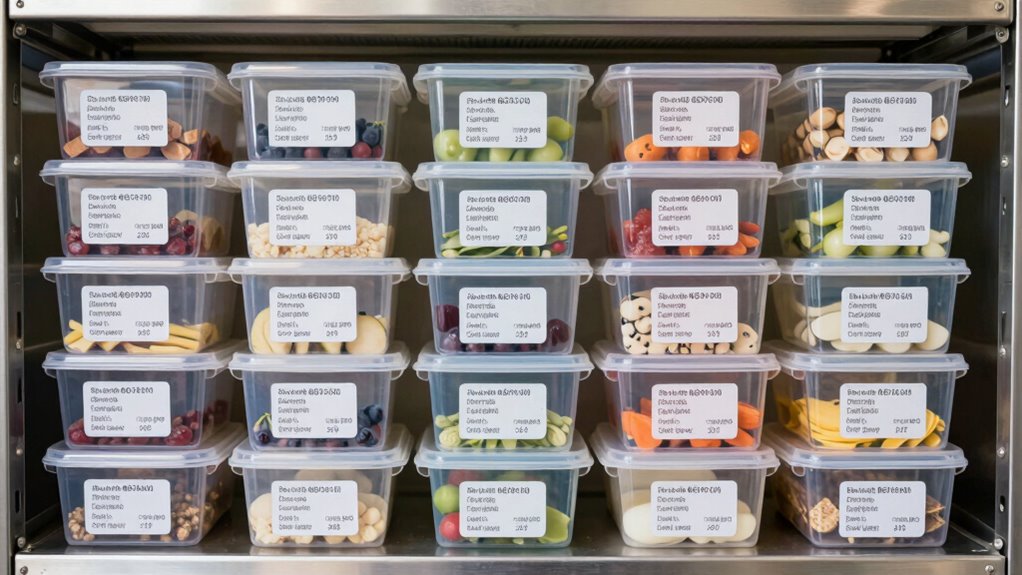
A well-designed food storage labeling system can considerably reduce waste and guarantee food safety in your home or business. By clearly marking expiration dates, you make it easier to identify which items need to be used first, preventing spoilage and unnecessary disposal. Accurate labeling ensures you stay on top of inventory management, so you always know what’s available and what’s nearing its expiry. This systematic approach helps you avoid overstocking, reduces clutter, and streamlines your food storage process. Implementing consistent labeling practices makes your system more reliable and easier to maintain over time.
Effective labeling reduces waste, enhances food safety, and streamlines inventory management.
When you implement a labeling system, you take control of your inventory. Each container or package gets a label that includes the purchase or preparation date, expiration date, and even batch information if necessary. This way, you’re not just guessing how old something is — you have precise data at your fingertips. As a result, you’re less likely to forget about items lurking at the back of the fridge or pantry. Plus, when you’re managing multiple batches or varieties, clear labels help differentiate between them, making stock rotation straightforward and effective.
Tracking expiration dates becomes second nature when you consistently label your food. You can set reminders or prioritize the use of items approaching their expiry, minimizing waste. When you’re cooking or restocking, knowing which foods are closest to their expiration date enables you to plan meals accordingly, reducing the chance of throwing away perfectly edible food. This level of organization not only saves money but also promotes safer eating practices, especially when dealing with perishable items.
Your labeling system can extend beyond just dates. You might include storage conditions, batch numbers, or special handling instructions. For instance, certain items may require refrigeration or should be kept away from direct sunlight. Incorporating this information into your labels keeps everything consistent and accessible, ensuring that everyone handling the food knows exactly what to do. It also simplifies inventory audits, allowing you to quickly verify stock levels and expiration statuses without rummaging through cluttered shelves or drawers.
Frequently Asked Questions
How Can I Automate My Food Storage Labeling Process?
You can automate your food storage labeling process by using digital labeling systems combined with barcode scanning. Implement barcode labels on your items, then use a scanner or mobile app to quickly input batch, location, and date information. This streamlines data entry, reduces errors, and speeds up tracking. With automation, you’ll efficiently manage your storage, keep everything organized, and easily update labels as needed, saving time and improving accuracy.
What Are the Best Materials for Durable Food Labels?
You should choose labels made from waterproof materials like laminated paper or vinyl that resist moisture and spills. Use a strong label adhesive to guarantee they stick securely over time, even in humid or refrigerated environments. These durable labels prevent smudging and peeling, making your tracking system more reliable. With waterproof materials and reliable adhesives, your labels stay intact, helping you manage food batches, locations, and dates more effectively.
How Do I Handle Label Updates for Expired Batches?
When handling label updates for expired batches, you should first remove the outdated label using a label scraper or gentle adhesive remover. Then, update the expiration date tracking and reapply a new label using clear, durable materials like waterproof labels. Verify the new label is securely attached and clearly visible. This method maintains accurate batch tracking and prevents confusion, keeping your storage system precise and organized.
Can This System Be Integrated With Inventory Management Software?
Imagine your food storage system as a finely woven tapestry; integrating it with digital tracking and software creates a seamless masterpiece. Yes, this system can be integrated with inventory management software, allowing you to automate batch tracking, locations, and expiry dates. With smooth software integration, you’ll streamline operations, reduce errors, and keep everything in harmony—making your food management as effortless as a gentle breeze guiding your workflow.
What Are Common Mistakes to Avoid in Food Labeling?
You should avoid common mistakes like neglecting to update expiration dates accurately, which can lead to spoiled food. Always double-check allergen labeling to prevent cross-contact issues and guarantee clarity for consumers. Don’t forget to label batches clearly and consistently, so you can track issues easily. Overlooking these details risks food safety violations and customer health problems, so stay vigilant about precise expiration dates and allergen information in your labeling process.
Conclusion
By mastering this food storage labeling system, you’ll turn yourself into a culinary scientist with superpowers—tracking every batch, location, and date like a food detective on a mission. Soon, you’ll be able to spot expired items from a mile away and keep your kitchen so organized, even Marie Kondo would be jealous. Say goodbye to mystery leftovers and hello to a kitchen so efficient, it practically runs itself. Get ready to conquer food chaos like a true labeling legend!