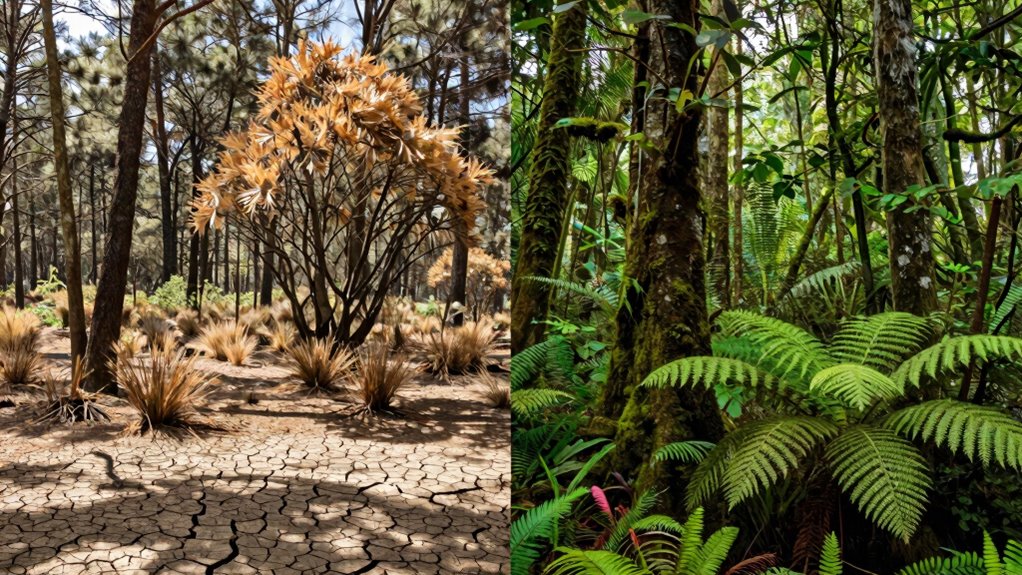

In dry forests, you’ll find plants and animals adapted to water scarcity, with trees shedding leaves during dry seasons and animals often burrowing or migrating for food. Food there is seasonal, based on fruits, seeds, and roots available at specific times. In contrast, wet forests have dense, lush vegetation year-round, supporting diverse food webs with constant food supplies. If you keep exploring, you’ll discover how these ecosystems shape their unique life strategies.

Get garden gear delivered free — and shop member deals
- Fast, free delivery on millions of items
- Access to Prime Big Deal Days deals on October 6–7
- Prime Video, Amazon Music and more included
Key Takeaways
- Dry forests have seasonal food sources like fruits, seeds, and roots, leading to cyclical food availability.
- Wet forests offer constant, abundant resources supporting diverse and complex food webs.
- Plants in dry forests adapt by shedding leaves to conserve water, affecting food production timing.
- In wet forests, rapid plant growth ensures a steady supply of food, reducing the need for animal migration.
- Animals in dry forests develop specialized feeding strategies to exploit fleeting food resources.

Dry forests and wet forests are two distinct types of ecosystems that differ primarily in climate and vegetation. As you explore these environments, you’ll notice how their unique conditions shape not only the plants and animals that thrive there but also the food patterns that emerge within them. Dry forests, often found in regions with seasonal rainfall, exhibit a landscape characterized by drought-resistant trees, shrubs, and grasses. These plants have adapted to survive long dry periods, and their resilience makes them essential in supporting biodiversity hotspots—areas rich in species found nowhere else. The flora and fauna of dry forests are often specialized, with many species evolving traits to cope with water scarcity. Because of this, dry forests tend to have a more limited diversity compared to their wet counterparts but still host a surprising array of life. Their climate adaptability is remarkable; many plants shed leaves during dry seasons to conserve water, and animals develop behaviors such as burrowing or migration to survive droughts. This resilience influences food patterns, as many animals rely on seasonal fruits, seeds, and roots that become available during specific times of the year, creating a cyclical food supply. Additionally, the seasonal availability of resources often leads to periodic food abundance, which animals must capitalize on quickly before it diminishes. This pattern emphasizes the importance of timing in foraging and resource utilization in dry forests. Moreover, animals often develop specialized feeding strategies to take advantage of the fluctuating food sources throughout the year. Understanding these adaptations to water scarcity highlights the intricate ways in which species survive in such challenging environments.
In contrast, wet forests, especially rainforests, flourish in consistently moist conditions, with dense vegetation and towering trees forming multilayered canopies. The climate here supports an incredible level of biodiversity, making these forests some of the planet’s most crucial biodiversity hotspots. Because of the stable, humid environment, plants grow rapidly and in abundance, providing a continuous supply of food sources for countless animal species. The lush vegetation supports complex food webs, with many species thriving on fruits, leaves, insects, and small animals. The climate adaptability of wet forests is less about drought resistance and more about managing excess moisture, which fosters an environment of rapid plant growth and high species diversity. The abundant food supply supports animals that often have specialized diets, and the constant availability of resources reduces the need for long migrations or hibernation, unlike in dry forests. This constant resource availability contributes greatly to the high species diversity observed in these ecosystems.
As an affiliate, we earn on qualifying purchases.
Frequently Asked Questions
How Do Climate Changes Affect Both Forest Types Differently?
Climate changes impact dry and wet forests differently by challenging their climate resilience. In dry forests, increased droughts threaten plant survival and cause biodiversity shifts, reducing species diversity. Wet forests face altered rainfall patterns, risking floods and habitat loss. You’ll notice these changes lead to biodiversity shifts, with some species thriving and others disappearing. Understanding these impacts helps you appreciate how climate resilience varies, emphasizing the importance of tailored conservation efforts for each forest type.
What Are the Main Threats to Dry and Wet Forests?
Like a house on fire, habitat destruction threatens both dry and wet forests. You see, biodiversity loss accelerates as humans clear land for agriculture, logging, and urbanization. These activities endanger species and disrupt delicate ecosystems. Forest conservation efforts are essential to prevent this destruction. Protecting these forests helps maintain biodiversity, ensuring the survival of countless species and preserving the critical ecological balance that sustains life on Earth.
How Do Animal Adaptations Differ Between Dry and Wet Forests?
You’ll notice animal adaptations differ greatly between dry and wet forests. In dry forests, animals develop drought-resistant adaptations, like water-conserving behaviors or burrowing to escape heat. Conversely, wet forest animals often rely on flood-tolerant strategies, such as swimming or nesting above water. These adaptations help animals survive extreme conditions, ensuring they thrive whether facing prolonged droughts or seasonal floods in their respective environments.
Are There Any Endangered Species Unique to Each Forest Type?
You’ll find some endangered species unique to each forest type, like the dry forest’s endemic Central American river turtle and the wet forest’s endemic jaguar. About 25% of these species are threatened, highlighting their fragility. Conservation efforts are essential to protect these unique animals, ensuring they don’t become lost forever. Supporting habitat preservation directly benefits these endangered, endemic species, safeguarding their important roles in each ecosystem.
How Do Human Activities Impact These Forests’ Ecosystems?
Human activities profoundly impact these forests’ ecosystems through deforestation, agriculture, and urbanization, disrupting habitats and threatening species. You should recognize that socioeconomic impacts, like local livelihoods and economic development, often drive these activities. Conservation strategies, such as protected areas and sustainable practices, are essential to preserve ecological balance. By supporting these efforts, you help maintain biodiversity and guarantee the long-term health of both dry and wet forests.
As an affiliate, we earn on qualifying purchases.
Conclusion
As you walk through these contrasting worlds, it’s as if the dry forest’s cracked earth whispers secrets of resilience, while the wet forest’s lush canopy drips with abundance. Coincidentally, both ecosystems thrive in their unique dances — one with sparse roots clutching for life, the other with vibrant leaves reaching for the sky. You realize that in nature’s silent symphony, each forest’s food pattern tells a story of survival, beautifully intertwined yet worlds apart.
As an affiliate, we earn on qualifying purchases.
As an affiliate, we earn on qualifying purchases.
Fall yard work Picks
leaf blowers
As an affiliate, we earn on qualifying purchases.