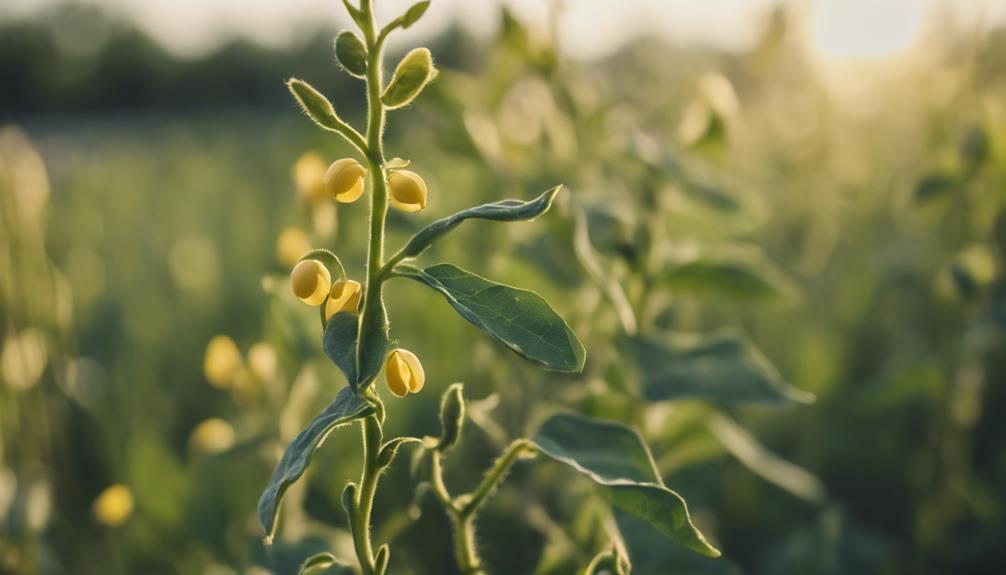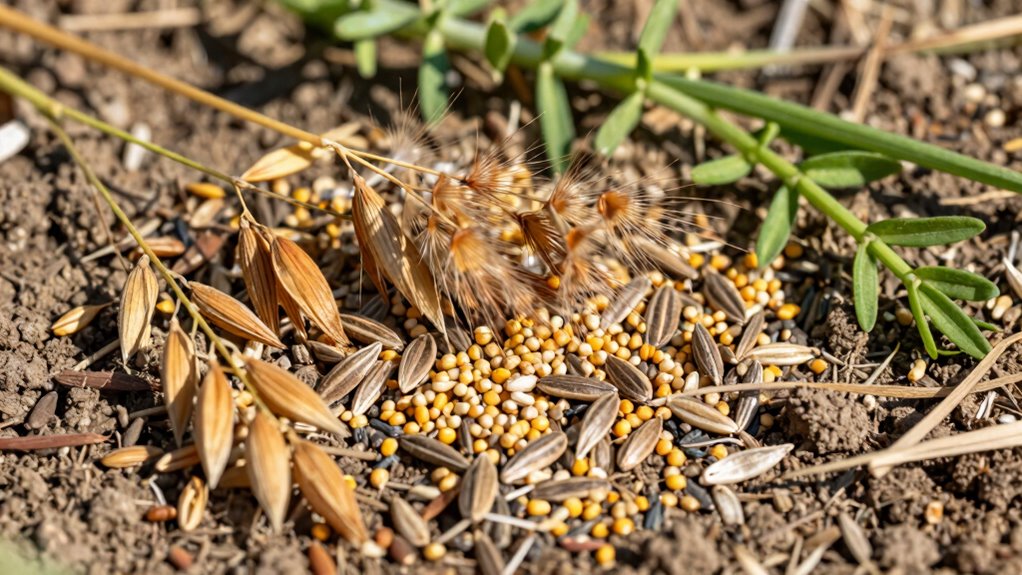

Wild seeds and grains are often overlooked but are essential for ecosystem health and biodiversity. By understanding how seeds disperse—from animals, wind, or water—you can discover rich foraging spots. Processing wild grains connects to traditional techniques and boosts nutrition. Recognizing these natural methods helps you find more sustainable food sources and supports ecological balance. If you’re curious about uncovering nature’s hidden treasures, you’ll find plenty more to explore beyond the surface.

Get garden gear delivered free with Prime
- Fast, free delivery on millions of items
- Prime Video, Amazon Music and more included
- Member-only deals all year
Key Takeaways
- Wild seeds and grains play a crucial role in biodiversity and ecosystem sustainability through natural dispersal mechanisms.
- Recognizing seed dispersal patterns helps locate and access untapped wild grain habitats for foraging.
- Many wild grains rely on animals, wind, or water for dispersal, influencing their distribution and abundance.
- Proper processing of wild grains enhances flavor, digestibility, and nutritional value, preserving traditional and sustainable practices.
- Understanding seed dispersal and processing techniques fosters ecological awareness and supports indigenous foraging knowledge.
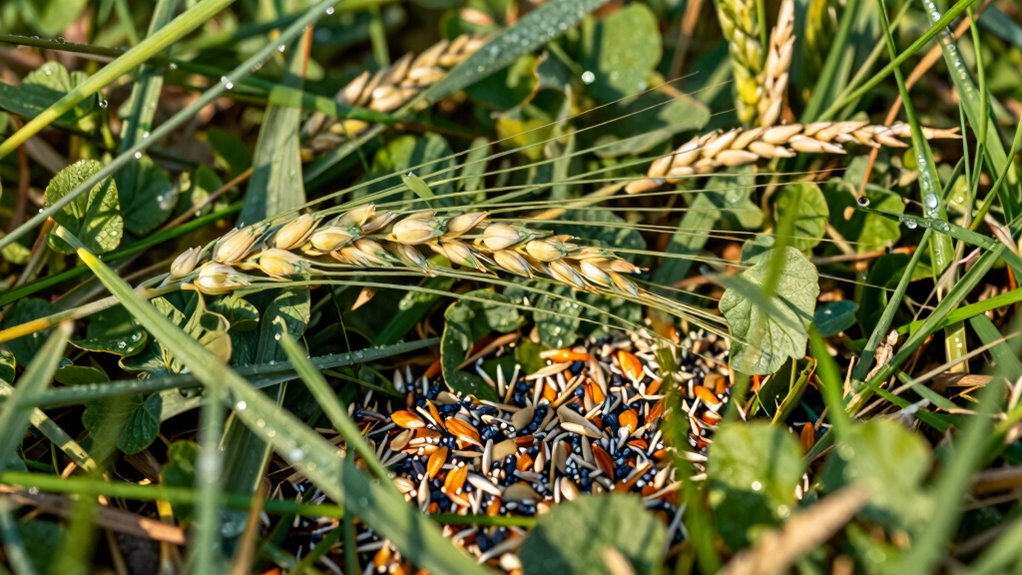
Have you ever wondered where the wild seeds and grains that nourish our ecosystems originate? It’s a fascinating process called seed dispersal, where plants rely on nature’s ingenuity to spread their offspring far and wide. Without this natural system, many of the wild grains and seeds we seek in foraging wouldn’t reach new locations to grow and sustain the environment. As seeds hitch rides on animals, wind, or water, they travel across landscapes, ensuring plant diversity and forest regeneration. This process is essential not just for plant survival but also for maintaining healthy ecosystems that support countless species, including us. Understanding the different dispersal mechanisms can help you better recognize where wild grains are likely to grow naturally.
When you start foraging for wild grains and seeds, understanding seed dispersal helps you appreciate the journey each seed has taken to arrive at your collection spot. Some seeds are designed to cling to animal fur or feathers, hitching a ride as their furry or feathery carriers move about. Others are lightweight and fluffy, carried effortlessly by the wind to new soils. Water can also play a role, as seeds float along rivers or coastlines, spreading far from their original source. Recognizing these dispersal mechanisms can enhance your ability to identify where wild grains and seeds thrive naturally, guiding you toward rich, untapped foraging locations. Additionally, many plants depend on animal dispersers to reach new habitats, highlighting the interconnectedness of ecosystems. This cooperation between plants and animals is a crucial aspect of ecosystem health and biodiversity.
Once you gather your wild grains, grain processing becomes the next step. This involves cleaning, threshing, and sometimes soaking or grinding the seeds to prepare them for consumption. Unlike cultivated grains, wild grains often come with husks, chaff, or other plant debris that need removal. Grain processing is essential because it makes the seeds more accessible and digestible, unlocking their nutritional potential. As you process wild grains, you connect with traditional techniques used by indigenous communities and early foragers, preserving a vital link to nature’s cycles. You’ll find that the effort involved in processing wild grains is well worth it, as it allows you to enjoy flavors and nutrients often absent from commercial varieties.
wild grain cleaning and processing tools
As an affiliate, we earn on qualifying purchases.
As an affiliate, we earn on qualifying purchases.
Frequently Asked Questions
How Do I Identify Edible Wild Seeds Safely?
To identify edible wild seeds safely, start by observing seed dispersal patterns and plant growth habits. Look for seeds that grow on healthy, vigorous plants in areas free from pollution or pesticides. Use a reliable field guide, and test a small amount first to check for reactions. Always double-check species with expert resources or local foraging groups, as misidentification can be dangerous despite the natural growth environment.
Are Wild Grains More Nutritious Than Cultivated Ones?
Wild grain varieties often pack more nutrients than cultivated ones, making them nature’s hidden treasure chest. While cultivated grains are bred for higher yields, wild grains tend to have richer nutritional comparisons, offering higher levels of vitamins, minerals, and fiber. Think of wild grains as nature’s original superfoods, providing more nutritional bang for your buck. So, if you’re seeking nutrient density, wild grains could be the more wholesome choice.
What Tools Are Best for Harvesting Wild Seeds?
You should use tools like a small sickle, scissors, or a sturdy basket for harvesting wild seeds. Focus on harvesting techniques that minimize seed damage, and look for seed maturity indicators such as color change, dryness, and fullness. When seeds are fully mature, they easily detach from the plant. Gently cut or shake the seed heads, ensuring you’re collecting only mature seeds to maximize your foraging success.
How Do I Store Wild Seeds to Prevent Spoilage?
Think of seed preservation as guarding tiny treasures. Store wild seeds in airtight containers, like a vault protecting gold, to prevent spoilage. Keep them in a cool, dark place—think of a secret cellar—where temperature and light stay steady. Use proper storage techniques, like drying thoroughly before sealing, to make certain they stay viable. This way, your seeds remain fresh, ready for planting when the time comes, like a future harvest waiting patiently.
Are There Legal Restrictions on Foraging Wild Grains?
Yes, there are legal regulations and permission requirements when foraging wild grains. You should always check local laws, as some areas restrict foraging to protect native ecosystems. In public lands, you may need permits or permissions from authorities, and private landowners’ consent is essential. Ignoring these rules can lead to fines or legal trouble. Always research specific regulations in your region before you start foraging for wild grains.
foraging seed dispersal guidebook
As an affiliate, we earn on qualifying purchases.
As an affiliate, we earn on qualifying purchases.
Conclusion
As you gather wild seeds and grains, remember they’re more than just food—they’re the quiet guardians of tradition and resilience. Like hidden treasures buried beneath the soil, they symbolize nature’s quiet strength and the promise of renewal. Each seed you collect is a small piece of the earth’s story, waiting for you to nurture it back to life. Embrace this journey, and let these overlooked treasures remind you of nature’s timeless cycle of growth and rebirth.
As an affiliate, we earn on qualifying purchases.
indigenous traditional grain processing kit
As an affiliate, we earn on qualifying purchases.
As an affiliate, we earn on qualifying purchases.
Columbus Day / Indigenous Peoples' Day Picks
long weekend sales
As an affiliate, we earn on qualifying purchases.