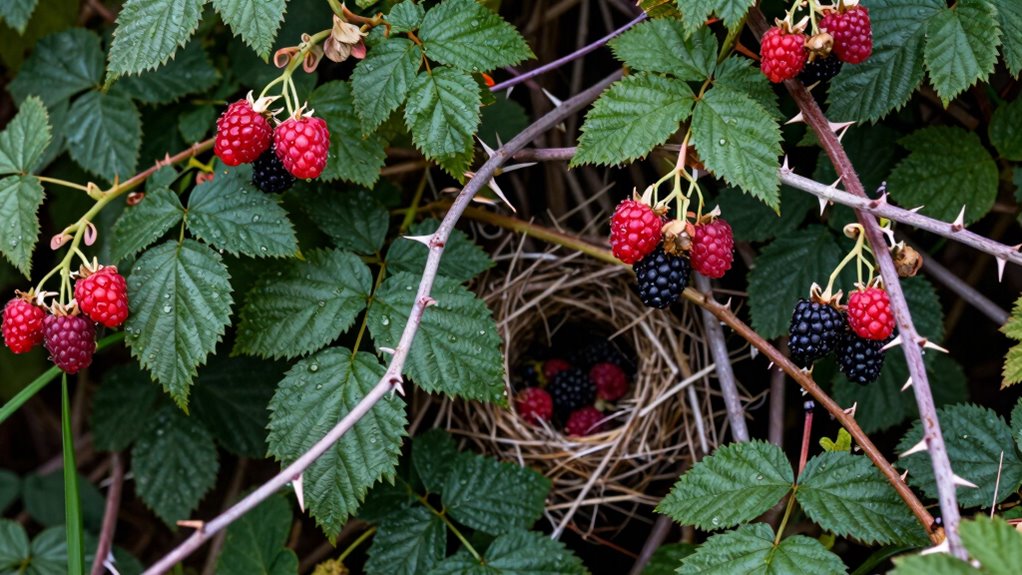

Brambles play a crucial role in supporting local ecosystems by offering food, shelter, and seasonal clues. You’ll find their dense foliage providing safe refuge for birds and small mammals, especially during harsh weather. Their berries ripen at different times, serving as energy sources and helping spread seeds. Observing brambles can reveal changes in the environment and wildlife patterns. If you want to discover more about their surprising ecological value, keep exploring how these plants shape nature’s balance.

Get garden gear delivered free — and shop member deals
- Fast, free delivery on millions of items
- Access to Prime Big Deal Days deals on October 6–7
- Prime Video, Amazon Music and more included
Key Takeaways
- Brambles provide essential shelter and nesting sites for various wildlife, supporting biodiversity and ecosystem health.
- Their berries serve as vital food sources for animals, especially during autumn and winter.
- The seasonal presence and ripening of bramble fruits act as indicators of environmental and ecological changes.
- Brambles aid in seed dispersal, promoting plant propagation and ecosystem stability.
- Dense foliage offers protection from predators and harsh weather, ensuring wildlife survival year-round.
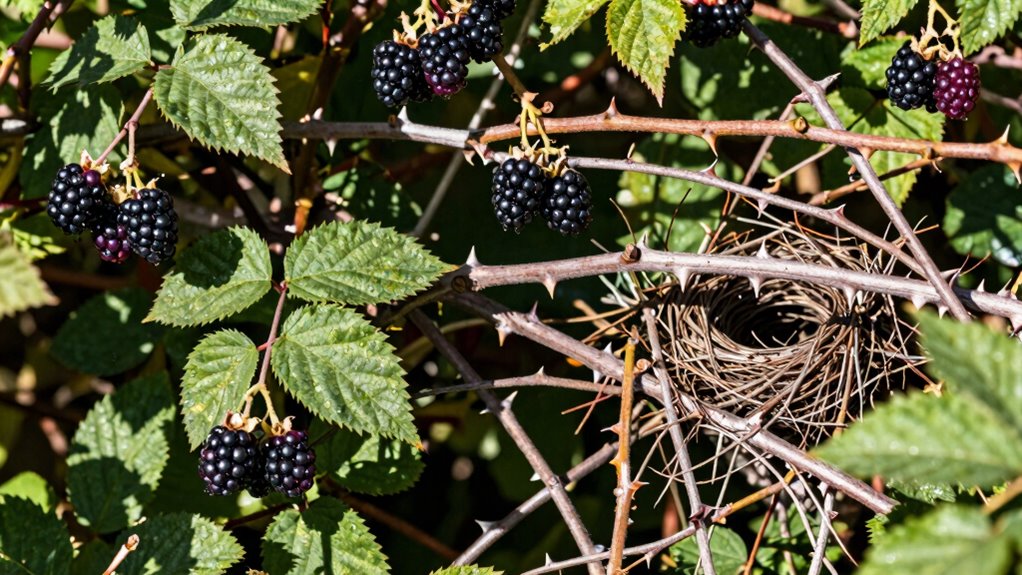
Have you ever overlooked brambles as just pesky thorns? These tangled thickets might seem like nuisances at first glance, but they actually harbor a wealth of hidden value. Beyond their prickly exterior, brambles play an essential role in supporting ecosystems and providing necessary wildlife habitats. When you take a closer look, you’ll see that they contribute considerably to biodiversity and environmental health. Their dense foliage offers shelter and nesting sites for numerous creatures, from birds to small mammals, giving them a safe refuge from predators and harsh weather. These habitats are indispensable for maintaining local wildlife populations, especially during critical seasons when food sources are scarce.
Brambles provide vital shelter and nesting sites, supporting biodiversity and protecting wildlife through harsh seasons.
The ecosystem benefits of brambles extend far beyond their role as shelter. They are prolific sources of food for many animals, offering berries that ripen at different times throughout the year. As you wander through a bramble patch, you might notice birds and insects flocking to the ripe fruits. These berries are rich in nutrients, providing energy for wildlife during autumn and winter months when other food is limited. Not only do they sustain animals, but they also support the plants themselves by encouraging the spread of seeds through animals that consume the berries and disperse the seeds elsewhere, aiding in plant propagation. Additionally, their role in biodiversity preservation underscores their importance in maintaining balanced ecosystems. Recognizing their ecological significance can deepen your appreciation for their role in environmental health. Observing seasonal clues from brambles can also help you understand broader environmental patterns and changes. Understanding how brambles influence food webs highlights their integral part in ecosystem stability.
As an affiliate, we earn on qualifying purchases.
Frequently Asked Questions
Can Brambles Be Used for Medicinal Purposes?
Yes, brambles can be used for medicinal purposes. You might find traditional remedies and herbal applications that utilize bramble leaves, berries, and roots. People use these parts for their anti-inflammatory, antimicrobial, and antioxidant properties. You could prepare teas or poultices from brambles to help with skin conditions, colds, or digestive issues. Always guarantee proper identification and consult a healthcare professional before using brambles medicinally.
What Are the Best Methods for Preserving Bramble Harvests?
You can effectively preserve your bramble harvest by drying or freezing them. While some worry drying reduces flavor, proper bramble drying retains much of their aroma and nutrients. To freeze, spread the berries on a tray, freeze until firm, then transfer to airtight containers. This method preserves their freshness and flavor for months. Both techniques make your brambles available for delicious treats long after harvest.
Are There Any Safety Concerns When Foraging for Brambles?
When foraging for brambles, safety concerns mainly involve wild growth and thorn safety. You should wear thick gloves and long sleeves to protect your skin from sharp thorns, which can cause cuts or infections. Be cautious around tangled branches and hidden thorns, and always identify the plant properly to avoid mistaking it for toxic plants. Staying alert and prepared helps guarantee a safe, enjoyable foraging experience.
How Do Brambles Affect Local Ecosystems?
Brambles play a crucial role in local ecosystems by providing wildlife habitats, offering shelter and food for birds, insects, and small mammals. They also help with soil stabilization, preventing erosion on slopes and disturbed areas. By supporting diverse species and maintaining soil health, brambles contribute to the overall balance of the ecosystem. Your foraging activities can coexist with these ecological benefits if you respect their natural functions.
Can Brambles Be Cultivated Intentionally?
Yes, you can intentionally cultivate brambles, and doing so creates wildlife habitats and enriches the soil. By planting brambles in your garden, you provide shelter and food for birds and insects. Their root systems help improve soil quality, making it healthier for other plants. With proper care, brambles can thrive, offering ecological benefits while also producing tasty berries for your use.
wildlife shelter for small mammals
As an affiliate, we earn on qualifying purchases.
As an affiliate, we earn on qualifying purchases.
Conclusion
Next time you see brambles, remember they’re more than just thorns. Imagine discovering a patch that provides wild blackberries for your summer snacks and shelter for small critters. By paying close attention, you could even find seasonal clues about when to harvest or prepare for colder months. Embrace these wild plants, and you’ll reveal nature’s hidden gifts—just like a forager who found a plentiful blackberry patch, turning it into a delicious feast and a cozy shelter.
As an affiliate, we earn on qualifying purchases.
As an affiliate, we earn on qualifying purchases.
Fall yard work Picks
leaf blowers
As an affiliate, we earn on qualifying purchases.