To safely harvest Chicken of the Woods, learn to identify its vibrant orange-yellow color, fan-shaped layers, and pore surface that darkens with age. Look for its growth on oak or sweetgum trees and compare it with lookalikes, which often have duller colors, softer textures, or grow on different woods. Spotting these key differences guarantees you avoid toxic species. Keep exploring to gain more tips for confident, safe foraging.
Key Takeaways
- Confirm bright orange and yellow coloration with white or tan edges, typical of Chicken of the Woods, not dull or greenish lookalikes.
- Check for fan-shaped, overlapping layers directly on hardwood tree sides, avoiding softer, sponge-like textures.
- Examine pores: tiny, yellow-orange (darkening with age), unlike gills or larger pores of lookalikes.
- Identify the habitat: grows mainly on oak and sweetgum trees, whereas lookalikes may prefer different wood types.
- Always verify the mushroom’s appearance and texture before eating; when in doubt, consult an expert to ensure safety.
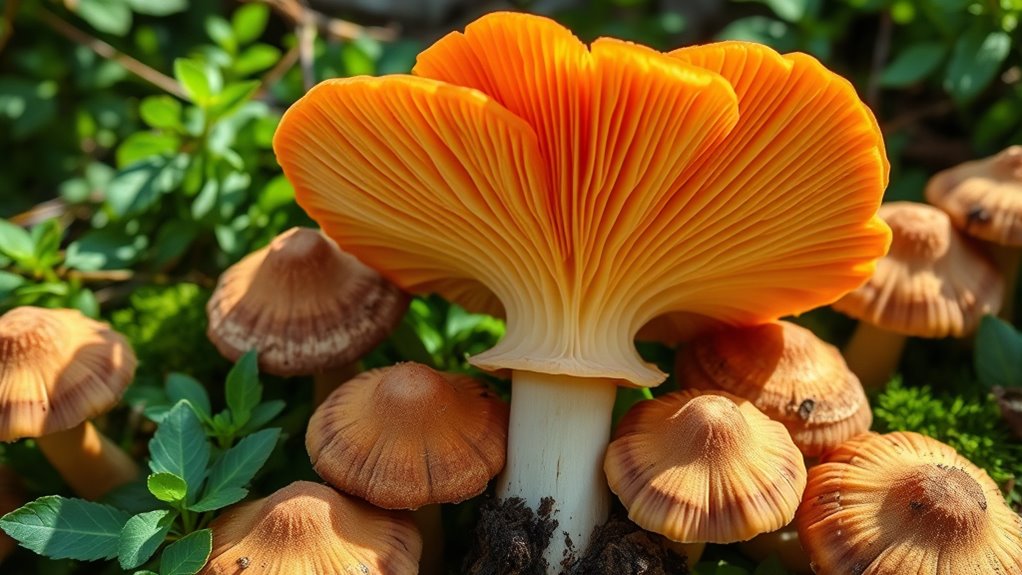
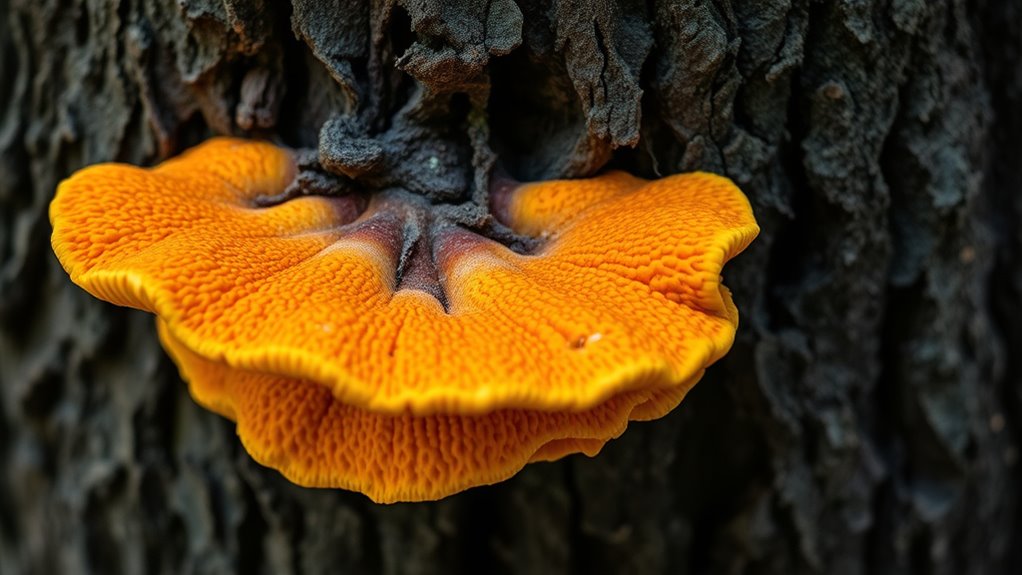
If you’re foraging for Chicken of the Woods, it is vital to know how to distinguish it from lookalikes, as some can be toxic or inedible. Identification tips are essential to guarantee you’re harvesting the right mushroom. First, focus on the mushroom’s appearance: Chicken of the Woods typically forms vibrant, shelf-like clusters on the sides of trees, especially oak and sweetgum. Its bright orange to yellow coloration, often with contrasting white or tan edges, makes it stand out. The surface is usually smooth or slightly wrinkled, and it doesn’t have a stem like traditional mushrooms; instead, it grows in fan-shaped layers that overlap. These distinctive features are your first clues.
Pay close attention to the underside of the mushroom. Chicken of the Woods has tiny pores instead of gills, which are usually yellow-orange and turn darker with age. When you cut into it, the flesh should be firm, moist, and white or slightly yellowish. The overall texture and color are key identification tips because lookalikes often differ markedly. For example, some false species may have a softer, sponge-like texture or display different colors, such as dull brown or greenish hues, that can deceive inexperienced foragers. Additionally, some lookalikes may grow on different types of wood or in different habitats, so habitat is an important consideration.
Look for yellow-orange pores that darken with age and firm, moist flesh when cut.
Knowing the culinary differences helps too. Chicken of the Woods is prized for its meaty texture and flavor reminiscent of chicken, making it popular in many dishes. It cooks quickly and has a mild, slightly woody taste. In contrast, lookalikes—especially toxic varieties—may have bitter, foul, or unappealing flavors when cooked, which is a warning sign. Always test small portions initially, and never consume a mushroom unless you’re 100% sure of its identity. Being familiar with the distinctive features of Chicken of the Woods and its lookalikes reduces the risk of misidentification.
Frequently Asked Questions
How Can I Tell if a Lookalike Is Toxic?
You can tell if a lookalike is toxic by examining toxicity indicators like color changes, unusual odors, and texture differences. Use identification techniques such as closely comparing spore color, gill attachment, and cap features to known safe species. Avoid assumptions based on appearance alone. When in doubt, consult expert guides or mycologists to guarantee the mushroom’s safety before harvesting or consuming. Always prioritize caution with unfamiliar fungi.
Are There Any Common Edible Lookalikes?
Yes, some common edible lookalikes include certain types of polypores that resemble Chicken of the Woods but are safe to eat. To avoid identification mistakes, always double-check features like color, gill structure, and spore print. Remember, harvesting precautions are essential—never consume a mushroom unless you’re 100% sure of its identity. When in doubt, consult expert guides or mycologists to prevent accidental poisoning.
What Tools Are Best for Safe Harvesting?
You should use sharp, clean knives or scissors for mushroom identification and harvesting equipment. These tools allow precise cuts, minimizing damage to the fungi and reducing contamination risk. A portable brush can help clean dirt off mushrooms without harming them. Always carry a basket or mesh bag to keep your harvest fresh and well-ventilated. Proper tools guarantee safe harvesting, accurate identification, and help preserve the mushroom’s quality.
Can Environmental Factors Change Mushroom Appearance?
Environmental variations can definitely change mushroom appearance. Factors like humidity, temperature, and light in their habitat influence their size, color, and texture. For example, mushrooms growing in wetter areas may look more vibrant or swollen, while those in drier spots might be smaller or duller. As you forage, pay attention to these environmental factors, as they affect how mushrooms develop and can help you accurately identify safe harvests.
How Should I Store Harvested Mushrooms Safely?
You should store harvested mushrooms in breathable storage containers, like paper bags or baskets, to prevent moisture buildup and spoilage. Preservation techniques such as refrigerating at low temperatures also extend their freshness. Avoid plastic bags, which trap humidity. Keep them in a cool, dry place and use them within a few days for the best quality. Proper storage guarantees your mushrooms stay safe and flavorful for later use.
Conclusion
Always double-check your Chicken of the Woods before harvesting, so you don’t accidentally pick a toxic lookalike that could turn your adventure into a nightmare. With sharp eyes and careful identification, you’ll become a mushroom detective, avoiding the dangerous doppelgängers that lurk in the woods. Remember, misidentification is a mistake you don’t want to make—think of it as risking your life for a mushroom! Stay vigilant, and enjoy safe, delicious foraging every time.