Using a forager’s color wheel helps you identify berries by hue and avoid dangerous doubles. Bright reds, like pokeweed, look appealing but are toxic, while edible berries such as blackberries share similar colors. Focus on hue, ripeness, surface quality, and growth patterns. Remember, color alone isn’t enough—combine it with other cues to ensure safety. Keep exploring these visual clues further, and you’ll gain more confidence in safe foraging.
Key Takeaways
- Use consistent, vibrant berry hues to identify ripeness and distinguish edible varieties from toxic look-alikes.
- Recognize that bright colors like red or shiny black may indicate ripeness but not safety, as some toxins mimic these hues.
- Combine hue cues with surface texture, shape, and growth patterns to accurately differentiate safe berries from dangerous doubles.
- Be aware that unripe berries often have lighter or different colors; proper ripeness ensures safety and optimal flavor.
- Consult reliable field guides and local expertise to verify color-based identifications and avoid hazardous misidentification.
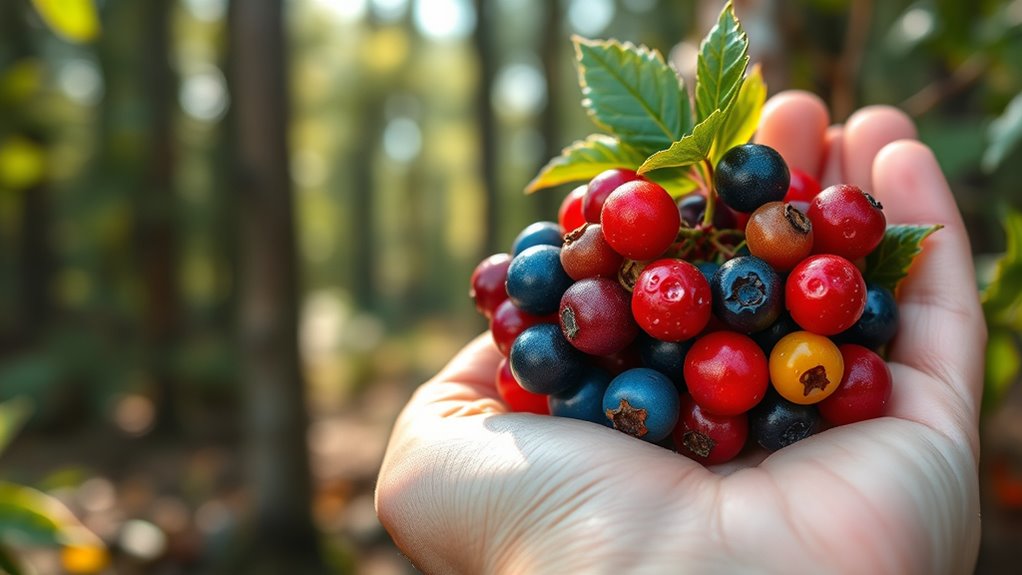
Have you ever wondered how foragers identify and differentiate edible plants and fungi in the wild? One of the most reliable methods involves understanding the colors of berries and how their hues can guide you to safe, tasty picks while avoiding dangerous doubles. The forager’s color wheel isn’t just about aesthetics; it’s a practical tool that helps you distinguish between edible and toxic berries. By paying attention to the color patterns and hues, you can dramatically reduce risks and make smarter harvesting decisions.
When you’re out gathering berries, remember that not all brightly colored fruits are safe to eat. Many toxic berries mimic edible ones in color, making it essential to learn the subtle differences. For example, shiny, bright red berries might look tempting, but some are highly toxic—like pokeweed or bittersweet nightshade. Conversely, some edible berries, like blackberries or blueberries, share hues with less safe counterparts. That’s why understanding the specifics of berry coloring becomes essential for safe foraging.
A key berry harvesting tip is to observe the overall hue and surface of the berries. Edible berries tend to have consistent, vibrant colors, and their surface should be firm and plump. Toxic berries often have dull, matte finishes or unusual textures. For instance, wild raspberries are a bright red and grow in clusters, making them easy to spot, while their toxic look-alikes, such as baneberries, are usually white or red but have a different shape and growth pattern. Knowing these visual cues helps you differentiate safely.
Another important point is to familiarize yourself with how berries change color as they ripen. Many edible berries develop a deeper hue when ripe, like blueberries turning a rich navy or blackberries darkening to black. Unripe berries may be lighter or different in color altogether, and consuming unripe berries can sometimes lead to poisoning. Use this knowledge to pick berries at the right stage—fully ripe, with consistent, appealing colors.
Additionally, understanding color variations and how they relate to ripeness and toxicity can further refine your foraging skills. Finally, never rely solely on color. Use other identification methods—such as leaf shape, berry placement, and plant habitat—to confirm your finds. When in doubt, consult reputable field guides or local foraging groups. Remember, the goal is to enjoy the bounty of nature safely, and mastering the color wheel of berries is an essential part of that. By paying close attention to hues and following berry harvesting tips, you’ll become more confident and proficient in foraging while keeping dangers at bay.
Frequently Asked Questions
How Can I Differentiate Edible Berries From Toxic Look-Alikes?
To differentiate edible berries from toxic look-alikes, focus on color contrast and berry shape. You should observe the hue carefully—edible berries often have distinct, vibrant colors, while toxic ones may look similar but with subtle differences. Pay attention to the shape too; edible berries tend to have consistent shapes, whereas dangerous doubles might be misshapen or irregular. Always cross-reference your findings with a reliable guide before consuming any wild berries.
Are There Any Berries That Change Color as They Ripen?
Imagine trusting a berry only to see it transform from dull to dazzling—color change becomes your ripening indicator. Many berries, like strawberries and blackberries, change hue as they ripen, signaling it’s safe to harvest. This color change acts as a natural warning and guide, helping you avoid unripe or toxic berries. Pay close attention to these ripening indicators, and you’ll better distinguish edible berries from potential dangers.
What Tools Are Best for Accurately Identifying Berry Colors in the Wild?
To accurately identify berry colors in the wild, you should use digital color meters or smartphone color apps. Digital color meters provide precise color readings, helping you distinguish between safe and toxic berries. Smartphone apps can quickly analyze berry hues with your camera, offering instant identification. These tools minimize guesswork and guarantee you make informed foraging decisions, reducing the risk of dangerous errors when picking wild berries.
Can Berry Color Variations Indicate Different Nutritional Contents?
Think of berry colors as a secret code revealing nutritional markers hidden within. Color variation can signal differences in vitamins, antioxidants, or toxins, guiding you to the safest, most nourishing choices. Bright reds might boost your immune system, while darker hues could pack more antioxidants. Pay attention to these subtle shifts, because understanding how berry color variation correlates with nutrition helps you forage smarter and safer, revealing nature’s hidden treasures.
Are There Regional Differences in Berry Color and Species?
You’ll notice regional berry patterns and cultural harvesting traditions influence berry colors and species. In some areas, certain berries develop unique hues due to climate, soil, or local plant varieties. These regional differences help you identify safe options and respect local customs. By studying these patterns, you can better recognize berries, avoid dangerous doubles, and appreciate how regional practices shape the berries you forage.
Conclusion
Remember, your eyes are like a compass guiding you through nature’s vibrant palette. Each hue on the forager’s color wheel symbolizes a choice—trusting the safe, embracing the beauty, and steering clear of danger’s shadow. Let these colors be your guardians, a reminder that in the wild, intuition and knowledge act as your lanterns. With every berry you identify correctly, you’re not just foraging—you’re forging a connection to nature’s delicate, essential balance.