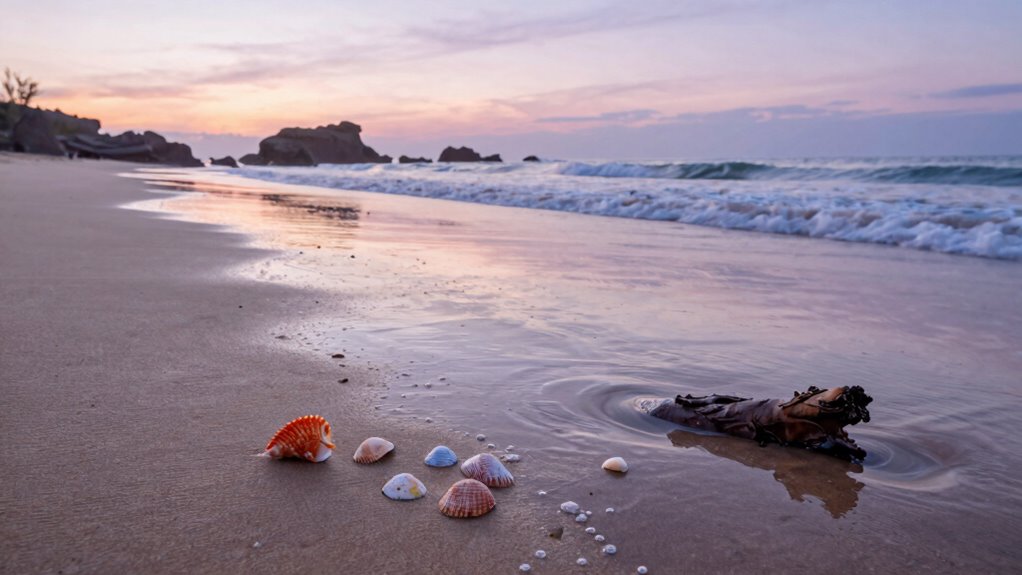

After a storm, you’ll notice beach finds change quickly because the powerful waves and currents dislodge debris and reshuffle sediments. This activity can wash in new objects like plastic bottles or driftwood while moving or burying existing ones. The erosion reshapes the shoreline, exposing new layers of rocks and sand. These rapid changes highlight the ocean’s strength and influence. If you keep exploring, you’ll discover even more about how nature’s forces shape coastlines overnight.
Key Takeaways
- Storms stir up water, transporting debris like plastic and driftwood onto beaches, altering the landscape overnight.
- Coastal erosion caused by waves reshapes shorelines, exposing new features and moving sediments quickly.
- Ocean currents and storm activity redistribute marine debris and sediments, changing beach environments rapidly.
- Storms reveal hidden geological layers and ecological features, creating new surfaces and habitats.
- The combined effects of debris deposition and erosion lead to noticeable overnight changes in beach appearance.
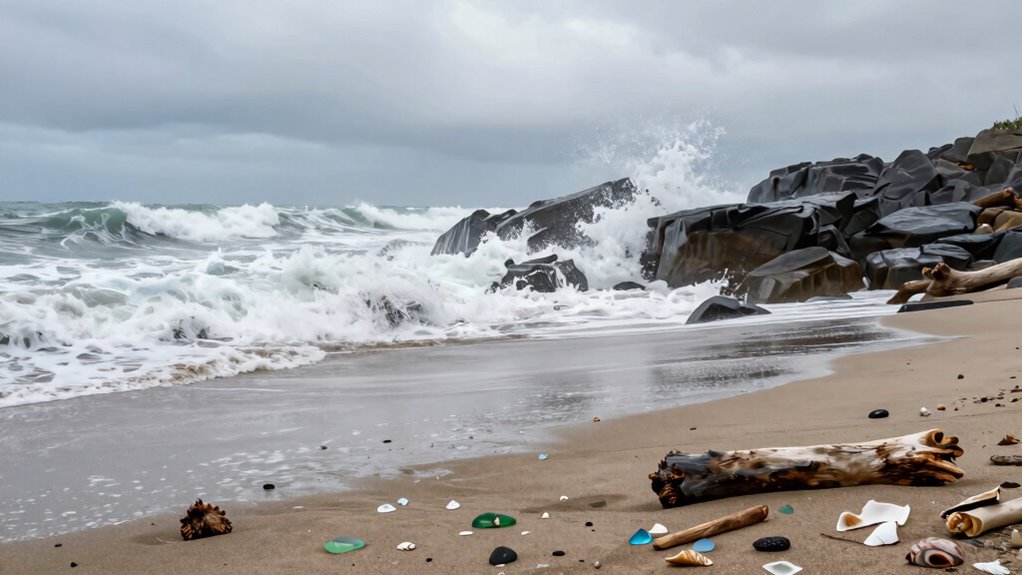
Have you ever wondered what treasures the ocean leaves behind after a storm? The beach you visited yesterday might look entirely different today, with unexpected finds scattered across the sand. Storms churn up the water, stirring the ocean floor and washing ashore debris that wasn’t there before. Marine debris, from plastic bottles to fishing gear, often becomes visible after these turbulent events. It’s a stark reminder of how human activity impacts our oceans, and it’s easy to feel overwhelmed by the amount of trash left behind. But storms do more than just bring debris; they also reshape the coastline through coastal erosion, carving new patterns into the shoreline and exposing layers of sediment and rocks that were once hidden.
When you walk along the beach shortly after a storm, you might notice an array of marine debris piled up along the tide line. Some of it is lightweight plastic that’s been carried far from its origin, while other pieces are larger, like driftwood or tangled fishing nets. These remnants serve as evidence of the storm’s power and the ocean’s capacity to transport objects over long distances. As waves crash relentlessly, they dislodge sand and pebbles, leading to significant coastal erosion. This process can cause sections of the shoreline to retreat, exposing new surfaces and shifting the landscape you thought you knew. What once appeared as a stable beach can suddenly look unfamiliar, with new coves or rocky outcroppings revealed and others swept away. The ongoing coastal erosion illustrates how powerful natural forces can dramatically alter familiar environments in a short period. Additionally, the movement of sediment during storms can influence marine ecosystems, affecting the habitats of various marine species. The changing landscape can also reveal hidden geological layers, offering scientists a glimpse into the Earth’s history. These rapid changes also underscore the importance of understanding storm dynamics to better predict future shoreline transformations.
The changes happen rapidly, and what you find on the sand can tell a story of the storm’s intensity. Marine debris can become embedded in the sand or drift into tide pools, creating a temporary but striking ecosystem of human-made objects and natural elements. Coastal erosion, on the other hand, often leaves behind exposed roots of dune grasses or eroded cliffs, highlighting the ongoing battle between land and sea. Additionally, marine debris can pose threats to wildlife, as animals may ingest or become entangled in these materials, disrupting local ecosystems. These transformations mean that your favorite spot might look entirely different from day to day, especially after a big storm. It’s a vivid reminder that the ocean is a dynamic force, constantly reshaping the coastline and redistributing what’s on its bottom.
As an affiliate, we earn on qualifying purchases.
Frequently Asked Questions
How Do Storms Impact the Local Ecosystem of Beaches?
Storms profoundly impact the local ecosystem of beaches by disrupting marine life and causing coastal erosion. You’ll notice marine creatures displaced or harmed as strong waves and currents wash away habitats. Coastal erosion reshapes the shoreline, altering habitats and making it harder for plants and animals to thrive. These changes can last for weeks or months, affecting the balance of the ecosystem and the health of the beach environment you enjoy.
Can Storm Debris Be Harmful or Contain Hazardous Materials?
Storm debris can definitely be harmful and may contain hazardous debris or toxic materials. When storms hit, they wash up debris that often includes sharp objects, chemicals, or pollutants from boats, factories, or land runoff. You should be cautious around beach debris, as touching or inhaling contaminated particles can pose health risks. Always report hazardous debris to local authorities for proper cleanup, protecting both your health and the environment.
What Are the Legal Considerations for Collecting Beach Finds After a Storm?
You need to be aware of property rights and collecting permits when gathering beach finds after a storm. Always respect private property and obtain necessary permits if required, as collecting without permission can lead to legal issues. Check local regulations beforehand, since laws vary by location. By following these legal considerations, you can enjoy your beachcombing responsibly and avoid potential fines or conflicts.
How Often Do Storm-Related Beach Finds Lead to Archaeological Discoveries?
Storm-related beach finds can surprisingly open doors to hidden stories, but they rarely turn up marine artifacts or historical relics regularly. While storms may uncover fleeting treasures, most discoveries remain small and transient, making significant archaeological findings infrequent. You might stumble upon interesting items, yet truly valuable relics often lie buried or deep beneath, requiring careful excavation and patience to reveal their stories. Keep exploring, but cherish every find as a rare glimpse into the past.
Are Certain Beaches More Prone to Significant Changes After Storms?
Yes, some beaches are more prone to significant changes after storms due to sand erosion and tidal shifts. You’ll notice that beaches with softer or less stable shoreline structures experience more dramatic shifts, uncovering or burying artifacts and shells. Storm intensity and frequency also play a role. If you frequent these beaches, you’ll see how powerful natural forces reshape the landscape overnight, revealing new discoveries or hiding old ones.
As an affiliate, we earn on qualifying purchases.
Conclusion
After a storm, the beach becomes a treasure chest, revealing surprises that vanished with the tide. You’re like a detective, uncovering hidden gems that the ocean’s fury has tossed ashore. These finds are fleeting, like whispers of the sea’s secrets, reminding you that nature’s beauty is ever-changing. Embrace each discovery, for tomorrow’s storm may erase today’s treasures, turning the shoreline into a blank canvas once more. Every visit is a new chapter in the ocean’s endless story.
As an affiliate, we earn on qualifying purchases.
As an affiliate, we earn on qualifying purchases.