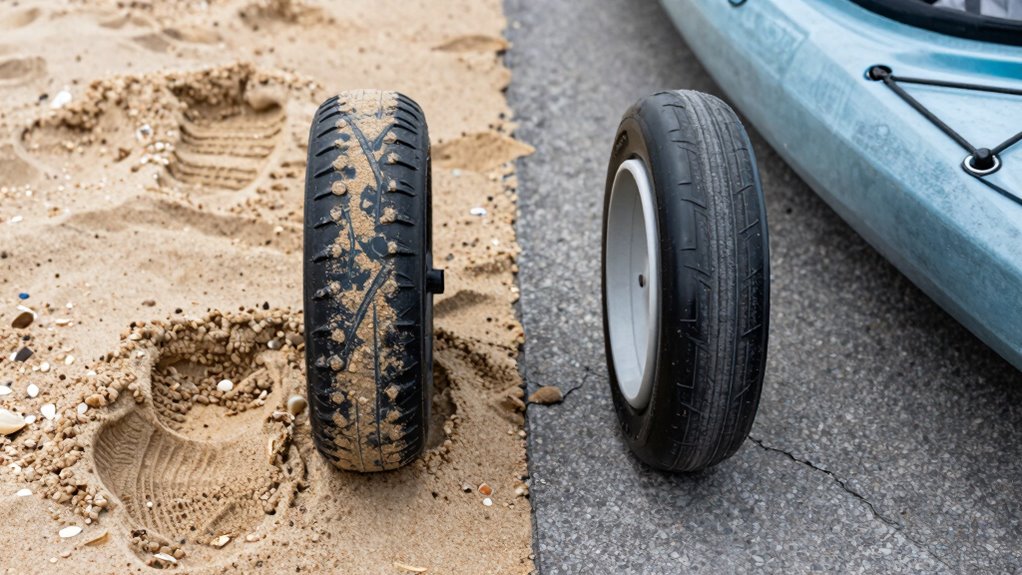

When choosing kayak cart wheels, consider the terrain you’ll mostly use them on. For sandy surfaces, opt for wider, knobby tires with durable rubber or composite materials that resist punctures and distribute weight evenly. On pavement, lightweight, narrow, or smooth-tread wheels with reliable, weather-resistant construction work best for easier rolling. Matching your wheel features to the terrain helps improve stability and durability, so exploring more will give you even better insights.
Key Takeaways
- Wide, knobby tires with high durability are ideal for sand to prevent sinking and handle abrasive surfaces.
- Narrow, smooth tires reduce resistance and are suitable for pavement for easier, efficient movement.
- Tire material should be abrasion-resistant and weatherproof for durability across different terrains.
- Reinforced wheel construction and sturdy hubs ensure stability and longevity on uneven, challenging surfaces.
- Proper tire width and tread pattern selection optimize traction, stability, and ease of transport on both sand and pavement.

When choosing a kayak cart, understanding the difference between wheels designed for sand and those meant for pavement can make a big difference in how smoothly you transport your boat. The key factors to consider are tire durability and wheel material, which directly impact performance and longevity. If you plan to frequently move your kayak across soft, sandy beaches, you’ll need wheels with high tire durability that can withstand abrasive surfaces without wearing down quickly. Look for tires made from durable rubber or composite materials, as these tend to resist cuts, punctures, and general wear. Similarly, the wheel material itself should be sturdy—think reinforced plastic or metal cores—that can handle rough terrain without cracking or deforming over time.
On the other hand, if most of your trips involve smooth, paved surfaces like parking lots or boat ramps, your focus shifts toward lightweight, low-resistance wheels. For pavement, you’ll want wheels with softer rubber tires that provide a smoother ride and better grip. The tire durability still matters but is less critical because pavement is less abrasive than sand. Instead, the wheel material should prioritize reducing weight and rolling resistance, which makes transporting your kayak easier and less tiring over longer distances. Additionally, selecting wheels with abrasion resistance can extend the lifespan of your cart when used on different surfaces. Choosing wheels with weather-resistant coatings can further enhance durability when exposed to the elements. Incorporating appropriate tire width can also improve stability and ease of movement across various terrains. Furthermore, selecting the correct tread pattern can improve traction and stability on different surfaces.
The choice of wheel material also influences how well your cart handles different terrains. For sandy environments, wheels with wider, knobby tires are better—they distribute weight more evenly and prevent sinking into soft sand. These tires often feature a thicker rubber compound for added durability, ensuring they resist punctures and abrasions from rough surfaces. Wider tires also help in sinking prevention, making your trips more effortless across loose or soft terrain. Conversely, for pavement, narrower, smoother tires work efficiently because they roll easily and require less effort to move. These tires are usually made from softer rubber blends that maximize grip and minimize noise. When considering long-term use, the construction quality of the wheel becomes an important factor to ensure durability and reliable performance.
Durability isn’t just about the rubber; it’s also about the construction of the wheel itself. For challenging terrain, look for wheels with reinforced hubs or metal axles, which can withstand the stress of uneven surfaces and prevent wobbling or breakage. For smoother surfaces, a simple plastic or lightweight alloy wheel is sufficient, offering a balance of durability and ease of use.
As an affiliate, we earn on qualifying purchases.
Frequently Asked Questions
How Do Wheel Sizes Affect Maneuverability on Different Terrains?
Larger wheels improve maneuverability on rough terrains, like sand, by rolling over obstacles more easily, making your gear more durable and terrain-compatible. Smaller wheels are better on smooth surfaces, providing quicker turns but less terrain versatility. When choosing kayak cart wheels, consider size for maximum gear durability and terrain compatibility; bigger wheels handle uneven terrain better, while smaller wheels excel on paved surfaces, ensuring smooth transport across various environments.
Are There Specific Wheel Materials Best for Saltwater Environments?
For saltwater environments, you should choose wheels made from corrosion-resistant materials like marine-grade aluminum or high-quality plastic composites. These materials excel in saltwater corrosion resistance and offer excellent wheel material durability, ensuring longevity and smooth maneuverability. Avoid regular steel or untreated metals, as they rust quickly. Selecting wheels with durable, corrosion-resistant materials helps prevent damage and keeps your kayak cart functioning at its best in harsh saltwater conditions.
Can Kayak Cart Wheels Be Easily Replaced or Upgraded?
Did you know that most kayak cart wheels are designed for easy replacement? You can typically upgrade or swap them out through simple wheel installation, making maintenance straightforward. When considering cart compatibility, check the axle size and mounting system to guarantee the new wheels fit perfectly. This flexibility allows you to customize your setup for different terrains, extending your kayak’s usability and making your adventures more comfortable.
What Maintenance Is Required for Different Wheel Types?
You need to regularly check your kayak cart wheels for wear and tear. For rubber tires, verify proper tire inflation to maintain ideal wheel durability and smooth rolling, especially on pavement. For foam or plastic wheels, inspect for cracks or damage and clean debris regularly. Proper maintenance extends wheel life, prevents breakdowns, and keeps your kayak transportation smooth. Adjust inflation as needed, and replace worn wheels promptly to avoid further issues.
How Do Weight Limits Vary Between Wheel Types?
You’ll find that weight limits vary between wheel types, with larger, more durable wheels often supporting heavier loads, especially on sand. Wheel durability influences how much weight they can handle without damage, and cost considerations come into play — sturdier wheels tend to be pricier but offer better support. For heavier kayaks, invest in high-quality wheels designed for durability, ensuring safe transport and reducing the risk of wear or failure during use.
As an affiliate, we earn on qualifying purchases.
Conclusion
Now that you know which wheels suit sandy shores or paved paths, picture yourself effortlessly gliding your kayak over different terrains. Whether you’re rolling smoothly across hot pavement or sinking slightly into soft sand, the right wheels make every trip feel like a breeze. With the perfect wheels under your kayak, you’ll carve through your adventures with confidence, leaving behind only footprints and a sense of freedom as you reach the water’s edge, ready to paddle into new horizons.
As an affiliate, we earn on qualifying purchases.
As an affiliate, we earn on qualifying purchases.