To observe shorebirds without disturbing them, keep a respectful distance using a telephoto lens and steady your camera to capture detailed images. Wear camouflage and create concealment with hides or blinds to blend into the environment. Stay quiet and patient, minimizing noise and sudden movements. By practicing these discreet methods, you allow the birds to behave naturally and support habitat preservation. If you want to learn more about respectful shorebird observation, keep exploring these helpful techniques.

Get garden gear delivered free with Prime
- Fast, free delivery on millions of items
- Prime Video, Amazon Music and more included
- Member-only deals all year
Key Takeaways
- Use a high-quality telephoto lens to observe shorebirds from a safe distance without causing disturbance.
- Create natural hiding spots or use portable blinds to remain unobtrusive during observation.
- Wear camouflage clothing and minimize noise to blend into the environment and avoid stressing the birds.
- Practice patience and quietness, allowing natural behaviors to occur without interference.
- Observe during optimal lighting times, like early mornings or late afternoons, to capture better images discreetly.
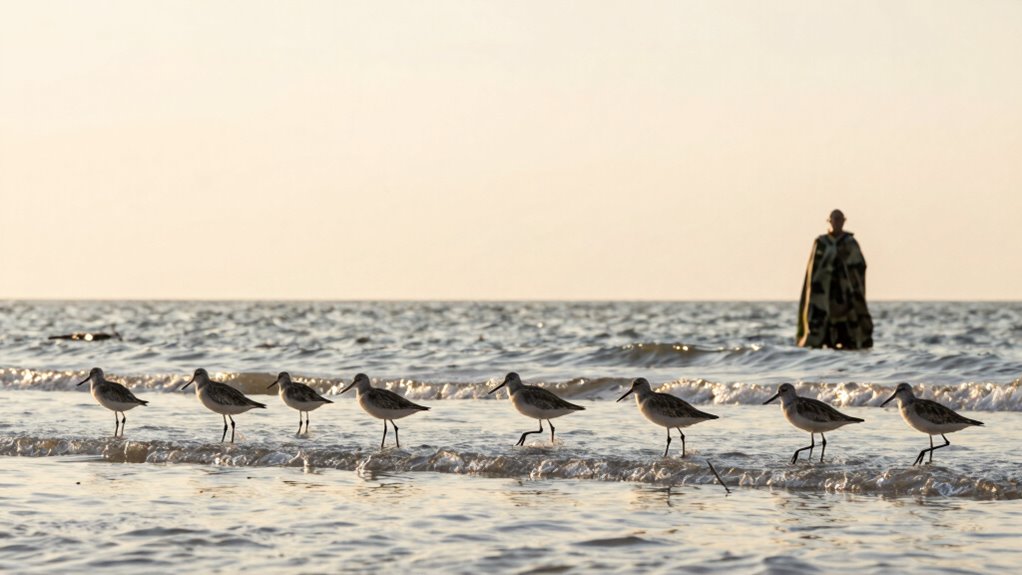
Have you ever wanted to observe shorebirds without disturbing their natural habitat? If so, you’re not alone. Many bird enthusiasts seek ways to enjoy these fascinating creatures while ensuring their environment remains undisturbed. One of the most effective approaches is to keep a respectful distance, which directly supports habitat preservation. When you avoid getting too close, you minimize stress on the birds, helping them go about their daily activities like feeding, nesting, and resting without interference. This not only benefits the birds but also enriches your experience, as you can observe their natural behaviors more authentically.
To make the most of your distant observations, mastering photography techniques becomes essential. Using a good-quality telephoto lens allows you to capture detailed images without needing to approach closely. A steady hand or tripod prevents blurry photos, giving you sharp, clear shots of these delicate birds from afar. Pay attention to lighting conditions—early mornings and late afternoons often provide the best natural light, reducing shadows and enhancing colors. By adjusting your camera settings—such as increasing shutter speed and lowering ISO—you can freeze motion and avoid noise, ensuring your photographs reflect the true beauty of the shoreline.
Use a telephoto lens, steady your shot, and optimize lighting and settings for clear, detailed shoreline bird photos from a respectful distance.
Creating a discreet hiding spot or using blinds can also help you get closer virtually, without physically intruding. Many photographers use portable hides or camouflage clothing to blend into the environment, which keeps the birds calm and less likely to fly away. Remember, patience is key; waiting quietly allows you to observe behaviors that might otherwise be missed if you approached too quickly or loudly. The goal is to be an unobtrusive observer who respects the shoreline ecosystem and its inhabitants. Additionally, understanding the importance of habitat preservation can deepen your appreciation for responsible birdwatching practices and motivate you to minimize your impact even further. Being aware of human impact on shoreline habitats encourages more mindful observation, which benefits both the environment and your experience. Recognizing the significance of biodiversity can inspire you to adopt sustainable practices that support the diverse species found along shoreline ecosystems. Incorporating ethical birdwatching principles into your outings ensures that your presence remains respectful and environmentally conscious.
Furthermore, education about shoreline ecosystems can help you better understand the interconnectedness of the species you observe and the environment they rely on. Remember, your mindful approach supports habitat preservation by reducing human impact. When you maintain a respectful distance, you contribute to the health of the shoreline ecosystem, ensuring that future generations can enjoy observing shorebirds just as you do now. Whether you’re snapping photos or simply watching, your mindful approach helps sustain the delicate balance of these habitats. In the end, the best way to enjoy shorebirds from afar is to combine patience, proper photography techniques, and a commitment to protecting their environment—allowing you to appreciate their natural beauty without causing disturbance.
telephoto lens for wildlife photography
As an affiliate, we earn on qualifying purchases.
As an affiliate, we earn on qualifying purchases.
Frequently Asked Questions
What Equipment Is Best for Distant Shorebird Observation?
You should use a high-quality, long zoom binocular or spotting scope for distant shorebird observation. Make certain to maintain your binoculars regularly for clear images, and choose a model with excellent lens quality. To guarantee steady viewing, stabilize your equipment with a sturdy tripod, which minimizes hand shake and enhances detail. Proper tripod stability and binocular maintenance are key to observing shorebirds clearly without disturbing them from afar.
How Can I Identify Different Shorebird Species From Afar?
You can identify shorebird species from afar by focusing on their feather patterns and behavior cues. Imagine spotting tiny, intricate markings on wings or chests that set each species apart. Watch how they move—whether they wade, run, or bob their heads. These behaviors and feather details act like nature’s secret codes, helping you distinguish one species from another even at great distances, making your observation both exciting and accurate.
Are There Specific Times of Day Best for Viewing?
You should plan your shorebird viewing during early morning or late evening, as bird behavior tends to be more active then. During these times, birds forage and move less cautiously, making observation easier from farther away. Ideal timing aligns with their natural activity patterns, reducing disturbance. By choosing these times, you get better chances to observe diverse species without scaring them off, enjoying a more rewarding experience.
How Do Weather Conditions Affect Shorebird Visibility?
A storm in the sky often clears the way for better visibility. Weather conditions, like wind influence and rain, impact bird migration patterns and make shorebirds harder to spot. Calm, clear days typically offer the best conditions for viewing, as birds are less disturbed and more active. Strong winds can push birds away or make them difficult to observe from afar, so check weather forecasts before heading out.
Can Photography Be Done Without Disturbing the Birds?
Yes, you can photograph shorebirds without disturbing them by practicing wildlife ethics and maintaining a safe distance. Use long lenses to capture detailed shots from afar, avoiding sudden movements or loud noises. Respect bird conservation efforts by staying on designated paths and observing flock behavior before approaching. This way, you protect their natural habitat, minimize stress, and guarantee the birds’ well-being while capturing beautiful images responsibly.
As an affiliate, we earn on qualifying purchases.
Conclusion
By keeping your distance, you become a silent guardian rather than a disruptive storm. It’s like dancing in harmony with nature, allowing shorebirds to go about their day undisturbed. Your patience and respect paint a clearer picture of their world, revealing their beauty without scaring them away. Remember, the farther you stay, the closer you get to witnessing their true essence—quiet, delicate, and free—making every observation a treasured moment in the symphony of nature.
camouflage clothing for birdwatching
As an affiliate, we earn on qualifying purchases.
As an affiliate, we earn on qualifying purchases.
As an affiliate, we earn on qualifying purchases.
Halloween Picks
halloween
As an affiliate, we earn on qualifying purchases.