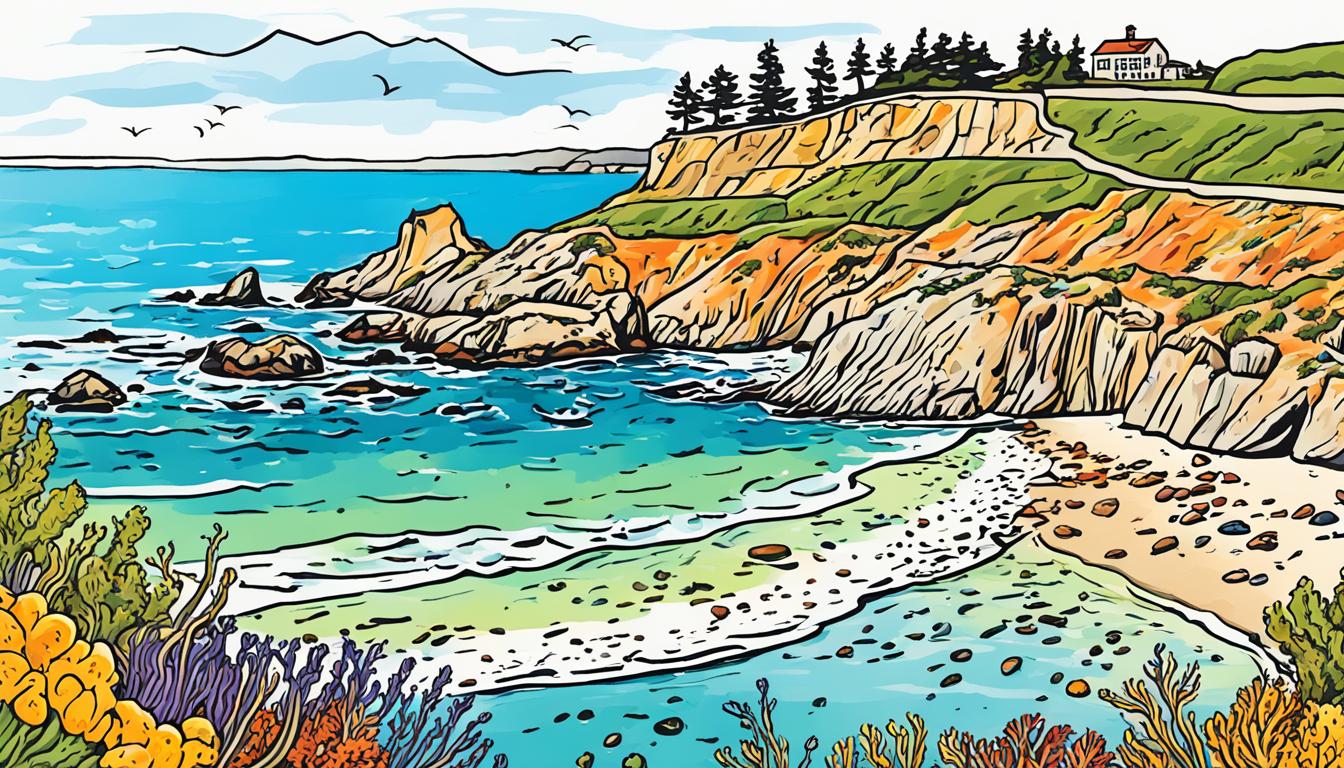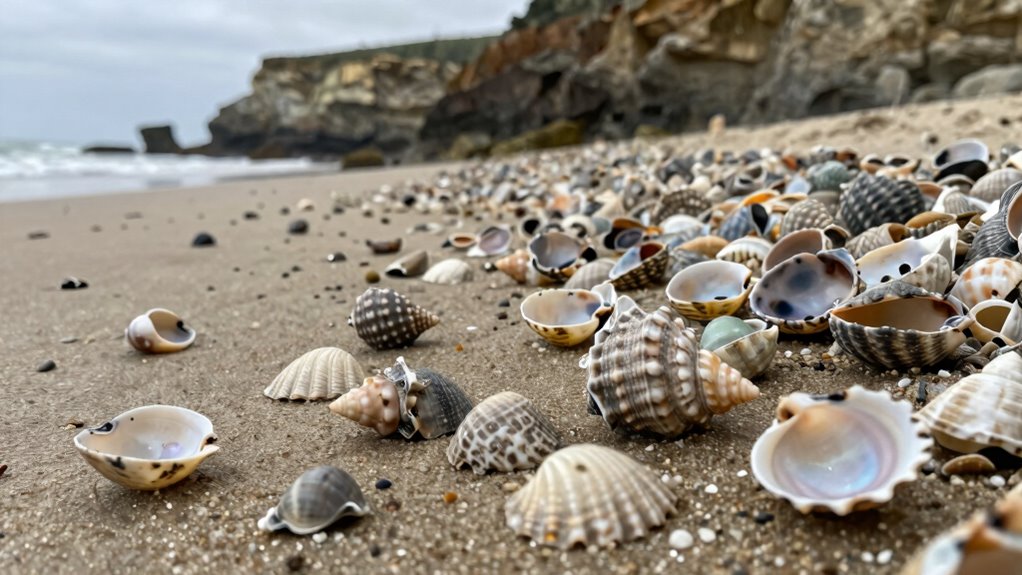

Old shell piles tell you a lot about today’s top coastal spots by revealing past human activities and natural ecosystems. They show which species thrived and how people interacted with the shoreline through tools, food, or trade. By studying shell layers, you can understand ecological shifts and the importance of these areas over time. If you keep exploring, you’ll uncover even more fascinating stories behind these ancient deposits and what they mean for modern coastal treasures.
Key Takeaways
- Old shell piles indicate historically rich coastal areas with long-term human activity and resource utilization.
- Shell species found in piles reveal past marine biodiversity and ecological conditions.
- The size and location of shell middens highlight historically significant and accessible coastal spots.
- Shell remnants help assess environmental changes caused by human impact over time.
- Analyzing shell piles provides insights into ancient cultures and their relationship with the shoreline.
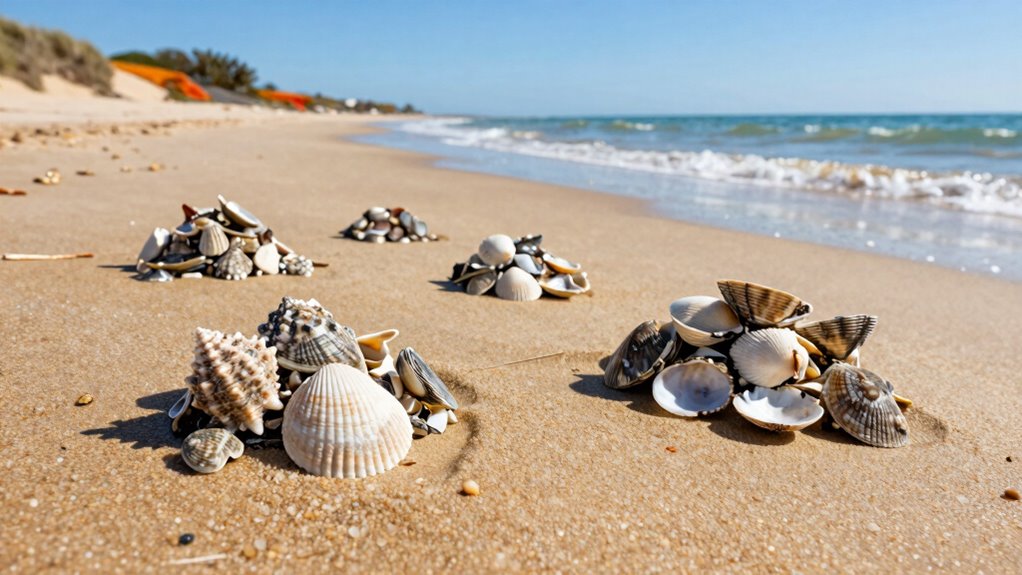
By examining shell piles, you’re engaging in a form of marine archaeology, uncovering stories buried beneath layers of calcium carbonate. Historically, ancient peoples often gathered shells for food, tools, or trade, leaving behind remnants that still exist today. When you see a dense pile, consider that it might have served as a communal shell midden, a kind of ancient trash heap. Such sites can reveal what species were abundant, what tools might have been used, and how long the area was actively inhabited or utilized. Marine archaeology isn’t just for professionals; with the right knowledge, you can identify shells, understand their origins, and piece together the lives of those who came before. Additionally, understanding the marine ecosystem can help you better interpret the significance of different shell types and their roles in local environments. Recognizing the impact of human activity on these sites can also provide insight into how coastal environments have changed over time. Learning about archaeological methods can enhance your ability to analyze and appreciate these natural features more deeply. Being aware of shell identification techniques can further aid in distinguishing native species from those introduced or invasive, enriching your understanding of the local ecology.
If you want to make the most of your beachcombing adventures, keep some beachcomber tips in mind. First, bring a small bag or container to collect interesting shells, but remember to leave some behind for others and for the environment. Look for shells that are intact, and try to identify different types—these details can tell you about the local marine population. When you find a large shell pile, take note of its location and size, as this can help you understand the historical significance of the site. Always be respectful of the area, avoid disturbing living creatures, and check local regulations about collecting shells, especially in protected areas. Understanding coastal geology can also help you recognize features that influence shell accumulation and distribution.
In essence, coastal shell piles are more than just pretty sights—they’re windows into the past and clues to today’s best coastal spots. By applying simple marine archaeology principles and beachcomber tips, you can deepen your appreciation and understanding of these natural features. Every shell tells a story, and with a keen eye, you’re invited to become part of that ongoing narrative, discovering what makes each shoreline unique and rich with history.
As an affiliate, we earn on qualifying purchases.
Frequently Asked Questions
How Do Shell Piles Form Naturally Along Coastlines?
Shell piles form naturally along coastlines through a process of shell concentration and sediment accumulation. As marine creatures shed shells or die, their remains gather in specific areas. Over time, wave action and currents deposit more shells, creating piles. Sediment then builds up around these shells, preserving them and forming prominent shell heaps. These natural formations can indicate areas with rich marine activity and are key to understanding coastal ecosystem history.
Can Shell Piles Indicate Future Coastal Erosion Risks?
Shell pile indicators can indeed signal future coastal erosion risks. When you observe large, unstable shell piles, it suggests that wave action and currents are actively shaping the shoreline, making erosion prediction more accurate. These piles act as natural markers, helping you identify areas where erosion might accelerate. By monitoring shell pile changes over time, you can better anticipate erosion patterns and plan accordingly to protect coastal environments.
Are Shell Piles Unique to Specific Regions or Globally Found?
Like a historian unearthing secrets, you find shell piles are not unique to specific regions but are globally widespread. These piles hold cultural significance, revealing traditions and diets of coastal communities across time. Their archaeological insights help you understand how humans interacted with their environment, adapted to local resources, and maintained cultural practices. Recognizing this global pattern deepens your appreciation for the shared human story told through these ancient shell remains.
What Species Contributed Most to Historical Shell Pile Formations?
You’ll find that historically, species like oysters, clams, and mussels contributed most to shell pile formations. During ancient dietary times, shellfish harvesting was essential for survival, leading communities to gather large quantities of shells over generations. These shell piles serve as archaeological records, revealing what species people relied on most and how they harvested shellfish, offering valuable insights into past coastal ecosystems and human diets.
How Do Shell Piles Influence Local Marine Ecosystems?
Shell piles play a crucial role in your local marine habitat by providing shelter for small fish and invertebrates. They also boost nutrient cycling by breaking down shells into minerals that nourish algae and other marine plants. As a result, these structures support diverse ecosystems, enhance biodiversity, and sustain healthy fish populations. You can see their influence in the thriving, balanced environments that attract both marine life and coastal visitors.
beachcomber shell collection bag
As an affiliate, we earn on qualifying purchases.
As an affiliate, we earn on qualifying purchases.
Conclusion
Those ancient shell piles stand as silent storytellers, whispering secrets of coastal life long past. They symbolize resilience, reminding you that nature’s rhythms persist through time, shaping the very shores we cherish today. As you explore these relics, see them as bridges between eras—proof that the ocean’s pulse continues, inviting you to become part of its ongoing story. Embrace these shells as treasures, symbols of enduring connection between land, sea, and your own journey.
As an affiliate, we earn on qualifying purchases.
As an affiliate, we earn on qualifying purchases.