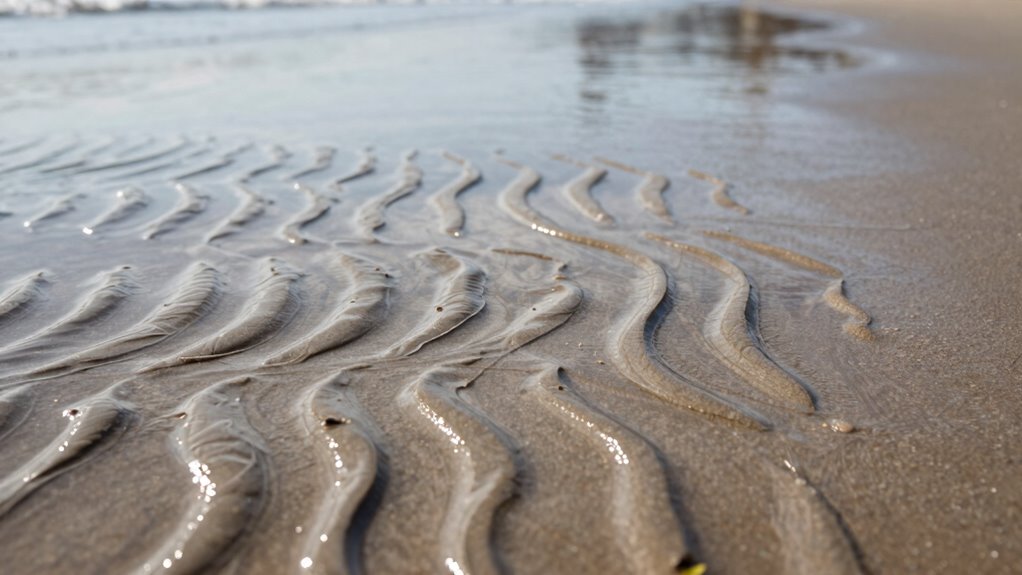

When you observe ripple patterns on wet sand, you’re seeing clues about past tidal currents and environmental conditions. The size, shape, and orientation of ripples reveal how water moved and how sediments settled over time. Stronger flows create larger ridges, while gentler flows produce finer textures. These surface textures act as a natural record of shoreline activity and history. If you explore further, you’ll uncover even more insights about how natural forces shape these fascinating patterns.
Key Takeaways
- Ripple patterns reveal past tidal activity and environmental conditions through their size, shape, and orientation.
- Surface textures indicate the strength and energy of water currents during sediment deposition.
- Finer ripples suggest gentle water movement, while larger ridges point to stronger flows.
- Grain size influences ripple appearance, with fine grains forming smooth textures and coarse grains creating rugged ridges.
- Analyzing ripple textures helps interpret shoreline dynamics, sediment transport, and historical climate variations.
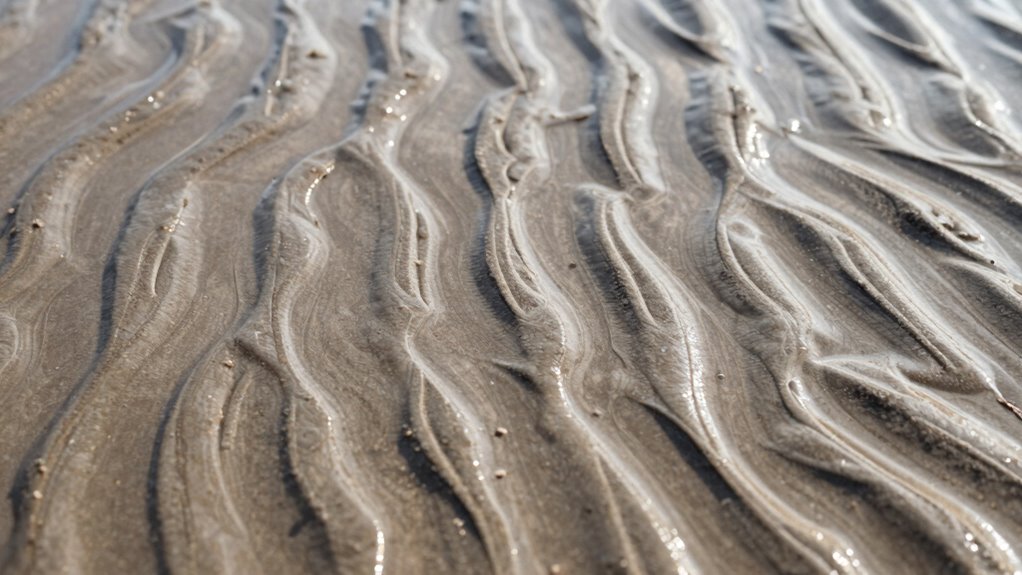
When the tide recedes, it often leaves behind intricate ripple patterns on wet sand that seem almost sculpted by nature itself. These ripples aren’t just random formations; they’re clues to the forces that shaped them. As you observe, you’ll notice how tidal influences play a notable role in determining their size, shape, and orientation. The ebb and flow of the water create a rhythmic process that deposits energy into the sand, causing it to form these delicate patterns. The movement of water, driven by tides, influences the size of the ripples—stronger currents tend to produce larger, more pronounced ridges, while gentler flows result in finer, more delicate textures. Recognizing this relationship helps you understand that each ripple pattern is a record of past tidal activity, almost like a natural fingerprint.
Beyond the influence of tides, grain size considerably impacts the appearance of these patterns. Fine sand grains tend to produce smooth, tightly packed ripples, giving the surface a velvety texture that’s easy to trace with your finger. Conversely, coarser grains create more rugged, prominent ridges, with a rougher surface that feels uneven under your touch. The size of the grains determines how easily they can be moved by water’s energy. Smaller grains are more mobile, settling into fine, intricate patterns, while larger grains resist movement, forming broader, more distinct ridges. As you examine the surface texture, you can often infer the dominant grain size, which reveals clues about the sediment’s origin and the energy of the environment where it was deposited. Recognizing the grain size can also help you understand the sediment’s origin and the energy of the environment where it was deposited. Additionally, the surface texture can reveal how sediment transport influenced the formation of ripples over time.
The surface texture of ripples, shaped by tidal influences and grain size, acts as a window into the dynamic history of the shoreline. When you observe these patterns closely, you’re practically reading a story written by natural forces—how water moved, how sediments settled, and how environmental conditions changed over time. The delicate interplay between water energy and particle size creates a variety of ripple forms, each telling a different story about the landscape’s history. Whether they’re subtle, almost invisible lines or bold, sweeping ridges, these surface textures are a record of the relentless, rhythmic dance between water and sand, waiting for you to interpret their silent language.
Additionally, understanding the surface texture can help you identify the environmental conditions that shaped the ripples, providing insights into the shoreline’s past climate and tidal patterns.
wet sand ripple pattern observation kit
As an affiliate, we earn on qualifying purchases.
As an affiliate, we earn on qualifying purchases.
Frequently Asked Questions
How Do Ripple Patterns Form Over Time?
Ripple patterns form over time through sediment transport driven by wave erosion. As waves move across the shore, they pick up and deposit sand, creating small ridges and troughs. You’ll notice these patterns develop as the water consistently shifts sediment, aligning it into rhythmic shapes. Over time, continuous wave action smooths and shapes the ripple, revealing the ongoing influence of wave erosion on the beach’s surface texture.
Can Ripple Patterns Indicate Recent Weather Changes?
Yes, ripple patterns can hint at recent weather changes. Unlike static geological indicators, these surface textures quickly respond to shifting conditions like wind speed and direction. By observing new or altered ripple patterns, you get a natural weather forecasting tool. You become a casual meteorologist, reading the sand’s story—each ripple revealing whether recent storms, breezes, or calmer skies have influenced the shoreline.
Are Ripple Patterns Unique to Specific Beaches?
You’ll find ripple patterns aren’t unique to specific beaches; they form through universal processes like water movement and wind. However, your awareness of these patterns can influence beach conservation efforts and tourism impact. By noticing how footprints or vehicles disturb ripples, you help protect delicate surface textures. Respecting these natural features encourages sustainable tourism, ensuring beaches remain pristine and their ripple patterns intact for future visitors to enjoy and study.
What Tools Can Best Analyze Ripple Pattern Details?
Think of analyzing ripple patterns like peeling an onion—each layer reveals new details. You’ll want tools like microscopes for sand grain analysis, revealing the tiny particles shaping the surface texture. Surface texture mapping software also helps visualize patterns in detail, showing how ripples form and evolve. Combining these tools lets you uncover the story behind each ripple, giving you a deeper understanding of the beach’s dynamic environment.
Do Ripple Patterns Influence Marine Life Habitats?
Ripple patterns do influence marine life habitats by shaping the environment in which organisms live. You should consider how these patterns impact marine navigation and coastal erosion, as they can determine water flow and sediment stability. When ripples alter the seabed, they create varied habitats for different species, affecting biodiversity. Recognizing these patterns helps you understand sediment movement, coastal erosion, and the overall health of marine ecosystems.
shoreline sediment analysis tools
As an affiliate, we earn on qualifying purchases.
As an affiliate, we earn on qualifying purchases.
Conclusion
Next time you walk along wet sand, take a moment to observe the intricate ripple patterns beneath your feet. These tiny textures reveal the dynamic dance between wind and water, telling stories of natural forces at play. Did you know that some ripple formations can be centuries old, preserved in the sediment? Recognizing these patterns not only deepens your appreciation for nature’s artistry but also connects you to a timeless, ongoing story written in the surface of the sand.
As an affiliate, we earn on qualifying purchases.
beachcombing scientific magnifier
As an affiliate, we earn on qualifying purchases.
As an affiliate, we earn on qualifying purchases.