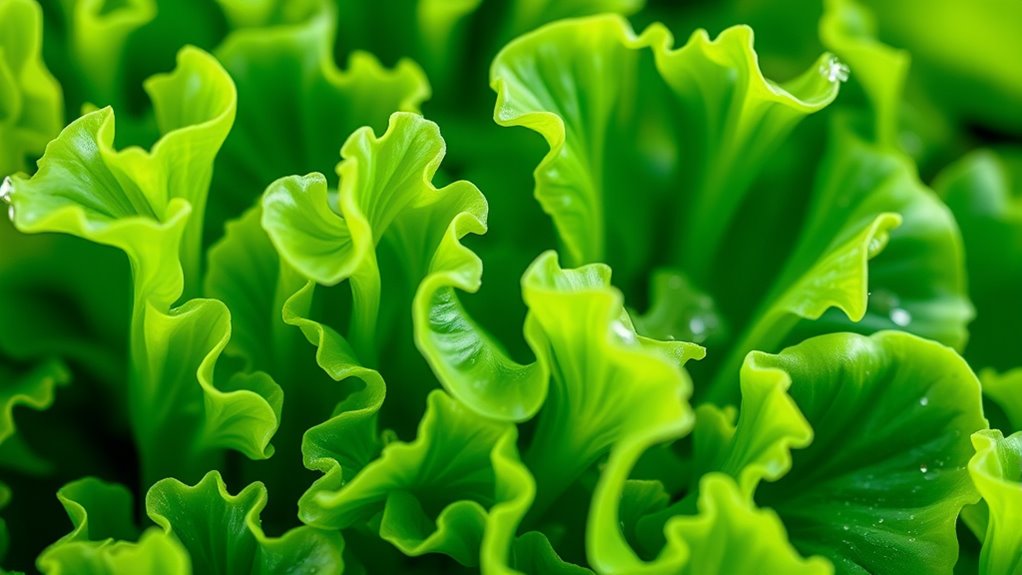
Sea lettuce (Ulva) is a bright green, leafy marine alga with delicate, torn fronds that grow on rocky shores and sandy beaches, especially during low tide. You can identify it by its vibrant color, soft texture, and simple, leafy appearance. It’s widely used in cooking to add oceanic flavor to salads, soups, and pastas, providing health benefits like iodine and fiber. For tips on harvesting and tasty ideas, keep exploring what makes sea lettuce a versatile, sustainable ingredient.
Key Takeaways
- Sea Lettuce (Ulva) is a bright green, leafy marine algae with delicate, thin fronds that grow on rocky shores and sandy beaches.
- It is harvested during low tide using scissors or knives, then rinsed thoroughly to remove sand and debris.
- Ulva is used in cooking to add oceanic flavor to salads, soups, pasta, and smoothies, often softened by blanching.
- Nutritionally, it is low in calories and rich in iodine, calcium, magnesium, fiber, and antioxidants, supporting health benefits.
- Sustainable harvesting promotes ecological balance and makes Sea Lettuce a versatile, nutritious ingredient for various culinary applications.
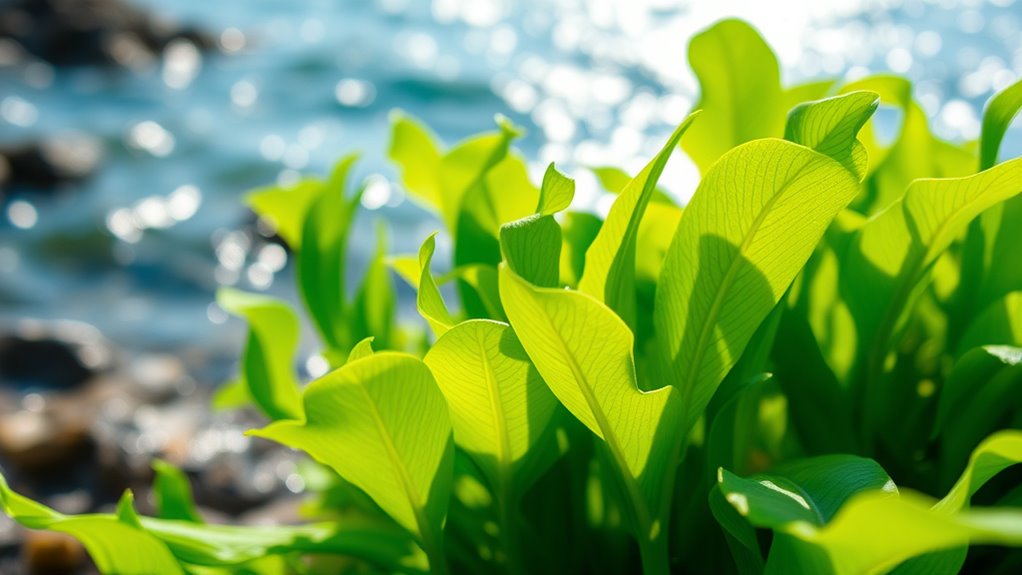
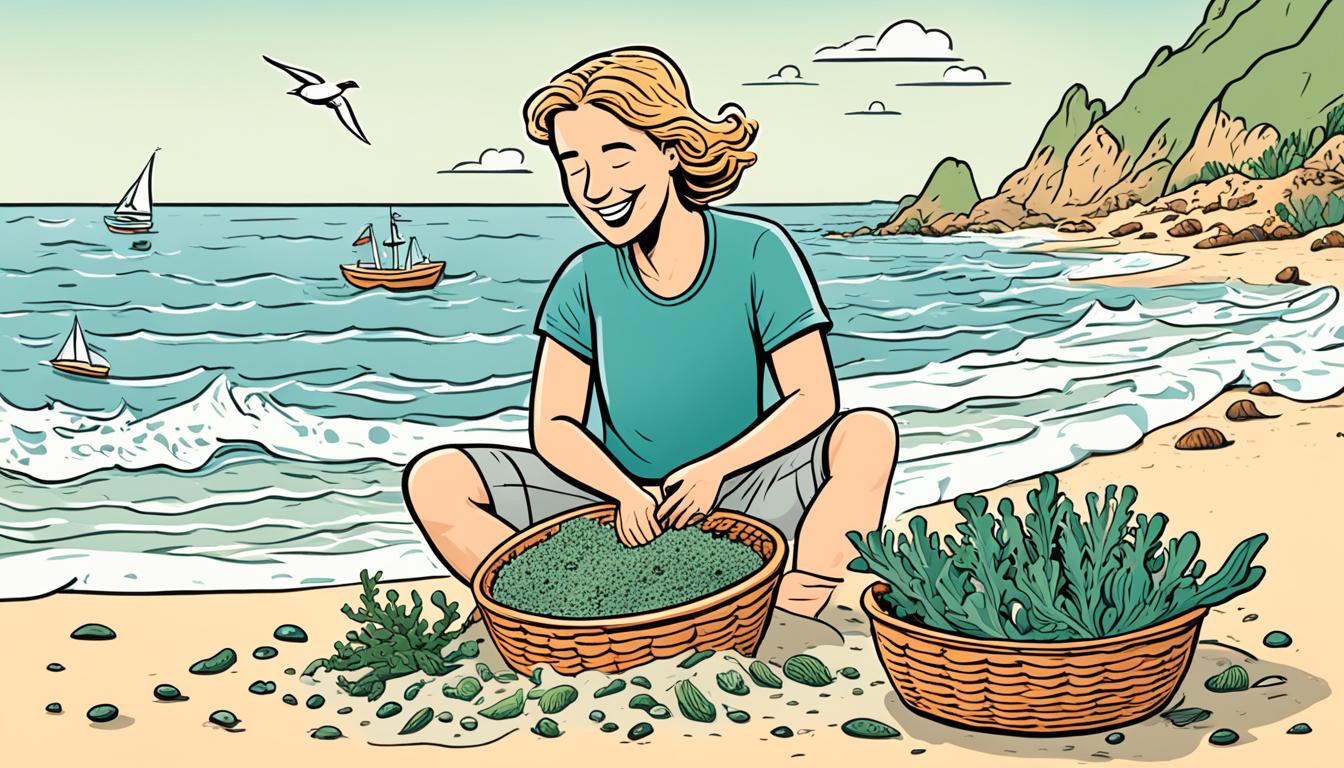
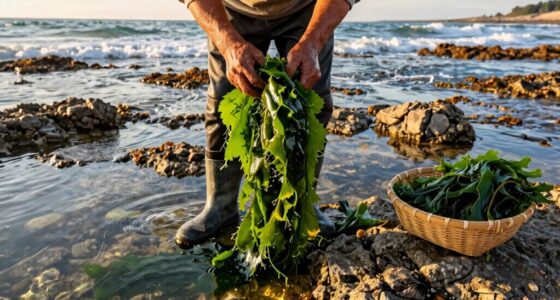
Have you ever wondered what makes sea lettuce (Ulva) such a versatile and vibrant marine plant? Its bright green color and delicate, leafy appearance make it stand out in underwater environments. If you’re interested in harvesting techniques, you’ll find that collecting sea lettuce is straightforward and sustainable. Typically, you can gather it by hand during low tide from rocky shores or sandy beaches where it naturally accumulates. Just be sure to use scissors or knives to trim it gently from the substrate, avoiding damage to the surrounding ecosystem. Harvesting responsibly ensures the plant continues to thrive and that you’re not disrupting local marine life. Once you’ve gathered your sea lettuce, it’s essential to rinse it thoroughly to remove any sand, shells, or debris. Proper cleaning preserves its freshness and prepares it for culinary use. Additionally, understanding sustainable harvesting practices helps maintain healthy marine ecosystems for future foragers.
Speaking of culinary recipes, sea lettuce can add a nutritious, oceanic flavor to a variety of dishes. Its mild, slightly salty taste pairs well with salads, soups, pasta, and even smoothies. When incorporating it into recipes, many cooks prefer to blanch the leaves briefly to soften their texture and reduce any residual grit. You can then chop it finely or leave it in larger pieces, depending on the dish. It’s a versatile ingredient that boosts the nutritional profile of your meals with vitamins, minerals, and antioxidants. For salads, combine fresh sea lettuce with other greens, olive oil, lemon juice, and your favorite toppings for a quick, healthful meal. In soups and broths, add it towards the end of cooking to impart a subtle sea flavor without overpowering the dish. Sea lettuce also works well in seaweed-based snacks or as a garnish that adds a pop of vibrant green.
Beyond its culinary appeal, sea lettuce offers numerous health benefits, making it a popular choice for health-conscious cooks. It’s low in calories but rich in iodine, calcium, and magnesium, supporting thyroid function and bone health. Its high fiber content aids digestion and promotes a feeling of fullness. Whether you’re harvesting it yourself or purchasing it from a market, knowing how to handle sea lettuce properly allows you to maximize its potential in your kitchen. With simple harvesting techniques and creative culinary recipes, you can enjoy this marine marvel in many forms. Its fresh, clean flavor elevates dishes while delivering essential nutrients, making sea lettuce a sustainable and nutritious addition to your diet. So next time you encounter this vibrant sea vegetable, consider how you can incorporate it into your meals and enjoy the bounty of the sea.
Frequently Asked Questions
Is Sea Lettuce Safe for Human Consumption Worldwide?
Sea lettuce is generally safe for human consumption, but you should be aware of regional safety and potential toxicity concerns. In some areas, water pollution or harmful algae blooms can contaminate Ulva, making it unsafe to eat. Always verify the source and confirm proper harvesting practices. When properly sourced and prepared, sea lettuce offers nutritious benefits worldwide, but stay cautious of local advisories to avoid health risks.
How Does Sea Lettuce Cultivation Impact Local Ecosystems?
When you cultivate sea lettuce, you might think it’s a walk in the park, but it can tip the ecosystem balance if it becomes invasive. Its rapid growth can outcompete native species, disrupting local habitats. While it’s sustainable and beneficial in moderation, overcultivation risks ecological harm. Keep a close eye to prevent invasive potential, ensuring your efforts support a healthy, balanced marine environment rather than throwing it off course.
Can Sea Lettuce Be Used as a Biofuel Source?
Yes, sea lettuce can be used as a biofuel source. You can harvest algae bioenergy from Ulva, converting it into sustainable fuels like biogas or biodiesel. Using sea lettuce for bioenergy offers a renewable, eco-friendly alternative to fossil fuels. It’s a promising option because it grows quickly and requires minimal land, helping you reduce carbon emissions while producing energy sustainably.
What Are the Nutritional Differences Between Wild and Farmed Sea Lettuce?
You’ll find that wild and farmed sea lettuce differ in nutrient content and mineral variations. Wild sea lettuce often has higher levels of iodine, magnesium, and trace minerals due to its natural environment, while farmed varieties may have more controlled nutrient profiles, sometimes lacking certain minerals. These differences can impact nutritional value, so if you’re seeking specific nutrients, consider the source and how it’s cultivated.
Are There Any Commercial Products Derived Specifically From Ulva?
You’ll find several commercial products derived from Ulva, including Ulva-based supplements and Ulva extract cosmetics. These products harness Ulva’s rich nutrients, promoting health and skin benefits. You can use Ulva supplements to boost your nutrition naturally, while Ulva extract cosmetics are popular for their moisturizing and antioxidant properties. Companies are increasingly incorporating Ulva into their formulations, making it a versatile ingredient in wellness and skincare markets.
Conclusion
Imagine holding a tiny piece of the ocean’s green heartbeat. That’s what sea lettuce feels like—alive, vibrant, and full of promise. Just as sailors once relied on the sea’s bounty for survival, you can harness Ulva’s nutrients for your health or garden. Think of it as nature’s green treasure chest, waiting to be revealed. Embrace sea lettuce, and you’ll find yourself connected to the ocean’s endless gift of life and nourishment.