Saltwater corrosion begins much faster than you think because salt acts as a powerful conductor, speeding up electrochemical reactions that cause rust. As soon as your metal is exposed, saltwater facilitates electrical currents that promote oxidation and deterioration. Higher temperatures and humidity make these reactions even quicker. Understanding how saltwater accelerates corrosion helps you appreciate why protective measures are essential. Stay with us to discover more about how to prevent this rapid damage.
Key Takeaways
- Saltwater acts as a highly conductive electrolyte, accelerating electrochemical reactions that cause corrosion.
- Corrosion can begin within weeks, not years, especially in warm, humid marine environments.
- Elevated temperatures and humidity increase the rate of electrochemical processes on metal surfaces.
- Saltwater’s presence promotes rapid formation of electrochemical cells that oxidize metals quickly.
- Protective coatings are essential, but wear over time can expose metals to faster corrosion.
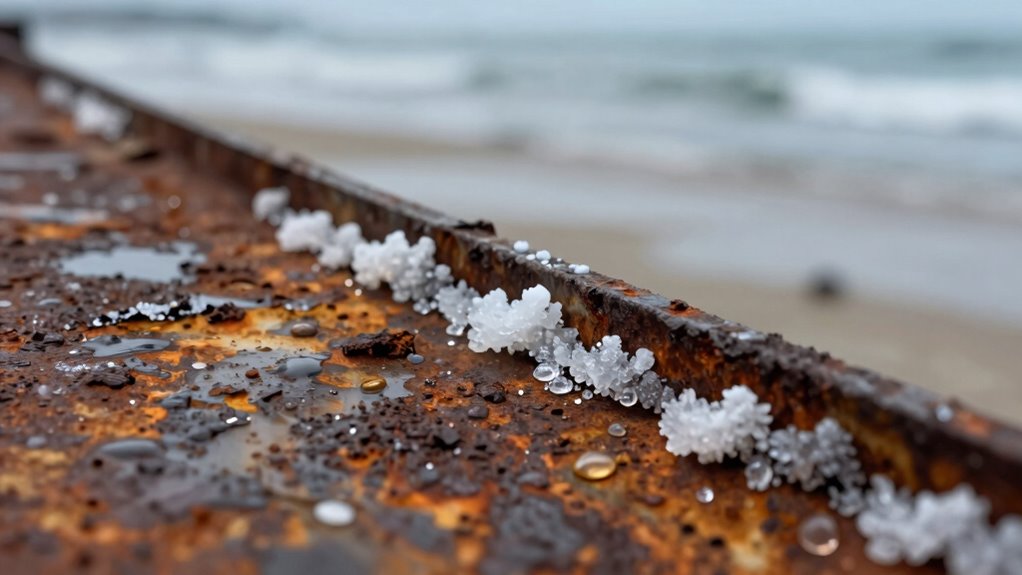
Saltwater corrosion is a common challenge faced by marine industries and coastal infrastructure, as the salty environment accelerates the deterioration of metals. You might assume that corrosion takes years to cause substantial damage, but in reality, it often starts much faster than you expect. Marine environments are particularly aggressive because the salt in seawater acts as a catalyst, speeding up electrochemical reactions that lead to rust and metal decay. When metals are exposed to these conditions without proper protection, you’ll notice corrosion beginning within months, sometimes even weeks, depending on the metal’s exposure level and environmental factors.
Saltwater accelerates metal corrosion, often starting within weeks without proper protection in marine environments.
Understanding why saltwater corrosion happens so quickly requires recognizing the role of the environment. In marine settings, saltwater isn’t just a simple liquid; it’s a conductor that facilitates electrical currents. These currents promote the formation of electrochemical cells on metal surfaces, which then lead to oxidation and rust. This process is further amplified by factors like temperature, humidity, and the presence of oxygen. The higher the temperature and humidity levels, the faster the corrosion progresses. That’s why coastal structures or ships operating in warmer waters tend to deteriorate faster without proper maintenance.
One of the most effective ways to combat this rapid deterioration is by applying protective coatings. These coatings serve as a barrier between the metal surface and the corrosive marine environment. Protective coatings not only prevent direct contact with saltwater but also inhibit the electrochemical reactions that cause rust. When applied correctly, they can greatly slow down the corrosion process, extending the lifespan of marine equipment and infrastructure. Regular maintenance and reapplication of coatings are essential because even the most durable protective layers can wear down over time due to constant exposure to harsh conditions.
You should also consider the specific nature of the marine environment when choosing protective coatings. Different formulations are designed for various conditions, whether it’s high salt concentration, fluctuating temperatures, or mechanical wear. Properly selected coatings can withstand these challenges, providing long-lasting protection. It’s essential to inspect coated surfaces regularly, removing any signs of damage or wear and reapplying coatings as needed. Doing so ensures that your structures and vessels remain protected and functional longer, avoiding costly repairs and downtime.
In addition, understanding the electrochemical reactions involved in saltwater corrosion can help in designing more effective protective strategies. In short, saltwater corrosion starts faster than you think because of the highly conductive and reactive nature of marine environments. Using effective protective coatings tailored to these conditions isn’t just advisable—it’s essential. Staying proactive with maintenance and choosing the right protective solutions can make the difference between enduring years of service and facing premature deterioration.

STAR BRITE Ceramic Metal Protect – SiO2 Polymer Protection
- Long-lasting corrosion protection: Creates durable SiO2 ceramic barrier
- Easy to clean and maintain: Repels water, dirt, and grime
- Versatile for various metals: Suitable for pontoons, trailers, towers
As an affiliate, we earn on qualifying purchases.
As an affiliate, we earn on qualifying purchases.
Frequently Asked Questions
How Does Temperature Affect Saltwater Corrosion Speed?
Temperature accelerates saltwater corrosion by speeding up corrosion mechanisms like electrochemical reactions. As temperatures rise, the rate of metal oxidation increases, making environmental factors more aggressive. You’ll notice faster deterioration because higher temperatures boost ion movement and electrical conductivity in saltwater, intensifying corrosion processes. So, controlling temperature is key to slowing down saltwater corrosion, especially in environments where metals are exposed to salty, warm conditions.
Can Different Metals Corrode at the Same Rate in Saltwater?
Like dancers in a performance, metals don’t all move at the same pace in saltwater. Different metals have varying corrosion compatibility, so they generally won’t corrode at the same rate. Metal pairing affects how quickly corrosion spreads—some metals resist rust better than others, while some accelerate the process. You’ll notice that using compatible metals reduces corrosion risk, but incompatible pairings can cause rapid deterioration, even in the same environment.
Does Pollution Accelerate Saltwater Corrosion?
Yes, pollution accelerates saltwater corrosion by introducing harmful environmental factors. Pollutants like chemicals and waste can weaken protective metal layers, making them more vulnerable. Additionally, pollution promotes marine life growth, such as barnacles and algae, which can further trap moisture and increase corrosion rates. As a result, polluted saltwater environments speed up the deterioration of metals, especially when combined with the natural corrosive effects of saltwater and marine life.
How Often Should Saltwater-Exposed Equipment Be Inspected?
You should inspect saltwater-exposed equipment at least every three to six months, even if it seems fine. Marine biology reveals that corrosion can progress rapidly due to salt and biological activity, so regular checks are crucial for corrosion prevention. Some might think infrequent inspections suffice, but proactive monitoring helps catch early signs of deterioration, extending equipment lifespan and maintaining safety in harsh marine environments.
Are There Protective Coatings That Prevent Saltwater Corrosion?
Yes, protective coatings act as corrosion barriers, preventing saltwater from reaching the metal surface. You can choose from options like epoxy, polyurethane, or marine-grade paints designed specifically for saltwater exposure. Applying these coatings creates a shield that reduces corrosion risk, extending the lifespan of your equipment. Regular inspections guarantee the coatings remain intact, so you can catch any damage early and maintain effective protection against saltwater corrosion.

CorrosionX Heavy Duty Anti Rust Spray, Dripless Self-Healing Corrosion Inhibitor with Waterproof Barrier for Marine, Agricultural & Industrial Equipment in Harsh, Saltwater Environments, 12oz Aerosol
- Weatherproof Rust Protection: Self-healing barrier resists rain and seawater
- Long-Lasting Durability: Protects up to 5 years indoors, 2 years outdoors
- Heavy-Duty Electrical Protection: Non-conductive formula for large terminals
As an affiliate, we earn on qualifying purchases.
As an affiliate, we earn on qualifying purchases.
Conclusion
Think of saltwater corrosion like a hidden predator lurking beneath the surface—once it strikes, it can cause rapid damage before you even notice. Just last summer, I watched a boat’s metal fittings rust away in just weeks after hitting salty waters. That quick deterioration shows how crucial it is to act fast. Don’t wait until corrosion has taken hold; stay vigilant and protect your equipment before it’s too late. Prevention is your best defense.

WD-40 Specialist Corrosion Inhibitor, Long-Lasting Anti-Rust Spray, 6.5 OZ
- Rust and corrosion protection: Lubricates and shields metal parts
- Long-lasting indoor and outdoor use: Protects up to 2 years indoors, 1 year outdoors
- Ideal for corrosive environments: Prevents rust in humid, cold, and winter conditions
As an affiliate, we earn on qualifying purchases.
As an affiliate, we earn on qualifying purchases.

Everbrite Protective Coating for Metal (4 Oz.)
- Durable Clear Coating: Restores and protects metal surfaces
- Restores Metal Luster: Revives faded metal colors
- Protects Against Tarnish: Prevents rust, corrosion, and fading
As an affiliate, we earn on qualifying purchases.
As an affiliate, we earn on qualifying purchases.