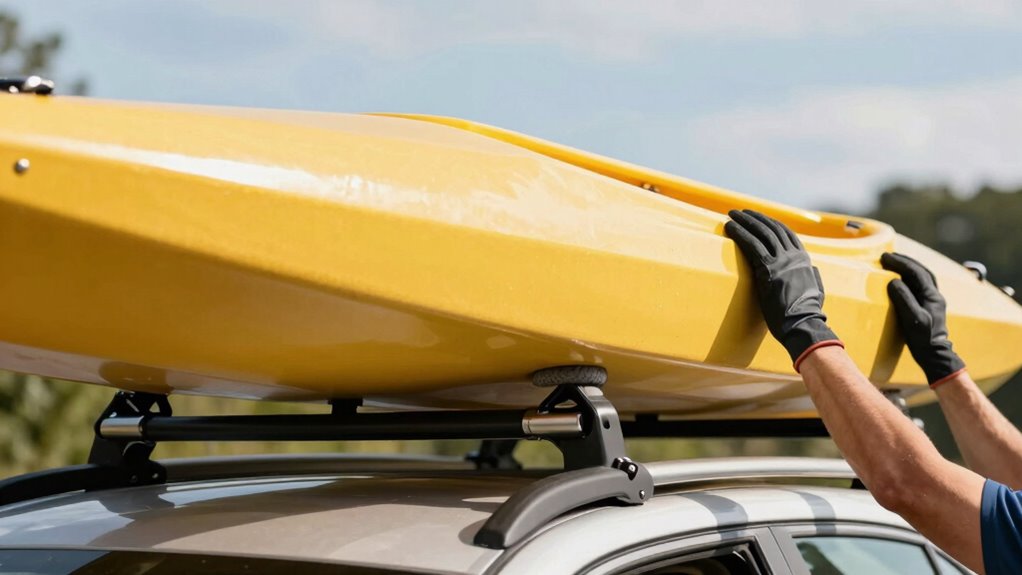

To load a kayak onto a roof rack without twisting, keep the boat close to your body and lift smoothly to avoid unnecessary strain. Align the kayak upside down, with foam pads to cushion and distribute weight evenly. Use straps snugly but not too tight, securing at multiple points in a crisscross pattern for stability. Regularly check your straps and hardware, and with patience, you’ll guarantee your kayak stays safe and undamaged throughout your journey. Keep going to learn more tips for a secure load.

Get garden gear delivered free with Prime
- Fast, free delivery on millions of items
- Prime Video, Amazon Music and more included
- Member-only deals all year
Key Takeaways
- Position the kayak upside down with the hull facing up, aligning crossbars with the widest part of the boat.
- Keep the kayak close to your body when lifting to maintain control and prevent twisting.
- Lift smoothly and steadily, avoiding jerks or twists, and place the kayak gently onto the roof rack.
- Distribute the kayak’s weight evenly across the crossbars to prevent warping or twisting.
- Secure straps snugly at multiple points, tightening evenly in a crisscross pattern to maintain stability during transit.
Are you unsure how to properly load a kayak onto your roof rack? If so, you’re not alone. Many people struggle with ensuring their kayak is securely mounted without risking damage or compromising rack safety. Proper kayak storage on your roof rack is essential not only for protecting your boat but also for maintaining the safety of your vehicle and everyone on the road. When you load your kayak correctly, you prevent twisting, warping, or cracking that could happen if the boat is misaligned or improperly secured.
Start by positioning your kayak upside down, with the hull facing upward. This orientation helps distribute the weight evenly and makes it easier to secure without unnecessary twisting. As you lift the kayak onto your roof rack, keep it close to your body to avoid straining your back and to maintain better control. When placing the kayak on the rack, aim for the crossbars to be roughly aligned with the widest part of the boat, which is typically around the cockpit area. This positioning helps in keeping the kayak stable and prevents it from shifting during transit.
Position your kayak upside down, align with crossbars, and lift close to your body for easy, secure transportation.
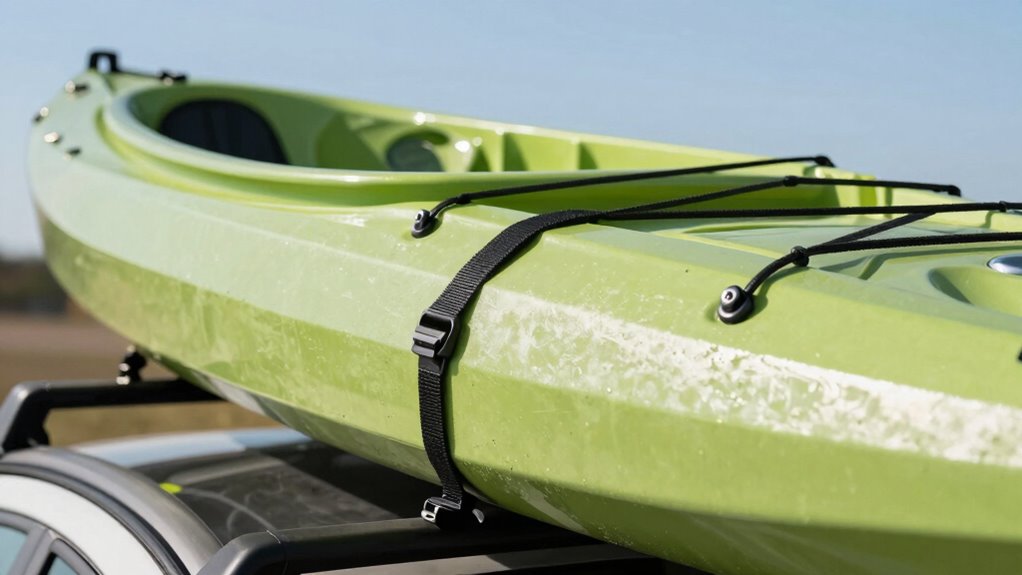
Use foam blocks, pads, or rack-specific cradles to cushion the kayak and protect its surface. These materials help absorb shocks and prevent scratches, especially if you’re traveling over rough terrain or uneven roads. Secure the kayak firmly using straps, making sure they are snug but not overly tight. Tighten the straps evenly to avoid putting uneven pressure on the boat, which could cause warping or twisting. It’s a good idea to strap the kayak at multiple points—front, middle, and rear—to keep it from sliding or bouncing. Additionally, understanding how to distribute weight properly on your rack can significantly improve stability and prevent damage. Proper rack safety also involves regularly checking your straps and hardware, especially after long drives or bumpy roads. Being aware of correct loading techniques can further help avoid unnecessary stress on your kayak and rack components.
As you fasten the kayak, double-check the rack safety. Make sure all straps are secure and that the kayak doesn’t shift when you gently tug on it. Tighten the straps in a crisscross pattern to maximize stability and evenly distribute tension. Regularly inspect the straps and rack components during your trip, especially after hitting bumps or potholes. Proper rack safety prevents accidents and ensures your kayak remains secure during your drive.
Finally, always be aware of your surroundings when loading and unloading. Take your time, and don’t rush the process, as rushing increases the risk of twisting the boat or damaging the rack. With careful attention to kayak storage and rack safety, you’ll protect both your kayak and your vehicle, making your trips safer and more enjoyable.
As an affiliate, we earn on qualifying purchases.
Frequently Asked Questions
What Types of Kayak Roof Racks Are Best for Minimizing Twisting?
You should opt for foam block or J-style roof racks to minimize twisting, as they provide better support and stability. Use roof rack padding to protect your kayak’s hull and secure it firmly. For added safety, incorporate kayak paddle storage straps, ensuring everything stays in place during transit. These rack types, combined with proper padding and paddle storage, help prevent twisting and keep your kayak secure on the roof.
How Do I Secure My Kayak to Prevent Movement During Transit?
Think of your kayak as a precious gemstone; you want it secure. To prevent movement during transit, use kayak padding to cushion and stabilize the boat, ensuring it doesn’t shift. Confirm your roof rack compatibility, making sure all straps are tight and properly positioned. Tie down the kayak firmly using cam straps or bow and stern tie-downs, checking regularly. Your careful approach keeps your kayak safe and your journey smooth.
Can I Load a Kayak Solo Without Damaging the Boat or Rack?
Yes, you can load a kayak solo without damaging it or the rack. First, position roof rack padding to protect your boat’s hull. Use your kayak paddle to help lift and guide the boat onto the roof, keeping it close to your body to avoid strain. Secure the kayak firmly with straps, ensuring it’s snug but not overly tight. Always double-check stability before hitting the road.
What Additional Accessories Can Help Prevent Twisting?
Think of your kayak like a delicate dancer—extra support keeps it from twisting out of line. Using crossbar padding cushions the boat, preventing damage, while tie-down straps stabilize it during transport. Additional accessories like bow and stern tie-downs or kayak cradles further prevent twisting and shifting. These tools work together to keep your kayak secure, ensuring a smooth ride without twisting or damage.
How Do Weather Conditions Affect Loading and Securing the Kayak?
Weather conditions considerably impact how you load and secure your kayak. Strong sun protection measures prevent equipment from heat damage, while wind resistance becomes vital when securing the kayak. In windy conditions, use additional straps and tie-downs to prevent shifting or flipping. If the sun’s intense, cover the kayak or apply UV protectant to avoid fading or cracking. Always check the forecast to adjust your loading strategy accordingly.
As an affiliate, we earn on qualifying purchases.
Conclusion
Now you’re ready to load your kayak without twisting it into a pretzel. Just follow these simple steps, stay steady, and keep your boat centered. With a little patience, you’ll prevent damage and keep your kayak in pristine condition—almost like magic! Remember, rushing can turn a smooth ride into a disaster. So take your time, stay alert, and enjoy every adventure with confidence. Your kayak, and your car, will thank you for it!
As an affiliate, we earn on qualifying purchases.
As an affiliate, we earn on qualifying purchases.
Fall yard work Picks
leaf blowers
As an affiliate, we earn on qualifying purchases.