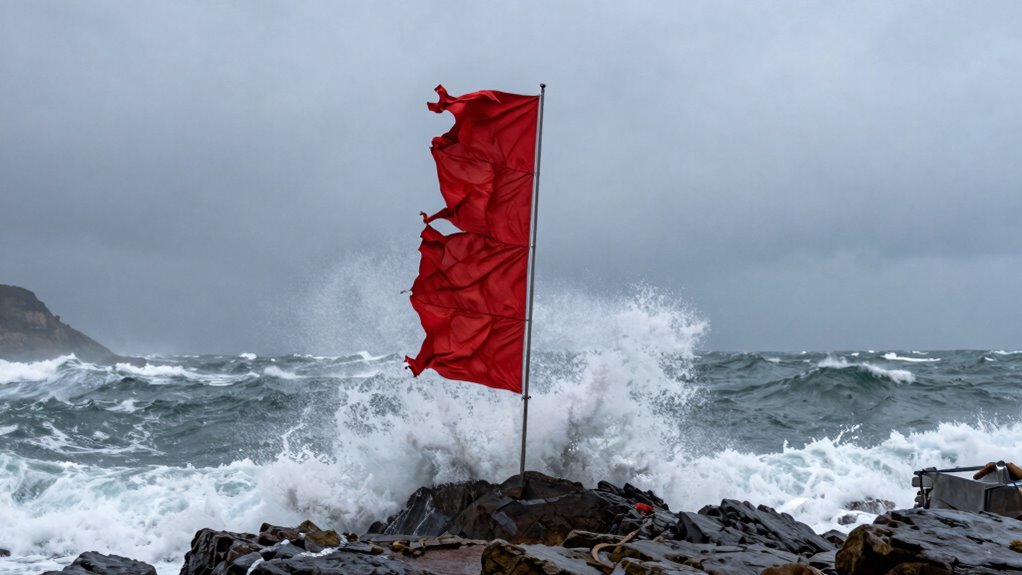

When you’re at the coast, don’t ignore warning signs like rough surf, darkening skies, or rising water levels, as they often signal dangerous conditions ahead. Strong winds, thick fog, and abnormal surf activity should trigger caution, since they can lead to storms, tidal surges, or impaired visibility. Recognizing these red flags can prevent accidents and protect your safety. Stay alert and aware—there’s more you should know about these critical signals before heading out.
Key Takeaways
- Rough surf, darkening skies, and rapid water level rises are critical warning signs to avoid coastal activities.
- Sudden tidal surges during storms or high tide can cause flooding and dangerous currents.
- Dense fog significantly reduces visibility, increasing collision and navigation risks for boats and ships.
- Strong winds, abnormal surf activity, and storm patterns indicate hazardous conditions that demand caution.
- Ignoring warning signs can lead to accidents, erosion, and environmental harm; always prioritize safety.
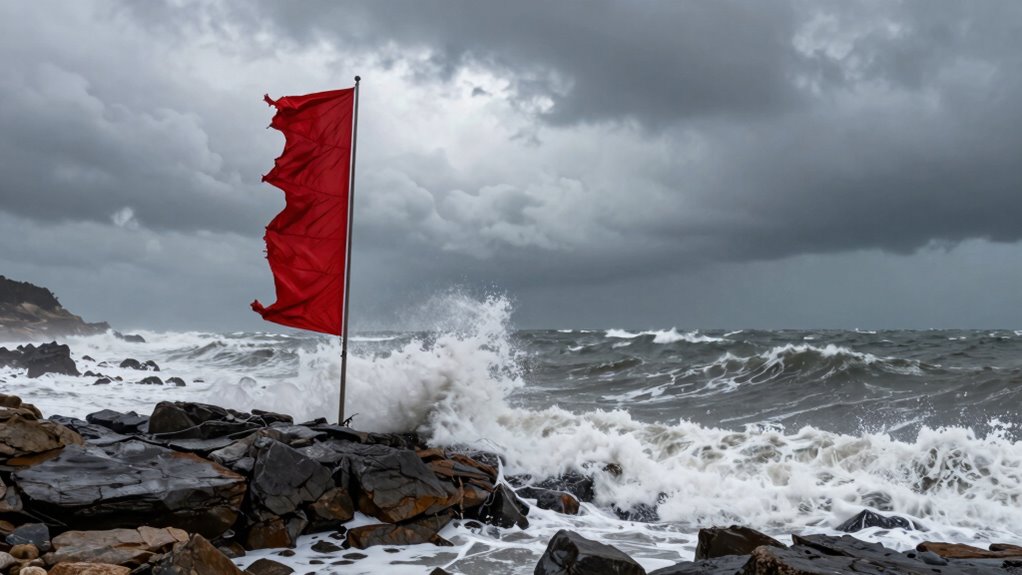
When the coast shows warning signs like rough surf, strong winds, or darkening skies, it’s essential to pay attention. These are clear signals that conditions are changing rapidly and that safety should be your top priority. One of the most dangerous phenomena to watch for is tidal surges. These sudden rises in water levels can flood beaches, erode coastline, and sweep unsuspecting swimmers or boaters out to sea. Tidal surges often occur during storms or high tide cycles, and their force can be unpredictable and powerful. If you notice water levels rising quickly or the surf becoming abnormally aggressive, it’s a sign to stay away from the shoreline and seek higher ground immediately.
Coastal fog is another red flag that shouldn’t be ignored. While it may seem benign or even mysterious, fog can considerably impair visibility, making navigation treacherous for boats and ships. If you’re on the water and encounter thick fog, you risk collisions, grounding, or losing your way. Onshore, fog can also hide hazards like rocks, piers, or sudden drops, increasing the chance of accidents. Don’t underestimate the danger of coastal fog—if it suddenly rolls in or thickens unexpectedly, it’s best to halt your activities and wait until visibility improves. Ignoring fog warnings can lead to dangerous situations, especially when combined with other weather conditions like strong winds or rough seas. Severe weather events can also have a deleterious impact on biodiversity and marine ecosystems, emphasizing the importance of respecting natural warning signs. Recognizing the signs of changing weather patterns can help prevent accidents and protect both visitors and marine life. Additionally, understanding storm warning signals can be crucial for timely safety measures.
As an affiliate, we earn on qualifying purchases.
Frequently Asked Questions
How Quickly Can Weather Conditions Change Along the Coast?
Weather conditions along the coast can change rapidly, sometimes within minutes. You might notice fog formation suddenly reducing visibility or a storm surge quickly escalating, especially during storms or high tides. These shifts can catch you off guard, so it’s vital to stay alert and monitor weather updates constantly. Always be prepared to adjust your plans immediately, as quick changes like fog or storm surge can pose serious risks.
Are Red Flags Visible From a Distance?
Red flags are highly visible from a distance, making them easy to spot. Visibility concerns are minimized because the bright red color sharply contrasts with the ocean and sky, catching your eye. The flag color’s significance is clear—red signals danger and the need for caution. So, keep an eye out for these vibrant flags when enjoying the coast, as they serve as essential, eye-catching warnings to stay safe and alert.
Can Weather Red Flags Be Ignored Safely?
You shouldn’t ignore weather red flags, as doing so risks your rain safety and surf safety. These flags warn you of dangerous conditions like high waves, strong currents, or stormy weather that could lead to accidents. Always respect these warnings, avoid swimming or surfing when red flags are up, and stay informed about local conditions. Your safety depends on recognizing and obeying these signals to prevent accidents caused by surf hazards.
What Emergency Supplies Should I Carry at the Coast?
For beach safety and emergency preparedness, you should carry essential supplies like a fully charged cell phone, a whistle, sunscreen, and plenty of water. Include a basic first aid kit, a flashlight, and a waterproof bag for valuables. Having extra clothing, a hat, and snacks also helps. These supplies make sure you’re ready for emergencies, and they help you stay safe and comfortable if conditions suddenly change or if rescue is needed.
How Often Are Weather Red Flags Updated or Monitored?
Think of weather alert systems as your coast’s vigilant guard dog, always on the lookout. They update red flag visibility regularly, often every hour or as conditions change, ensuring you get real-time alerts. Monitoring depends on local agencies and weather services, so stay attentive to their broadcasts. By doing so, you’ll always know when danger’s near, helping you make safe decisions before conditions turn risky.
As an affiliate, we earn on qualifying purchases.
Conclusion
Pay attention to these red flags, and don’t ignore them—your safety is more precious than a treasure chest overflowing with gold. When conditions turn dangerous, they can change in an instant, making even the bravest feel like tiny boats in a stormy sea. Stay vigilant, respect the weather, and trust your instincts. Remember, ignoring these signs isn’t just risky—it’s like playing a game of chance with your life. Stay safe and surf smart!
As an affiliate, we earn on qualifying purchases.
As an affiliate, we earn on qualifying purchases.