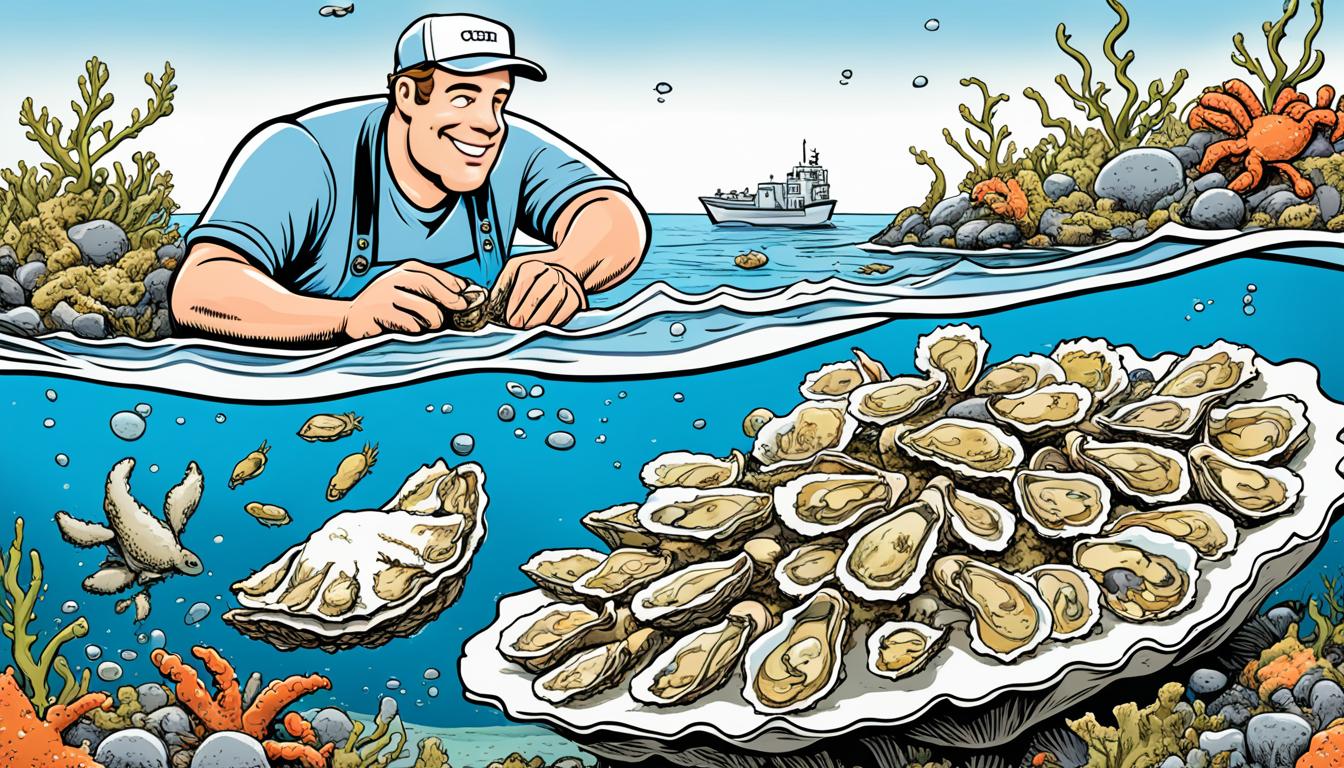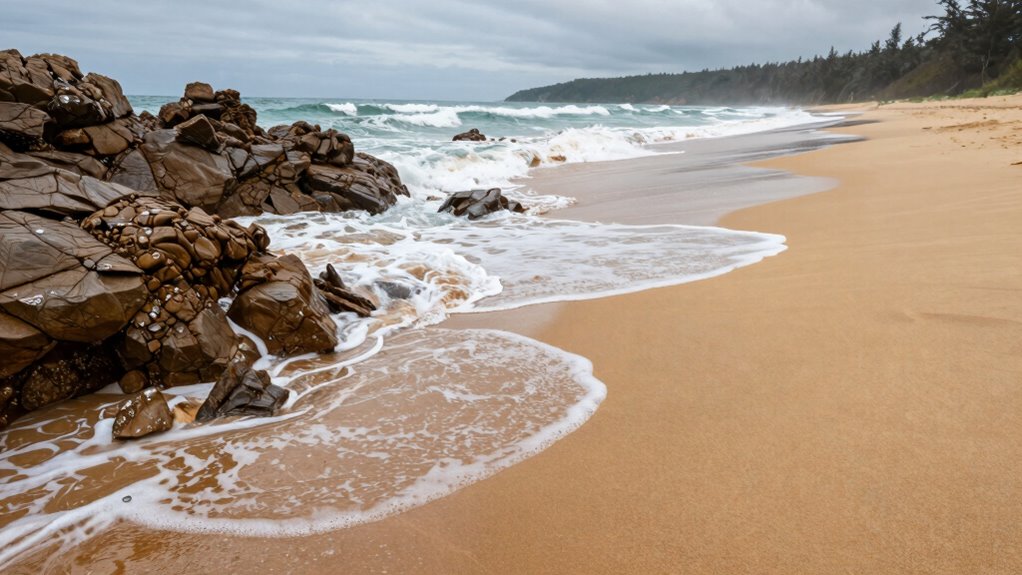

If you’re a beginner, rocky shores are the best place to learn about marine life quickly. They offer visible, easily accessible habitats with crevices and tide pools, making it simpler to spot and identify species like barnacles, mussels, and sea stars. Sandy shores are more challenging because organisms hide or shift with the sand. Stick with rocky shores for a clearer, more straightforward introduction—if you explore further, you’ll discover even more fascinating details.

Get garden gear delivered free with Prime
- Fast, free delivery on millions of items
- Prime Video, Amazon Music and more included
- Member-only deals all year
Key Takeaways
- Rocky shores offer visible, easily identifiable species and habitats, making initial learning quicker for beginners.
- Tide pools in rocky areas provide accessible, stable environments for observing marine life.
- Sandy shores are more dynamic and require patience to locate and identify species.
- Rocky habitats have uneven surfaces with crevices that facilitate easier exploration and observation.
- Overall, rocky shores provide clearer, more immediate learning opportunities for newcomers.
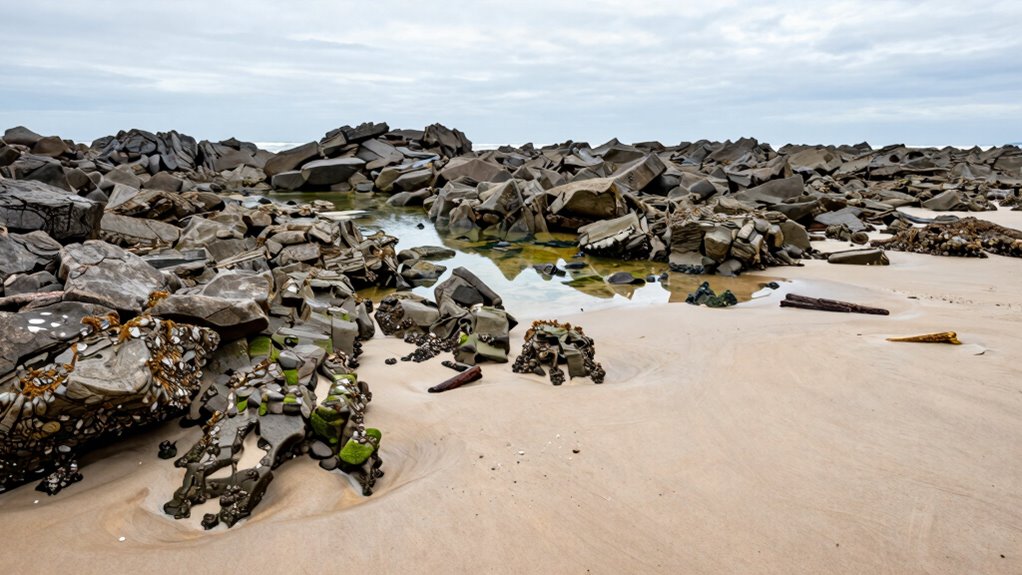
Have you ever wondered how rocky shores differ from sandy shores? Both environments are fascinating, but they offer very different experiences when it comes to exploring marine life. If you’re just starting to learn about coastal ecosystems, understanding these differences can help you pick the best spot for your first observations. Rocky shores tend to be richer in marine biodiversity because they provide a stable habitat for many species. Their uneven surfaces create numerous crevices and tide pools, which serve as hiding places and breeding grounds for a wide variety of marine creatures like barnacles, mussels, sea stars, and anemones. These tidal zones are dynamic, constantly changing with the ebb and flow of the tide, exposing organisms to both air and water. This variability challenges the creatures living there, but it also sustains a diverse ecosystem. As a beginner, you’ll find that rocky shores make it easier to spot and identify different species because they tend to cluster in specific areas, making your observations more straightforward.
In contrast, sandy shores are flatter and less textured, which means they don’t hold as many niches for marine life. Instead of crevices, you’ll see vast stretches of fine grains, with only a few hardy species like crabs, worms, and some mollusks making their homes within the sand. Marine biodiversity here is generally lower than on rocky shores, but the organisms that do live there are often more adapted to burrowing or moving through the loose substrate. Tidal zones on sandy shores are equally dynamic, with the shifting sands constantly redistributing organisms and nutrients. For beginners, sandy shores can be a good place to observe how marine animals burrow and how ecosystems recover after disturbances, but spotting a wide range of species can be more challenging compared to rocky environments.
When you’re learning about coastal habitats, rocky shores offer more immediate visual cues and more stable environments for observation. The multitude of tidal pools and accessible crevices make it easier to find and study different species, giving you a clearer picture of marine biodiversity. On the other hand, sandy shores might require more patience and a keen eye to locate the less obvious creatures that blend into the environment. Both environments are valuable for learning, but if your goal is to see a variety of marine life quickly and with less difficulty, rocky shores are often the better choice for beginners. They provide a richer, more accessible introduction to the complexities of tidal zones and the incredible diversity of life that inhabits them.
As an affiliate, we earn on qualifying purchases.
Frequently Asked Questions
Which Shoreline Type Has More Diverse Marine Life?
You’ll find more diverse marine life on rocky shores, thanks to their rich coral diversity and numerous tidal pools. These environments offer shelter and food sources, attracting a variety of species like crabs, mollusks, and sea anemones. Sandy shores, in contrast, support fewer species because their loose substrate doesn’t provide as many hiding spots. So, if you want a vibrant ecosystem to explore, rocky shores are the better choice.
Are Rocky Shores Safer for Beginners Than Sandy Shores?
Rocky shores are generally safer for beginners because they provide better footing, reducing the risk of slipping. Still, you should wear proper safety gear like sturdy shoes and gloves to prevent injuries. Keep in mind, rocky areas can have sharp edges and fragile marine life, so be mindful of your environmental impact. Sandy shores might be more forgiving, but always stay cautious and prepared regardless of the shoreline type.
How Does Wave Action Differ Between Rocky and Sandy Shores?
Wave action differs dramatically between rocky and sandy shores. On rocky shores, waves crash fiercely, creating tide pool variations and shaping erosion patterns, making it a wild ride for learners. Sandy shores, however, enjoy gentler waves, offering a calmer experience. You’ll find that the rocky terrain challenges your balance and skills, while sandy beaches let you ease into it. So, choose your adventure—rough or smooth, the waves won’t hold back!
Which Shore Type Is Better for Beginner Snorkeling?
You’ll find sandy shores better for beginner snorkeling because they offer calmer waters, making it easier to navigate and observe marine ecosystems safely. Sandy bottoms reduce the risk of injury and equipment snagging, simplifying gear considerations. Rocky shores, with their sharp edges and stronger wave action, can be challenging for newcomers. Starting at sandy beaches allows you to build confidence and learn snorkeling skills in a more forgiving environment.
Do Different Shore Types Require Different Safety Precautions?
Yes, different shore types require different safety precautions. On rocky shores, you should watch for slippery surfaces and unstable rocks to avoid falls, especially during wildlife observation. Sandy shores generally have gentler tidal patterns, but you still need to be cautious of sudden waves and currents. Always check tide schedules and stay alert to changing conditions, so you can enjoy your experience safely and avoid dangerous situations.
As an affiliate, we earn on qualifying purchases.
Conclusion
Choosing between a rocky or sandy shore is like picking a path in life’s journey. The rocky shore, with its rugged resilience, symbolizes grit and perseverance, perfect for those enthusiastic to learn toughness. The sandy shore, soft and forgiving, represents adaptability and patience, ideal for gentle beginnings. Whichever you choose, remember that each shoreline holds its own lessons. Embrace the symbolism, and let the ocean of experience guide your growth—your adventure starts where the tide meets the land.
marine life identification guide
As an affiliate, we earn on qualifying purchases.
As an affiliate, we earn on qualifying purchases.
As an affiliate, we earn on qualifying purchases.
Fall yard work Picks
leaf blowers
As an affiliate, we earn on qualifying purchases.