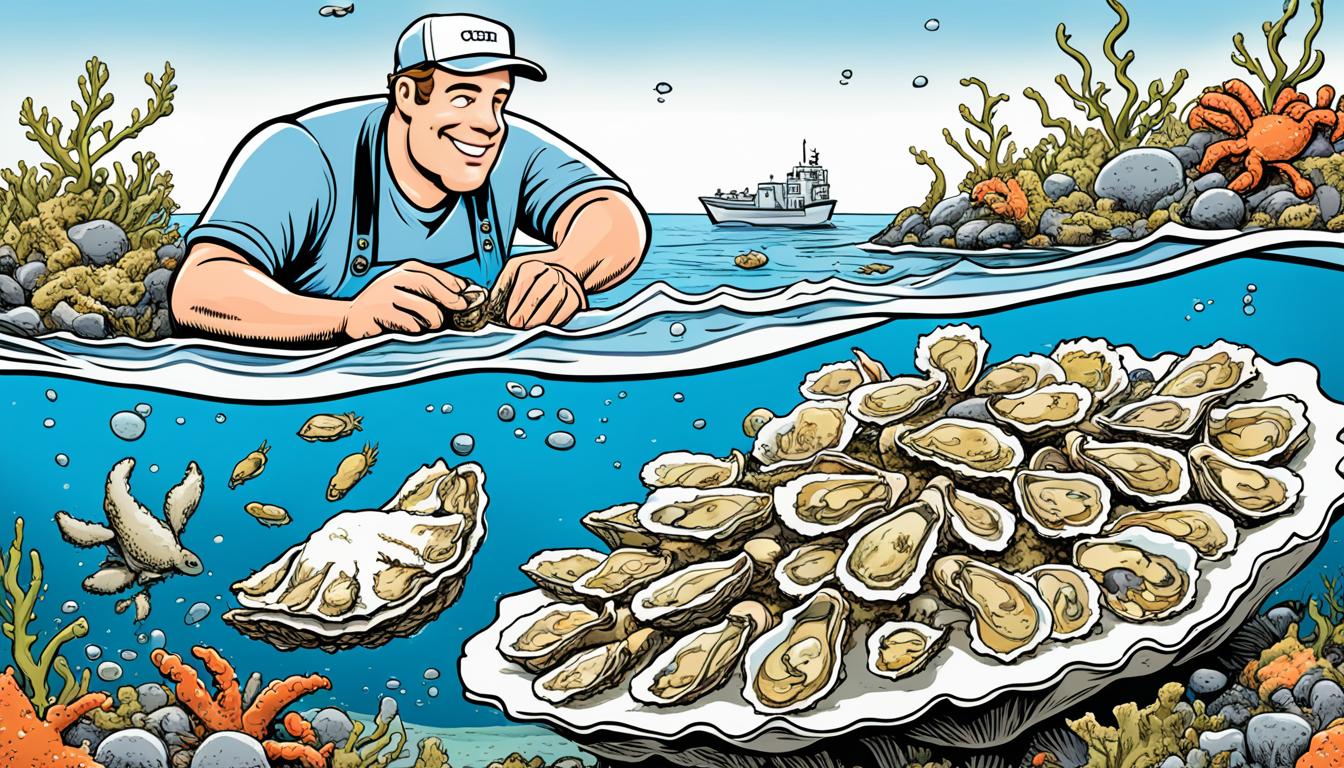
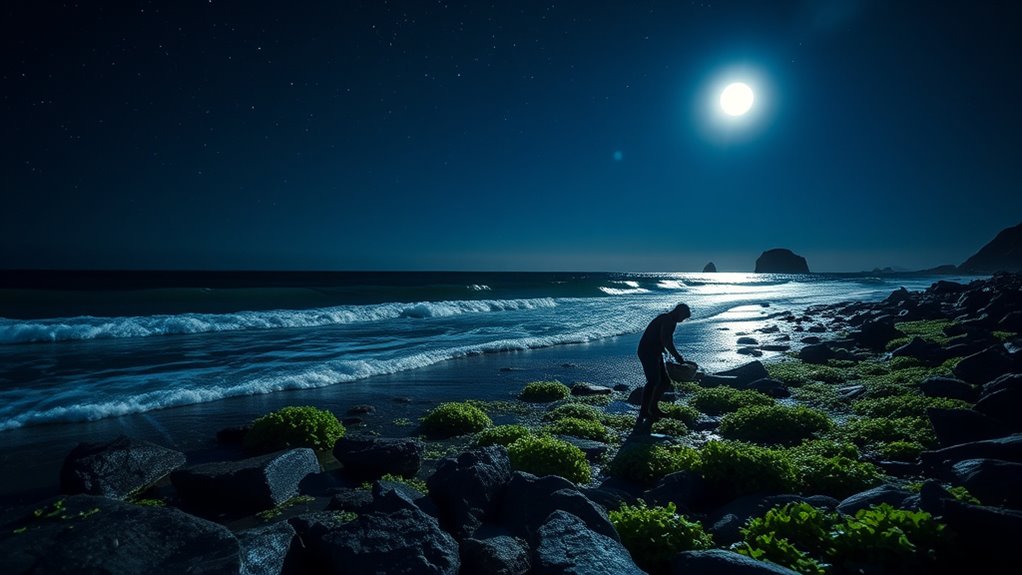

Under the stars, you can discover the secrets of the midnight tide by quietly harvesting healthy sea lettuce along rocky coastlines. This nocturnal activity supports sustainable practices, as you carefully clip the sea greens at their base to promote future growth, all while avoiding disturbance to marine life. The environment teems with bioluminescent organisms and tiny fish, creating a magical atmosphere. If you continue exploring, you’ll uncover more about this peaceful, eco-friendly ocean tradition.

Get garden gear delivered free with Prime
- Fast, free delivery on millions of items
- Prime Video, Amazon Music and more included
- Member-only deals all year
Key Takeaways
- Nocturnal harvesting minimizes ecological disruption, allowing sustainable collection of healthy, mature sea lettuce during the night.
- Calm, nutrient-rich waters at midnight foster lush sea lettuce growth and vibrant marine life.
- Spotting bioluminescent organisms and tiny nocturnal fish offers clues for successful harvesting.
- Using specialized, minimal-impact gear ensures careful collection while protecting marine ecosystems.
- The serene, star-lit environment creates a respectful atmosphere vital for sustainable nocturnal harvesting practices.
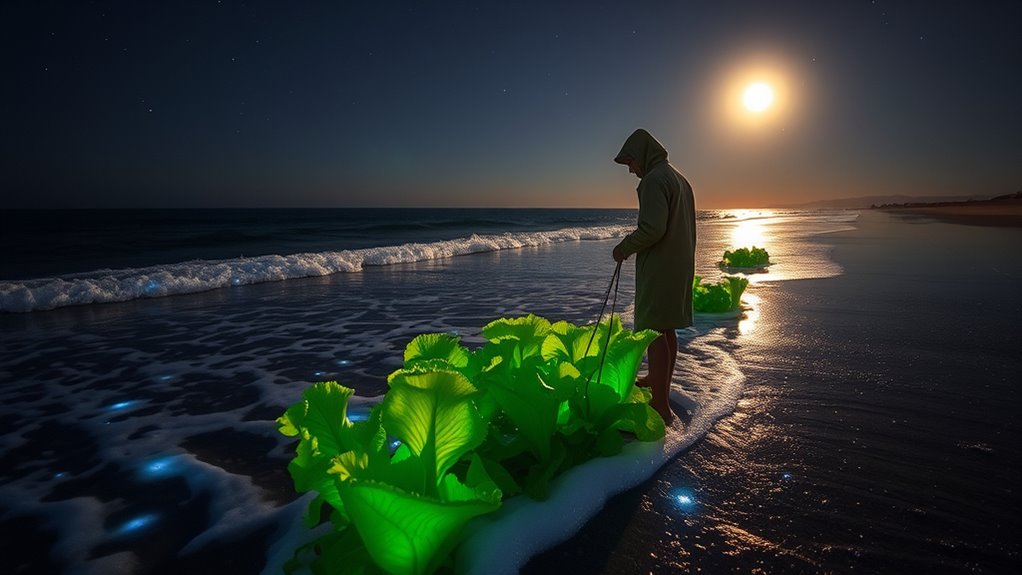
As the midnight tide rolls in, it reveals secrets long buried beneath the ocean’s surface, drawing curious explorers and seasoned divers alike into its mysterious depths. Under the glow of the moon, you find yourself immersed in a world that many never see—where the ocean’s quiet rhythm becomes a guide for your nocturnal harvesting adventure. The ocean’s marine ecology at night is a dynamic, essential system, teeming with life that thrives in the darkness, making it the perfect time to gather sea lettuce without disturbing the daytime ecosystem. This leafy green, abundant along rocky coastlines, plays a critical role in marine ecology as both habitat and food source for countless marine creatures.
Nighttime harvesting, or nocturnal harvesting, is a practice rooted in respecting this delicate balance. As you move silently through the water, you notice how sea lettuce sways gently with the currents, its vibrant green contrasting against the darker seabed. Unlike daytime collection, nocturnal harvesting minimizes disruption to marine life, allowing the ecosystem to continue its natural cycles undisturbed. You learn to identify healthy, mature sea lettuce, which often appears lush and abundant in the cool, nutrient-rich waters of night. With careful, deliberate movements, you clip the sea lettuce at its base, ensuring the plant can continue to grow and support other marine creatures.
This method requires patience and respect, as you become attuned to the subtle signs of the environment. The marine ecology at night offers a unique perspective—you might spot tiny nocturnal fish darting through the kelp or see the glow of bioluminescent organisms that light up the dark waters. As you harvest, you’re reminded of your role as a steward of the ocean, contributing to sustainable practices that preserve these ecosystems for future generations. Using specialized gear such as compact and portable tools can help minimize disturbance and facilitate efficient collection in the delicate nocturnal environment. The cool sea breeze, the rhythmic sound of water against your gear, and the stars overhead create an atmosphere of harmony and quiet reverence for nature’s nighttime bounty.
Popular right now

Shark Pet Cordless Stick Vacuum, Up to 40-Minute Runtime, Lightweight, IX141

Samsung 43-Inch M70H Series 4K Mini LED Smart TV (2026)

Bose QuietComfort Ultra Headphones (2nd Gen), Wireless Noise-Cancelling Over-Ear Headphones with Spatial Audio, Driftwood Sand
As an affiliate, we earn on qualifying purchases.
Frequently Asked Questions
What Equipment Is Essential for Nighttime Sea Lettuce Harvesting?
When harvesting sea lettuce at night, you need essential harvesting gear like a sturdy knife or scissors, gloves to protect your hands, and a container to store your harvest. Make sure to guarantee safety precautions, such as wearing a headlamp or waterproof flashlight, to see clearly and avoid accidents. Also, carry a waterproof bag for your gear and ascertain you’re aware of tides and currents to stay safe while harvesting under the stars.
Are There Specific Moon Phases Ideal for Harvesting?
You should consider the moon phase when planning your sea lettuce harvest, as it impacts tidal levels and lighting conditions. The most favorable timing usually occurs during a new moon or during neap tides, when tides are lower and easier to access. By aligning your harvest with these moon phases, you’ll benefit from calmer waters and better visibility, making your nighttime foraging more productive and safer.
How Do Tides Affect Sea Lettuce Collection?
You might think tides just move water, but they play a crucial role in harvesting sea lettuce. Tidal patterns influence when you can gather the seaweed, as low tides expose more of the nutrient-rich beds where sea lettuce thrives. During these times, nutrient cycles are at their peak, making your harvest more abundant and fresh. Tracking tides helps you optimize your collection and guarantee you’re harvesting at the best moment.
Is Harvesting Sea Lettuce Environmentally Sustainable?
You might wonder if harvesting sea lettuce is environmentally sustainable. When you practice sustainable harvesting, you reduce ecological impact by taking only what’s needed and avoiding overharvesting. This approach allows sea lettuce populations to thrive and ecosystems to remain balanced. By following eco-friendly methods, you guarantee that your harvesting supports healthy marine environments, preserving these essential plants for future generations and maintaining the ocean’s natural bounty.
Can Beginners Safely Harvest Sea Lettuce at Night?
You might feel like a daring explorer, but harvesting sea lettuce at night isn’t for beginners. To stay safe, focus on marine safety and practice nocturnal navigation skills. Use a flashlight, stay aware of your surroundings, and avoid rough waters. With proper preparation and caution, you can enjoy nighttime harvesting, but rushing in without experience could lead to accidents. Always prioritize safety over adventure to protect both yourself and the environment.
Conclusion
As you stand beneath the shimmering stars, you realize the magic of harvesting sea lettuce isn’t just in the act itself, but in the rhythm of the tide, the whisper of the wind, and the glow of the moon. You embrace the night’s secrets, the dance of nature’s elements, and the serenity of the sea. In this moment, you’re part of something timeless, something pure—something unforgettable.