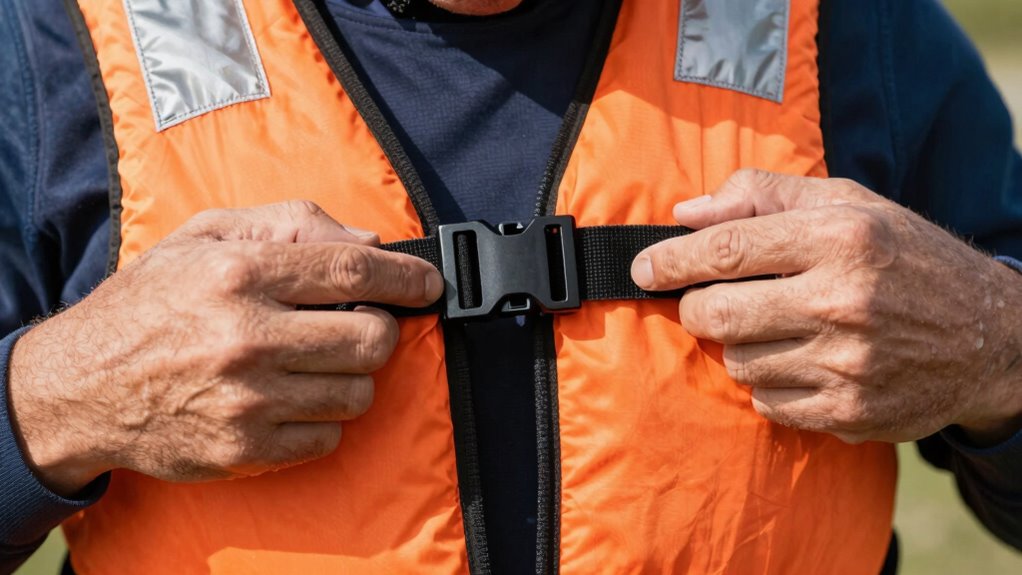

The most overlooked adjustment on your PFD is making sure the straps are snug enough to keep it high on your torso without restricting movement or circulation. Many people forget to double-check the fit before getting in the water, risking discomfort or safety issues. Properly tightened straps prevent slipping and maximize buoyancy, especially over wetsuits. If you want to stay safe and comfortable, pay close attention to this essential step — there’s more to ensure your PFD works perfectly.
Key Takeaways
- The most overlooked adjustment is tightening the straps enough to secure the PFD firmly without restricting movement.
- Proper fit ensures the PFD sits high on the torso, maximizing buoyancy and safety during water activities.
- Always double-check strap tightness before each use, especially over wetsuits or additional gear.
- A snug yet comfortable fit prevents the PFD from slipping off or shifting during movement.
- Regularly adjusting straps maintains optimal safety, comfort, and effectiveness of the PFD in emergencies.

Ever wonder how to find the perfect life jacket fit? It’s a common question, and one that’s vital for your safety on the water. Many people overlook one key adjustment that makes all the difference: ensuring your personal flotation device (PFD) fits snugly without restricting movement. A proper fit isn’t just about comfort; it’s about staying safe and complying with water safety protocols. If your PFD doesn’t fit correctly, it could slip off or fail to keep you afloat during an emergency. To avoid this, take the time to adjust the straps so they’re tight enough to secure the device firmly against your body, but not so tight that they cut off circulation or cause discomfort. The goal is to have the PFD sit high on your torso, with minimal movement when you move your arms or twist your body.
Another essential factor many overlook is wetsuit compatibility. If you’re wearing a wetsuit, your PFD must be compatible to avoid a poor fit that can compromise safety. Wetsuits tend to be snug and compressible, so choosing a PFD designed to accommodate this layer ensures it won’t ride up or feel too tight. Many PFDs are specifically made with adjustable straps or different sizing options to work seamlessly over wetsuits. If the PFD isn’t compatible, it may shift or become uncomfortable, which could distract you or hinder your ability to respond quickly. Always try on your PFD with your wetsuit before heading out, adjusting the straps to confirm it remains secure and comfortable. This practice aligns with water safety protocols, emphasizing preparation and proper equipment fit to minimize risks. Additionally, understanding the importance of a proper fit can greatly enhance your safety and confidence while on the water.
Taking the time for a proper fit also helps you maintain better awareness of your water safety protocols. When your PFD fits well, you’re less likely to be distracted by discomfort or constantly readjusting it, so you can focus entirely on your surroundings and safety measures. Remember, a well-fitted PFD is your first line of defense in emergencies, providing buoyancy and peace of mind. Don’t skip the adjustment step, even if it feels minor. It’s often the most overlooked adjustment that can make the biggest difference in your safety and comfort on the water. Always double-check your fit each time you go out, especially if you’re wearing additional gear like a wetsuit, and ensure your PFD is secured correctly before any activity. Proper fit and compatibility are simple steps that greatly improve your water safety and overall experience.
Frequently Asked Questions
How Often Should I Recheck My PFD Fit?
You should recheck your PFD fit regularly, especially before each trip or activity, to guarantee proper fit maintenance and gear compatibility. Changes in body weight, clothing, or gear can affect how well your PFD fits and performs. Make it a habit to verify the fit each time for safety and comfort, preventing slippage or discomfort during use. Regular checks keep your PFD functioning at its best and ensure your safety on the water.
Can I Wear a PFD Over Other Gear?
Think of your PFD as a trusty shield—you can wear it over other gear if you choose, but proper layering options are key. Make sure your PFD fits snugly over your clothing without restricting movement or comfort. Adjust for bulk from wetsuits or insulating layers, and always check that the PFD remains secure. Layer smartly to stay safe, comfortable, and ready for any adventure on the water.
What if My PFD Feels Too Tight but Isn’T?
If your PFD feels too tight but isn’t, it might be due to material stretching or your body shifting slightly. You should do fit testing to verify it’s snug without restricting movement or breathing. Remember, PFD material can loosen over time, so adjust straps if possible. A proper fit keeps you safe and comfortable, so don’t ignore the discomfort—double-check with fit testing to get it just right.
Are There Different Fit Guidelines for Children?
Ironically, yes, there are different fit guidelines for children. You should focus on children’s PFD sizing, which emphasizes snug but comfortable fits, and consider youth fit adjustments to guarantee safety. Unlike adult life jackets, kids need more precise fitting to stay secure and comfortable. Always check the manufacturer’s sizing charts and adjust straps properly. Proper fit isn’t just comfort; it’s your child’s safety on the water.
How Do I Adjust a PFD for Long-Term Comfort?
To guarantee long-term comfort, you should regularly check and tweak your PFD’s PPE adjustments. Start by loosening or tightening straps for a snug but comfortable fit, avoiding pinching or excessive movement. Adjust shoulder and side straps to distribute pressure evenly, which boosts comfort improvements over time. Remember, a well-fitted PFD not only enhances safety but also reduces fatigue, making your water adventures more enjoyable and hassle-free.
Conclusion
So, there you have it — the one adjustment most people ignore, yet swear by once they finally get it right. Skipping this step is like ignoring a life jacket’s instructions; sure, you might float, but why risk it? Get cozy with that tiny tweak, and suddenly your PFD becomes your best friend in the water. Because, let’s face it, who needs comfort or safety when you can just wing it?