In this kelp species guide, you’ll discover varieties like kombu, used in Japanese cooking for umami-rich broths, and bull kelp, known for its distinct large blades and role in coastal ecosystems. Each species supports marine biodiversity and provides unique culinary and nutritional benefits. Proper harvesting guarantees sustainability and ecological health. If you keep exploring, you’ll find detailed insights into the importance of these kelp species, their uses, and how to harvest responsibly to protect these crucial marine resources.
Key Takeaways
- Kombu (Saccharina japonica) is a widely used edible kelp known for its umami flavor and role in Japanese cuisine.
- Bull Kelp (Nereocystis luetkeana) is a large, fast-growing kelp found along North American coasts, forming dense underwater forests.
- Other common kelp species include Laminaria, Macrocystis pyrifera, and Alaria, each with unique habitats and uses.
- Kelp species vary in size, habitat, and harvesting methods, impacting their culinary and ecological roles.
- Proper identification and sustainable harvesting are essential to preserving kelp diversity and supporting healthy ecosystems.
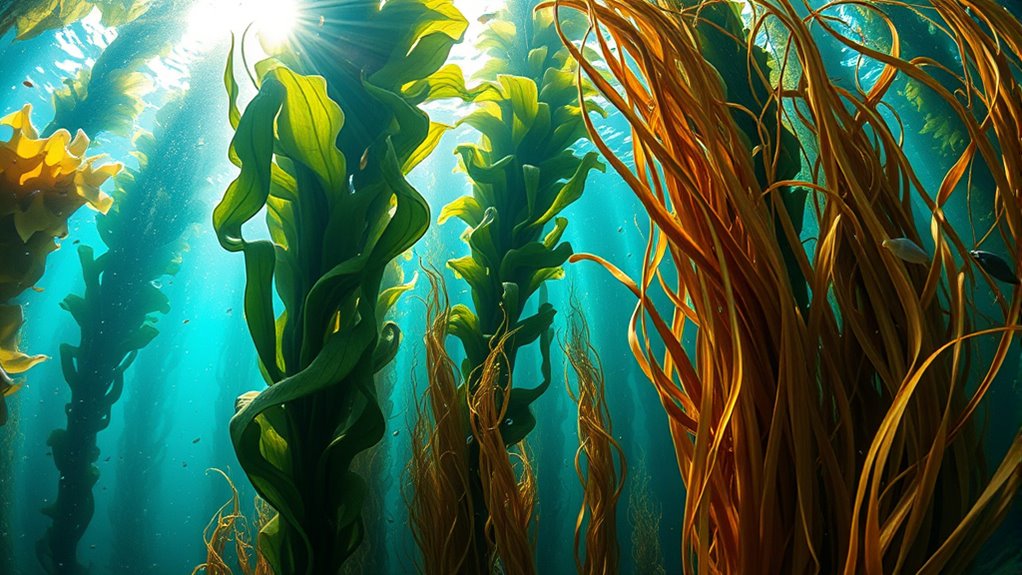
Kelp is an indispensable underwater plant that plays a fundamental role in marine ecosystems, providing habitat, food, and shelter for countless species. If you’re interested in harvesting kelp, understanding the proper techniques is essential to guarantee sustainability and preserve the health of kelp forests. When it comes to harvesting techniques, you should focus on methods that minimize environmental impact, such as selective cutting and hand-harvesting. These approaches involve carefully clipping the kelp at the base, avoiding damage to the holdfast (the root-like structure), and leaving enough of the plant intact so it can continue growing. Using sharp tools and harvesting during appropriate seasons also helps prevent overharvesting and ensures healthy regrowth. As you harvest, always follow local regulations and guidelines, which may restrict the amount and timing of harvest to protect marine ecosystems.
Kelp’s culinary uses are just as diverse as its ecological importance. In many cultures, especially in Asia, kelp is a staple ingredient in soups, broths, and salads. Its umami-rich flavor adds depth to dishes, making it a popular choice for enhancing taste naturally. Kombu, a type of kelp, is often used to make dashi, a fundamental Japanese stock that forms the base for miso soup, noodle dishes, and stews. When preparing kelp for culinary purposes, you typically soak it in water to rehydrate or boil it to soften the texture. You might also slice it into strips or chop it finely, depending on the recipe. Beyond Japan, kelp is increasingly appreciated worldwide, often incorporated into smoothies, pickles, and health tonics due to its nutritional benefits. Proper harvesting techniques also help maintain the sustainability of kelp populations for future use.
In addition to culinary uses, kelp is valued for its nutritional content—rich in iodine, vitamins, and minerals—making it a popular supplement for health-conscious consumers. Harvesting kelp thoughtfully ensures that there will be plenty for culinary uses without depleting natural populations. Whether you’re using kelp fresh, dried, or powdered, proper handling and storage are important to maintain its flavor and nutritional value. As you explore kelp, remember that sustainable harvesting techniques not only protect the environment but also guarantee a steady supply for future culinary adventures. Whether you’re preparing a traditional dish or experimenting with new recipes, understanding these techniques helps you appreciate kelp’s versatility and significance, both as a food and a vital part of marine ecosystems.
Frequently Asked Questions
How Do Kelp Species Vary in Their Nutritional Content?
You’ll notice that kelp species vary in their nutritional content, especially in mineral content and nutritional variability. Some, like kombu, are rich in iodine, calcium, and magnesium, while others like bull kelp have different levels of these minerals. This diversity means that depending on the species, your kelp can provide varying health benefits, so it’s worth choosing based on your specific nutritional needs.
What Are the Environmental Impacts of Kelp Harvesting?
You should consider that kelp harvesting, if done unsustainably, can harm marine ecosystems by disrupting habitat and reducing biodiversity. Sustainable harvesting practices help maintain kelp populations and protect marine life. Overharvesting can lead to decreased shelter for fish and other species, affecting the entire ecosystem. By following sustainable methods, you can minimize negative marine ecosystem effects and support healthy, thriving kelp forests.
Can Kelp Species Be Cultivated Commercially Outside Their Native Regions?
Yes, you can cultivate kelp species commercially outside their native regions through aquaculture. However, you’ll face aquaculture challenges like maintaining ideal conditions and preventing invasive potential. It’s essential to carefully manage cultivation to avoid disrupting local ecosystems. When done responsibly, commercial kelp farming outside native areas can boost food and biofuel sources while minimizing ecological impacts. Just stay vigilant about environmental risks and sustainable practices.
How Do Kelp Species Adapt to Changing Ocean Temperatures?
Imagine kelp as a resilient dancer, gracefully adjusting to shifting ocean temperatures. You see, their reproductive strategies kick in, producing spores that drift like tiny boats seeking new kelp zones. As waters warm or cool, kelp shifts its zone distribution, anchoring itself where conditions suit its survival. This adaptability helps kelp thrive despite changing temperatures, allowing it to gracefully navigate the ever-evolving dance of the ocean’s climate.
Are There Any Potential Health Risks Associated With Consuming Certain Kelp Species?
Yes, consuming certain kelp species can pose health risks due to toxic compounds and contaminant accumulation. You might ingest heavy metals like arsenic or pollutants from polluted waters, which can build up in kelp tissues. To stay safe, it’s best to consume kelp from reputable sources and moderate your intake, especially if you’re pregnant or have health concerns. Always stay informed about kelp harvesting locations and potential contamination risks.
Conclusion
As you explore the diverse world of kelp, remember that each species is like a different brushstroke in a vibrant underwater mural. I once snorkeled through a kelp forest where the towering kombu and waving bull kelp felt like living skyscrapers. Just as each plant adds depth and color to the scene, understanding these species enriches your appreciation for ocean ecosystems. Plunge in, learn more, and let these kelp forests inspire your wonder for our planet’s incredible biodiversity.