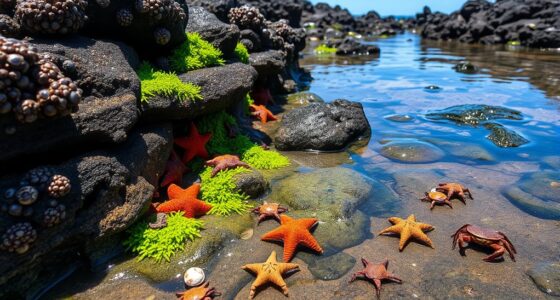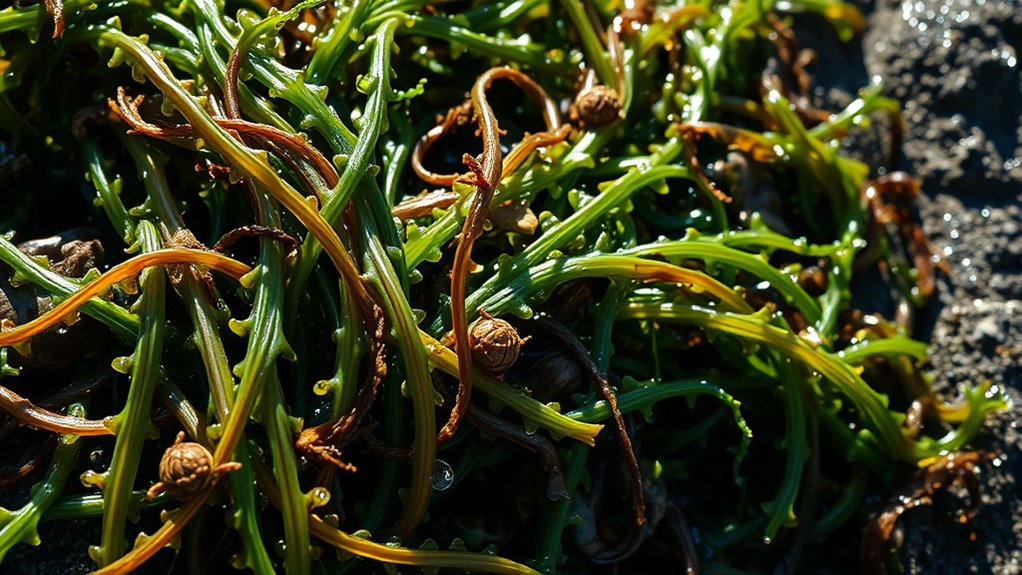
To forage wakame and alaria responsibly, use scissors or a knife to cut just above the holdfast, avoiding pulling and damaging the plant. Rinse them thoroughly with cold water and store in breathable containers in the fridge for short-term use. To preserve them long-term, dry in a well-ventilated area or blanch then freeze. Learn how to identify healthy, vibrant specimens and harvest sustainably to protect marine ecosystems—more tips await as you explore further.

Get garden gear delivered free with Prime
- Fast, free delivery on millions of items
- Prime Video, Amazon Music and more included
- Member-only deals all year
Key Takeaways
- Properly identify wakame and alaria by their color, texture, and appearance to ensure responsible foraging.
- Harvest only sustainable amounts using scissors above the holdfast, avoiding damaged or polluted areas.
- Rinse seaweed thoroughly with cold water to remove debris before immediate use or preservation.
- Dry or blanch and freeze for long-term storage, ensuring complete moisture removal to prevent spoilage.
- Respect local cultural practices and environmental guidelines to maintain healthy cold-water seaweed ecosystems.

Have you ever wondered how to find fresh, edible seaweed right from the shoreline? If you’re interested in foraging for wakame and alaria, you’ll want to focus on sustainable harvesting practices. These methods *guarantee* that you collect only what’s needed without damaging the environment or depleting the seaweed populations. When harvesting, use scissors or knives to cut the seaweed just above the holdfast (the root-like base). Avoid pulling or tearing, which can harm the plant and disrupt the ecosystem. It’s best to harvest from areas that are not overcrowded, and steer clear of seaweed that appears damaged, dried out, or contaminated by pollutants. By practicing sustainable harvesting, you help maintain healthy seaweed beds for future foragers and marine life alike. Additionally, paying attention to the cultural significance of seaweed in local communities can enrich your foraging experience and promote respectful harvesting practices.
Once you’ve gathered your seaweed, preservation techniques come into play to keep it fresh and edible. Rinse your wakame and alaria thoroughly with cold, clean water to remove sand, salt, and any small debris. If you plan to use the seaweed soon, pat it dry with a clean towel and store it in a breathable container or paper bag in the refrigerator. For longer storage, drying is highly effective. You can hang the seaweed in a well-ventilated area or use a dehydrator to remove moisture completely. Proper drying prevents mold and spoilage, preserving the seaweed’s flavor and nutritional value. Alternatively, some like to blanch the seaweed briefly in boiling water, then cool it in ice water before freezing. This method can lock in nutrients and extend shelf life. Regardless of your choice, always label your preserved seaweed with the harvest date to keep track of freshness.
Knowing how to identify the best harvesting spots and applying sustainable techniques *ensures* that your foraging remains responsible and eco-friendly. When it comes to preservation, mastering the right techniques guarantees that your seaweed stays flavorful and safe to eat over time. Both wakame and alaria thrive in cold water, so look for their characteristic textures and colors—wakame is usually dark green and tender, while alaria has a more robust, ruffled appearance with a slightly bitter taste. By combining careful harvesting with proper preservation, you can enjoy these nutritious seaweeds long after you leave the shoreline. With a little practice, you’ll become confident in sourcing and storing seaweed, *ensuring* a sustainable and rewarding foraging experience every time.
Frequently Asked Questions
Are Wakame and Alaria Safe for Raw Consumption?
Yes, wakame and alaria are safe for raw consumption, but you should verify they come from reputable sources to maintain seaweed nutrition and safety. Always follow local harvesting regulations to avoid contamination and overharvesting. Rinsing thoroughly helps remove any debris or salt, reducing potential risks. When properly sourced and prepared, these seaweeds offer valuable nutrients and can be enjoyed raw in salads or sushi.
How Do I Identify Wakame and Alaria in the Wild?
Think of the ocean’s bounty like a treasure map—you must know where to look. To identify wakame and alaria, visit rocky shores during spring and summer, when they flourish. Wakame has broad, ruffled fronds with a delicate, feathery appearance, while alaria sports long, slender, sword-like blades with characteristic “wings.” Look for these seaweeds clinging to rocks in cold-water habitats, swaying with the tide, ready for your foraging adventure.
What Tools Are Best for Foraging These Seaweeds?
You’ll want a sturdy pair of scissors or a sickle for harvesting wakame and alaria, ensuring you follow local seaweed harvesting regulations. Use your hands carefully to avoid damaging the delicate holdfasts. Traditional foraging techniques, like gently scraping or cutting, help preserve the ecosystem. Always check regulations first, and harvest sustainably by taking only what you need, leaving enough for future growth. This way, you enjoy fresh seaweed responsibly.
Can I Harvest These Seaweeds Sustainably?
Yes, you can harvest these seaweeds sustainably by following best practices. Focus on sustainable harvesting practices like taking only what you need, leaving enough behind for regrowth, and avoiding overharvesting. This helps minimize ecological impacts and guarantees the health of the marine environment. Be mindful of local regulations, and always harvest responsibly to support the ecosystem’s balance and future seaweed availability.
Are There Any Look-Alikes to Watch Out For?
Yes, there are toxic look-alikes to watch out for when foraging seaweeds like wakame and alaria. Some species can cause seaweed poisoning if mistaken for edible varieties. Always learn to identify the key features of safe seaweeds and avoid those with unusual textures, colors, or smells. When in doubt, consult a local expert or guide to prevent accidental harvesting of toxic look-alikes that could harm you.
Conclusion
Don’t let the unfamiliarity stop you—imagine yourself walking along a rocky shoreline, hands gently grasping vibrant wakame and alaria. With a little guidance, you’ll discover these cold-water seaweeds are easier to forage than you think. By learning to identify and harvest them responsibly, you’ll add fresh, nutritious ingredients to your kitchen while connecting with nature. So, go ahead—embrace the adventure and see how rewarding seaweed foraging can be, even if you’re new to it.
Columbus Day / Indigenous Peoples' Day Picks
long weekend sales
As an affiliate, we earn on qualifying purchases.