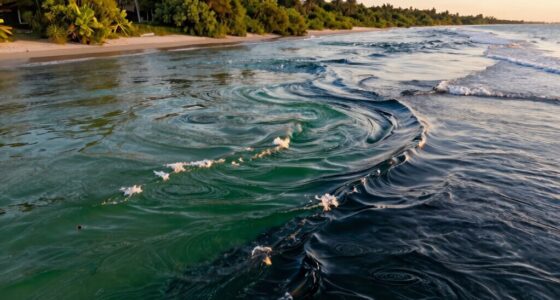
The speed at which a beach refills after low tide depends on its shoreline shape and underwater terrain. Narrow or steep coastlines funnel water quickly, causing rapid refilling. Conversely, gently sloping seabeds slow down water flow. Coastal features, erosion, and human structures also influence how fast the tide can return. If you want to discover more about the natural forces and local factors behind this process, keep exploring the fascinating details below.
Key Takeaways
- Narrow or steep coastlines funnel water, causing rapid tide inflow and faster beach refilling.
- Coastal topography with underwater channels or barriers influences water movement speed.
- Gently sloping seabeds slow water ingress, leading to slower beach refilling.
- Human modifications like seawalls can alter natural tidal flow and refill rates.
- Erosion and shoreline changes reshape coastlines, impacting tidal response and refill speed.

Have you ever noticed that some beaches seem to refill with water much faster after a tide recedes, while others take their time? The answer lies in a mix of natural factors, especially tidal patterns and coastal erosion. When the tide goes out, the way water rushes back in depends heavily on the local tidal cycle. Some beaches experience a rapid influx of water because they’re aligned with the natural rhythm of high and low tides in that area. These tidal patterns are influenced by the gravitational pull of the moon and the sun, which create specific timing and intensity for each tide. If your beach is situated where the tide’s rise is quick, it’s because the coastline is shaped to funnel water in rapidly, often due to a narrow or steep continental shelf.
Some beaches refill quickly due to narrow shelves and strong tidal patterns influenced by the moon and sun.
On the other hand, beaches that refill more slowly often have different tidal dynamics. They might be located in areas where tidal currents are weaker or where the continental shelf spreads out wider, causing a gentler, more gradual rise of water. The shape and depth of the seabed directly influence how fast water moves back onto the shore. If the seabed slopes gently, the water will flow in slowly, giving the appearance of a more leisurely refill. Conversely, steep or constricted coastlines accelerate water movement, leading to quick refills. Additionally, the local underwater terrain can create channels or barriers that influence the speed of water inflow, further impacting refill times. Coastal morphology also plays a significant role in shaping these differences in refill rates, as it determines how water flows and interacts with the shoreline. Understanding these natural processes can help explain the tidal flow and why certain beaches respond differently. Recognizing how coastal features influence water movement can deepen your appreciation of coastal dynamics and shoreline variability.
Coastal erosion also plays a crucial role in how quickly beaches regain water. Over time, erosion can alter the shoreline’s shape and depth, impacting tidal flow. Beaches that suffer significant erosion might develop wider or more uneven profiles, which can either slow down or speed up water refilling depending on how the land has changed. Erosion can create barriers or channels that divert water flow, making some beaches refill faster while others remain sluggish. In areas with intense erosion, the coastline might become more irregular, causing unpredictable tidal patterns and inconsistent water levels. These ongoing changes in erosion can also expose or cover natural barriers, further influencing how water moves back onto the beach. Coastal erosion constantly reshapes the shoreline and influences tidal behavior in complex ways. Moreover, human interventions such as seawalls or groynes can also modify natural erosion processes, further affecting how beaches refill.
Understanding why some beaches refill faster helps you appreciate how natural forces work together. Tidal patterns, shaped by celestial mechanics, determine the timing and speed of water movement. Coastal erosion, driven by weather, human activity, and natural processes, continuously reshapes the shoreline, influencing how water interacts with the land. When you visit a beach, notice how its shape and position relative to the tide can tell you a lot about its refill speed. The dynamic interplay of these factors creates the diverse shoreline behaviors you observe, making each beach uniquely responsive to the ocean’s rhythmic dance.
As an affiliate, we earn on qualifying purchases.
Frequently Asked Questions
How Does Human Activity Impact Beach Refilling Rates?
Human activity impacts beach refilling rates primarily through coastal development and beach pollution. When you build structures too close to the shoreline, it can block natural sand movement, slowing refilling. Pollution from trash or chemicals damages the natural environment, hindering sand replenishment. By managing coastal development responsibly and reducing beach pollution, you can help maintain natural sand flow, ensuring beaches refill naturally and stay healthy for future visitors.
Do Seasonal Changes Affect How Quickly Beaches Refill?
Yes, seasonal variations and climate effects profoundly influence how quickly beaches refill. During warmer months, increased wave activity and higher water levels can bring more sand onto the shore, speeding up refilling. Conversely, in colder seasons, calmer waters and reduced wave energy slow down the process. You’ll notice beaches tend to refill faster in spring and summer due to these seasonal changes driven by climate effects.
Can Beach Erosion Alter the Refilling Process?
Beach erosion can drastically alter the refilling process, sometimes changing a beach’s landscape forever. When erosion occurs, it disrupts coastal sedimentation, making it harder for natural barriers like dunes or reefs to trap sand effectively. Without these barriers, sand washes away more quickly, delaying refilling. You might see a beach that once recovered swiftly now take years to regain its former shape, as erosion continuously chips away at its foundation.
What Role Do Nearby Rivers Play in Beach Refilling?
Nearby rivers play a vital role in beach refilling through river influx, bringing sediment supply that replenishes eroded beaches. When a river carries a high sediment load, it deposits sand and other materials onto the shoreline, speeding up the refilling process. Conversely, if a river’s sediment supply diminishes, the beach may refill more slowly. So, the health and flow of local rivers directly influence how quickly a beach recovers.
Are There Specific Types of Sand That Influence Refill Speed?
Sand composition and sediment size dramatically influence how quickly a beach refills. Fine, rounded sands allow water and wind to move them easily, speeding up refilling. Think of it like a well-oiled machine—coarser, irregular sediments slow down the process, acting as barriers. So, if you see a beach with smooth, fine sand, expect it to replenish faster, because its sediment size and composition create a smoother path for natural forces.
As an affiliate, we earn on qualifying purchases.
Conclusion
Ultimately, understanding why some beaches refill faster than others helps you appreciate the subtle nuances of coastal dynamics. By paying attention to factors like shoreline shape and natural flow, you can better anticipate your next visit’s experience. While the ebb and flow of tides might seem unpredictable, they gently remind us that nature’s rhythm guides us in ways both delicate and profound. Embrace these gentle variations, and let them deepen your connection with the ever-changing beauty of the coast.
As an affiliate, we earn on qualifying purchases.
As an affiliate, we earn on qualifying purchases.