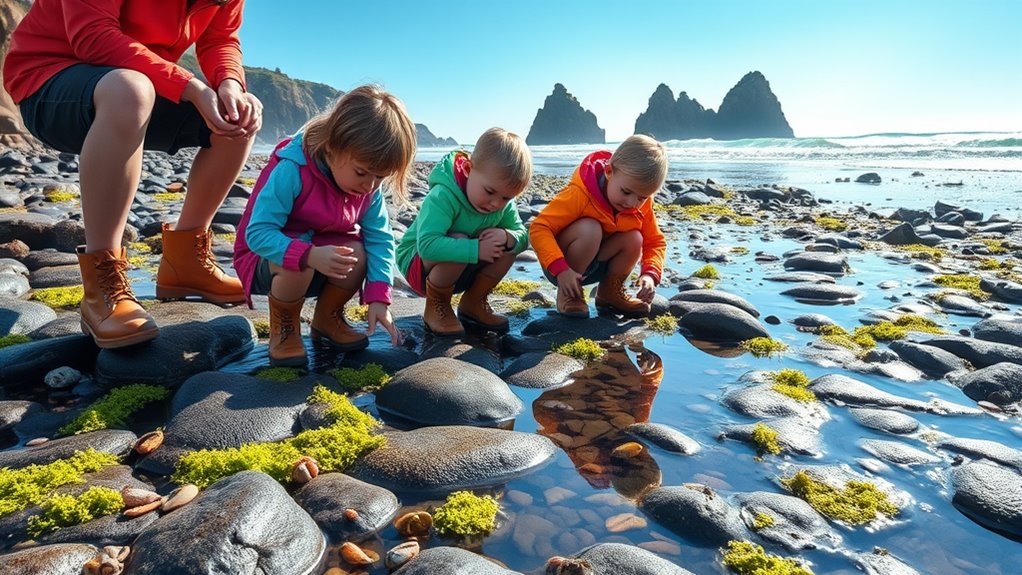

Intertidal foraging with kids offers a fun, hands-on way to explore marine environments safely while teaching respect for nature. Focus on collecting only what’s needed, follow local guidelines, and stay alert to hazards like slippery rocks or marine creatures. Teach children proper handling and safety precautions to prevent injuries. By staying responsible and cautious, you can foster a love for marine ecosystems. Keep going to discover more tips for safe and educational intertidal adventures with your family.

Get garden gear delivered free with Prime
- Fast, free delivery on millions of items
- Prime Video, Amazon Music and more included
- Member-only deals all year
Key Takeaways
- Teach children about local tide pools, marine species, and conservation to enhance learning and respect for ecosystems.
- Follow safety guidelines by explaining hazards, supervising handling, and avoiding dangerous creatures like jellyfish and sea urchins.
- Plan visits during low tide using tide charts for safer exploration and easier access to marine life.
- Practice responsible foraging by collecting only legal, abundant species and leaving habitats undisturbed.
- Use trusted resources and local guidelines to promote sustainable harvesting and ongoing marine conservation education.
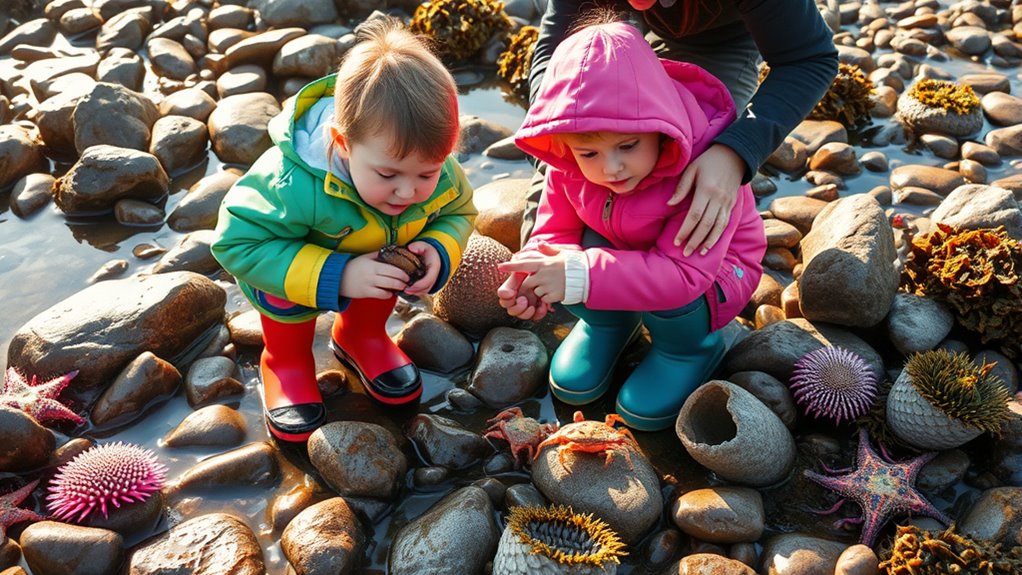
Have you ever wondered how to turn a simple walk along the shoreline into an exciting adventure for your kids? Intertidal foraging offers a fantastic way to do just that, turning a routine beach visit into a hands-on learning experience. As you explore tide pools and sandy flats, you’re not just hunting for interesting shells or creatures—you’re also engaging in activities that promote marine conservation and sustainable harvesting. Teaching your kids about the importance of respecting marine environments helps instill a sense of responsibility, ensuring they understand that collecting only what’s needed and leaving the habitat undisturbed benefits everyone. This approach encourages mindful foraging, where you focus on collecting species that are abundant and legal to harvest, avoiding overexploitation and helping preserve these ecosystems for future generations. Learning about local harvesting guidelines can further support sustainable practices and protect marine biodiversity.
Safety comes first, so before heading out, make sure your kids understand the potential hazards of intertidal zones. Explain that slippery rocks, sharp shells, and unfamiliar marine animals can pose risks, and emphasize the importance of staying close and moving carefully. Always check tide charts so you can plan your visit during low tide, when the shoreline is more accessible and safer for exploration. Keep a first aid kit handy for minor scrapes or cuts, and teach your children to recognize common hazards like jellyfish or sea urchins. Equally important is knowing which marine creatures are safe to handle and which aren’t; some animals can sting or cause allergic reactions, so handling should be supervised and gentle.
Frequently Asked Questions
What Are the Best Age Groups for Intertidal Foraging With Kids?
You’ll find that children aged 6 to 12 are the best age groups for intertidal foraging, as they can handle age-appropriate activities and follow safety guidelines. At this stage, they’re curious and capable of learning about tide pools and marine life. Just make sure you provide close parental supervision, teach them about potential hazards, and encourage respectful exploration to guarantee a fun and safe experience for everyone.
How Can I Teach Kids to Identify Edible Versus Poisonous Sea Creatures?
Like a seasoned explorer from a bygone era, you can teach kids to identify edible versus poisonous sea creatures through hands-on observation and clear guidance. Show them how to examine sea creature identification features, such as shell shape or color patterns, and emphasize safety by highlighting dangerous signs. Use visual aids or field guides, and always stress the importance of consulting an expert before consuming any wild catch to make certain it’s safe to eat.
Are There Specific Safety Gear Recommendations for Children During Foraging?
You should equip children with protective gloves and waterproof footwear to guarantee safety during foraging. Gloves protect their hands from sharp shells and potential toxins, while waterproof shoes keep their feet dry and prevent slips on wet, uneven surfaces. Always supervise kids closely and teach them how to handle marine creatures gently. These safety gear essentials help create a safer, more enjoyable foraging experience for children.
How Do I Ensure Sustainable Foraging Practices With Kids?
To guarantee sustainable foraging with kids, teach them about respecting harvesting quotas and the importance of habitat preservation. Encourage responsible collecting by only taking what’s allowed and avoiding fragile areas. Instill a sense of stewardship by explaining how their actions impact local ecosystems. Make it a fun learning experience, emphasizing conservation and mindful harvesting, so they develop respect for nature and understand the importance of protecting these environments for future generations.
What Are Common Mistakes Parents Should Avoid During Intertidal Foraging Trips?
You should avoid overharvesting, which can harm ecosystems, and ignoring tides, as it’s dangerous and disrupts foraging plans. Always teach your kids to take only what they need and respect the environment. Keep an eye on tide schedules to stay safe and make sure you’re not stranded or damaging fragile habitats. By being mindful, you help protect marine life and create positive, educational experiences for your kids.
Conclusion
Now that you’ve learned how to safely explore the intertidal zone with your kids, you’re ready to create lasting memories and foster a love for nature. Remember, with proper caution and respect for the environment, you can turn this adventure into a safe, educational experience. Isn’t sharing these moments with your little explorers worth every careful step? Embrace the journey, and watch your kids develop curiosity, confidence, and a deeper connection to the world around them.
Fall yard work Picks
leaf blowers
As an affiliate, we earn on qualifying purchases.