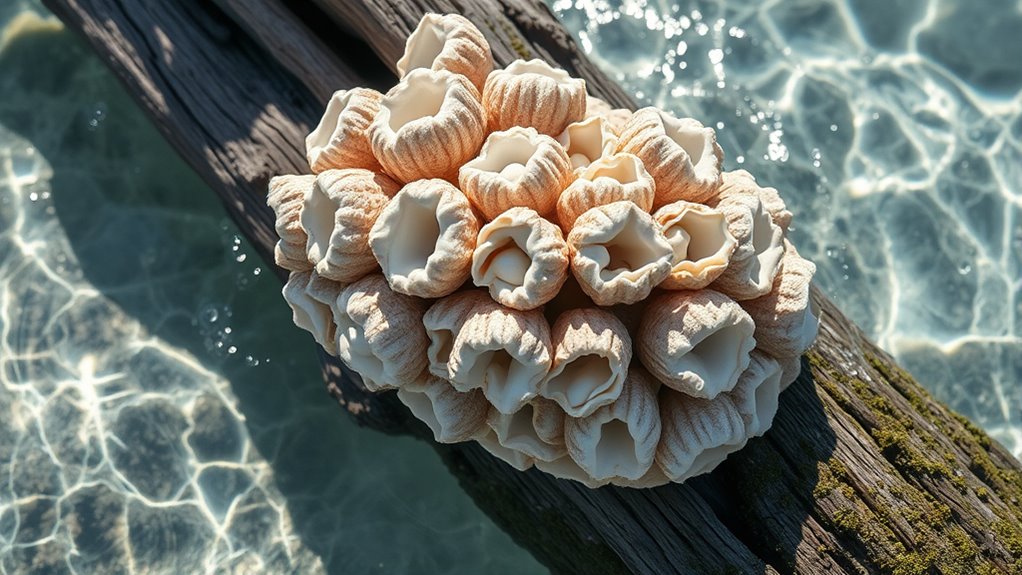

Barnacles are marine crustaceans with strong shells that attach firmly to surfaces like ships or rocks. For safe consumption, focus on mature barnacles with thick shells, which are easier to harvest without damaging the meat. Properly soaking and scrubbing shells in warm water helps loosen cement and remove debris. Always identify safe species and follow local regulations to avoid ecological harm. If you want to know more about harvesting and preparing barnacles, you’ll find helpful tips here.
Key Takeaways
- Only harvest mature barnacles with thick shells to ensure better meat quality and safety.
- Properly clean and soak barnacles in warm water to soften cement and remove debris before consumption.
- Confirm the species and source are safe and reputable, as some barnacles may be toxic or unsuitable for eating.
- Follow local regulations and sustainable practices to avoid ecological harm and overharvesting.
- Cook barnacles thoroughly by boiling, steaming, or grilling to eliminate potential pathogens and enhance safety.

Barnacles are fascinating marine crustaceans that attach themselves firmly to hard surfaces like rocks, ship hulls, and even whales. Their shell attachment is remarkable; they secrete a strong cement-like substance that bonds them securely to whatever surface they settle on. This adhesive allows them to withstand powerful currents and waves, making them some of the most resilient organisms in the ocean. If you’re interested in harvesting barnacles for food, understanding their shell attachment is vital. You’ll need to carefully choose the right tools and techniques to detach them without damaging the delicate meat inside.
When it comes to harvesting techniques, the goal is to remove barnacles from their shells efficiently while maintaining safety and maximizing yield. Typically, you start by selecting mature barnacles that have developed a thick, hard shell, which indicates a good source of edible meat. Using a sturdy knife or a specialized scraper, you gently pry the barnacle away from its attachment point. Applying a bit of heat or soaking the shell in warm water can loosen the cement, making the process easier. Be cautious during this step because the shells can be sharp, and improper handling might cause injury or damage the meat inside.
You might also consider using the “hot water” technique, where soaking barnacles in warm water for a few minutes softens the cement, making shell removal more manageable. This method reduces the risk of cracking the shell and losing precious meat. Once freed, you should rinse the barnacles thoroughly to remove any debris or barnacle remnants. Proper cleaning ensures you’re only consuming the edible parts and not any of the inedible shell fragments or residual cement.
In some regions, harvesting barnacles is regulated because they’re an important part of the marine ecosystem. Always check local laws before collecting. If you’re harvesting from a commercial or wild source, be mindful of sustainable practices. Avoid overharvesting and ensure your methods don’t harm the surrounding environment.
Finally, after extraction, you can prepare barnacles by boiling, steaming, or grilling them. Their flavor is often described as briny and slightly chewy, making them a delicacy in many coastal cuisines. However, only consume barnacles from reputable sources or those you’ve collected responsibly, as some species may be unsafe to eat. In essence, understanding shell attachment and employing proper harvesting techniques are vital steps in safely enjoying barnacles. Proper handling ensures you get the most out of this unique marine delicacy while respecting the environment. Additionally, being aware of marine organism resilience can help you develop more effective and sustainable harvesting methods.
Frequently Asked Questions
Can Barnacles Be Farmed Commercially for Food?
Yes, you can farm barnacles commercially through barnacle aquaculture. This method involves cultivating barnacles in controlled environments, making them suitable for widespread commercial harvesting. By managing the growth conditions, you guarantee high-quality, safe, and sustainable supplies of barnacles for food markets. This approach helps meet demand while preserving wild populations, providing a viable option for those interested in the lucrative barnacle industry.
Are There Any Health Risks Associated With Eating Barnacles?
Eating barnacles can pose health concerns if they’re contaminated with toxins or pollutants from their environment. Toxin risks include heavy metals and bacteria, which could lead to food poisoning or other health issues. To stay safe, make sure you source barnacles from reputable, clean waters and properly cook them. Avoid eating barnacles from questionable sources, and always follow local guidelines to minimize potential health risks.
How Do Barnacles Differ From Other Shellfish?
Barnacles are like tiny fortress builders, with a tough shell structure that differs from other shellfish. Unlike soft-shelled clams or oysters, barnacles have rigid plates that protect their bodies. Their marine adaptations include attaching firmly to surfaces like rocks or ships, making them distinct from mobile shellfish. This shell structure offers extra protection but also influences how you prepare and eat them, compared to more flexible seafood.
What Are the Most Sustainable Ways to Harvest Barnacles?
You can harvest barnacles sustainably by using selective removal methods that minimize environmental impact. Focus on harvesting only mature barnacles and avoid damaging their attachment sites, which helps maintain populations. Use manual tools instead of heavy machinery to reduce habitat disturbance. Additionally, harvest during seasons when barnacle populations are abundant to prevent overexploitation. These practices promote sustainable harvesting, ensuring healthy ecosystems and ongoing availability of barnacles for future use.
Are Barnacles Considered a Delicacy in Any Cultures?
Yes, barnacles are considered a cultural delicacy in some regions, especially in parts of Asia and Europe. You’ll find them featured in local culinary traditions, where people prize their unique texture and flavor. When you try barnacles, you’re experiencing a dish rooted in centuries-old practices, making them a special treat for seafood lovers. Just guarantee they’re harvested sustainably to enjoy them responsibly and preserve these culinary traditions.
Conclusion
Now that you’ve learned about barnacle biology and edibility, you see the importance of knowing what’s safe to eat, what to avoid, and how to prepare. You understand the risks and the rewards, the facts and the myths, the cleanliness and the caution. With this knowledge, you can enjoy barnacles responsibly, appreciate their role in the ecosystem, and make informed choices. So, stay curious, stay cautious, and savor the sea’s bounty wisely.