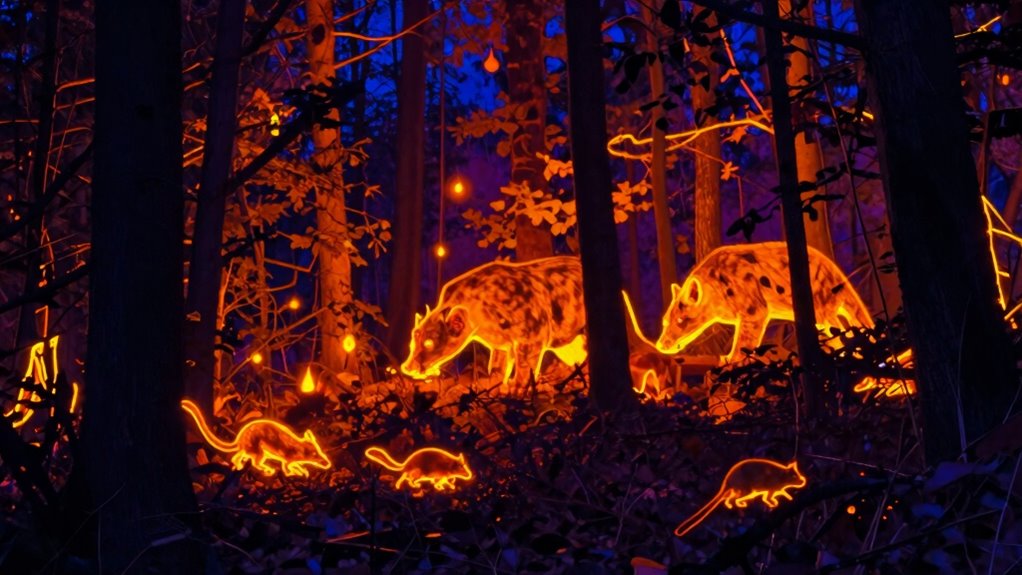

Thermal imaging shows heat signatures that can reveal hidden issues, but their interpretation isn’t straightforward. Factors like material type, environmental conditions, and equipment limitations influence what you see. Metal surfaces scatter heat, while insulation traps it, affecting what’s visible. External factors like wind, rain, or sunlight can create misleading signals, so you need to understand these limitations. If you keep exploring, you’ll discover how to better analyze these images and avoid false conclusions.
Key Takeaways
- Heat signatures can be influenced by material properties, environmental factors, and equipment limitations, requiring careful interpretation.
- Thermal imaging detects heat but cannot provide definitive diagnostics without contextual analysis.
- External conditions like wind, rain, and sunlight can alter or obscure thermal signatures, leading to potential misinterpretation.
- Variations in material conductivity affect heat dissipation, making some signatures misleading about actual issues.
- Understanding device limitations and environmental influences ensures accurate assessment and reduces false positives.
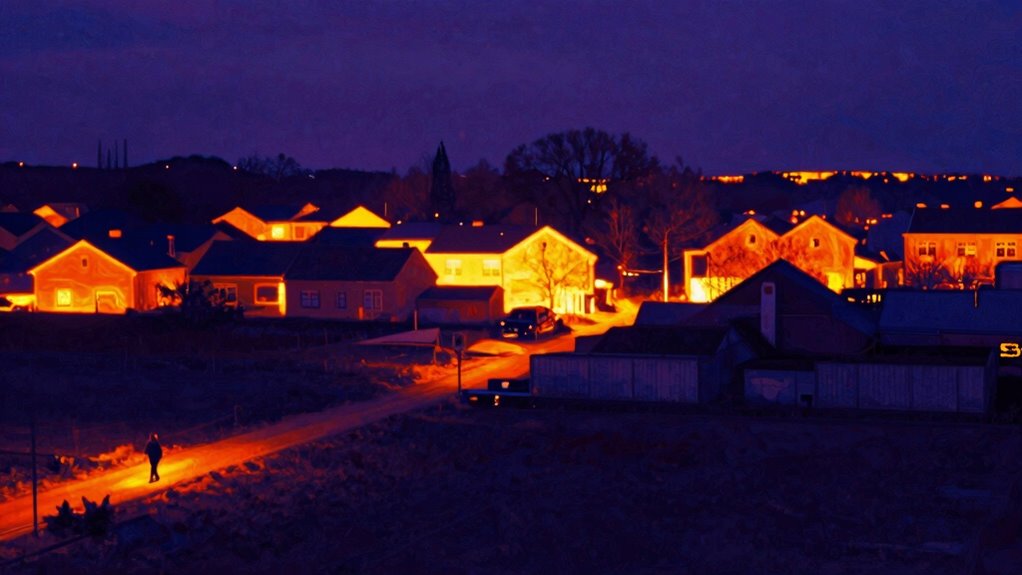
Have you ever wondered how far thermal imaging can actually see? The truth is, while thermal cameras are impressive tools for detecting heat signatures, their capabilities aren’t limitless. Many factors influence how much detail you can gather from thermal images, and understanding these limitations is key to interpreting what you see accurately. One major factor is material conductivity. Different materials conduct heat differently, which affects how heat signatures appear on thermal images. Metals, for example, are highly conductive and can quickly dissipate heat, making them less distinct in thermal scans. Conversely, insulating materials like foam or rubber trap heat, creating more prominent signatures. Recognizing these variations helps you avoid misinterpretation; a hot spot on a wall might not be an active electrical fault but simply an area with poor insulation. Additionally, material conductivity plays a crucial role in how heat signatures are displayed and interpreted. Environmental interference also plays a vital role in the effectiveness of thermal imaging. External conditions such as wind, rain, fog, or direct sunlight can distort heat signatures or obscure them entirely. Wind, for instance, can rapidly cool surfaces, making a heated object appear cooler than it actually is. Rain or high humidity can absorb or scatter infrared radiation, reducing image clarity and detail. Bright sunlight can also mask subtle temperature differences by heating surfaces unevenly. These environmental factors mean you can’t rely solely on a thermal image without considering the context in which it was taken. To improve accuracy, it’s essential to be aware of thermal resolution** limitations, which vary depending on the equipment used. Being mindful of environmental factors can significantly enhance your interpretation of thermal images. Knowing how thermal signatures** are affected by external influences helps you better distinguish between true issues and environmental artifacts, ultimately leading to more reliable assessments. Ultimately, understanding these constraints helps you leverage thermal imaging effectively, knowing when it’s revealing genuine issues and when other methods are necessary to confirm what you observe.

COOLJOB 6 Pairs Gardening Gloves for Women Ladies, Breathable Rubber Coated for Yard Garden, Outdoor Indoor Protective Work with Grip, Medium Size, Red & Green
- Designed for Women: Lightweight, breathable, comfortable fit
- Enhanced Hand Protection: Thickened fingertips for nail and hand safety
- Long, Flexible Cuffs: Keeps dirt and debris out
As an affiliate, we earn on qualifying purchases.
Frequently Asked Questions
Can Thermal Imaging Detect Hidden or Underground Objects?
Thermal imaging can sometimes detect hidden objects or assist with underground detection, but it’s not always reliable. Heat signatures from underground or hidden objects might not be strong enough to stand out against natural ground temperature variations. You need to interpret thermal images carefully, as factors like soil type, moisture, and depth affect detection. So, while thermal imaging helps, it often requires supplemental methods for accurate underground detection.
How Does Weather Affect Thermal Imaging Accuracy?
Weather impact profoundly affects thermal imaging accuracy. Rain, fog, or snow can obscure heat signatures, making detection harder. Wind can disperse heat, reducing contrast between objects and background. You face calibration challenges during extreme weather, as the device needs to adjust for changing conditions. To get reliable results, you must consider these factors, continuously calibrate your equipment, and understand that adverse weather may limit thermal imaging effectiveness.
Are There Legal Restrictions on Thermal Imaging Use?
Think of thermal imaging like a delicate dance—each move governed by unseen rules. You’re bound by legal restrictions that protect privacy concerns, making certain your use respects personal boundaries. To stay in step, you must guarantee legal compliance, understanding that laws vary by jurisdiction. Ignoring these rules risks crossing ethical lines, so always verify local regulations before deploying thermal imaging technology. Respecting these limits keeps your work responsible and within the law.
What Is the Maximum Distance Thermal Cameras Can Effectively Scan?
You can typically scan up to several hundred meters with thermal cameras, but the effective distance depends on sensor resolution and signal processing. Higher resolution sensors capture finer details at longer ranges, while advanced signal processing enhances image clarity and accuracy. Factors like atmospheric conditions and target size also influence the maximum distance. So, for precise thermal imaging, consider your camera’s specs and environmental factors to determine its effective scanning range.
How Do Different Materials Influence Heat Signature Detection?
Different materials influence heat signature detection based on their material properties and surface emissivity. High-emissivity surfaces, like human skin or matte paint, emit infrared radiation effectively, making them easier to detect. Conversely, low-emissivity materials, such as shiny metals or reflective surfaces, reflect infrared energy, which can obscure true heat signatures. Understanding these properties helps you interpret thermal images accurately, as materials can either enhance or mask the heat signals you’re trying to observe.

WZQH Leather Work Gloves for Men or Women.Gardening,Welding,Coffee-grey L
- Material: 100% split cowhide leather with soft lining
- Protection: High abrasion, puncture, cut, and heat resistant
- Reinforced Palm: Extra protection for tough tasks
As an affiliate, we earn on qualifying purchases.
Conclusion
So, even with thermal imaging’s incredible powers, it’s not a crystal ball—heat signatures can’t tell you everything. You still need your sharp eyes and brain to interpret what’s really happening. Relying solely on thermal images is like trusting a map without knowing the terrain—it can lead you astray. Remember, thermal imaging is a fantastic tool, but it’s your insight that truly makes the picture complete. Don’t underestimate the power of human intuition!

COOLJOB Gardening Gloves for Men, 2 Pairs Breathable Rubber Coated for Garden Weeding Landscaping, Outside Work for Lawn Yard, Men's Large Size, Black & Red
- Breathable and Comfortable Material: Red and black polyester base for breathability
- Long Cuffs and Elastic Wrist: Keeps dirt out and easy to wear
- Durable Rubber Coated Palm: Provides protection and non-slip grip
As an affiliate, we earn on qualifying purchases.

Emergency Blanket Mylar Thermal Space Survival Gear & Supplies 4-Pack Foil
- Thermal Retention: Retains up to 90% of body heat
- Multi-Purpose Use: Suitable for shelter, ground cover, and more
- Compact & Lightweight: Folds to a small size for easy storage
As an affiliate, we earn on qualifying purchases.