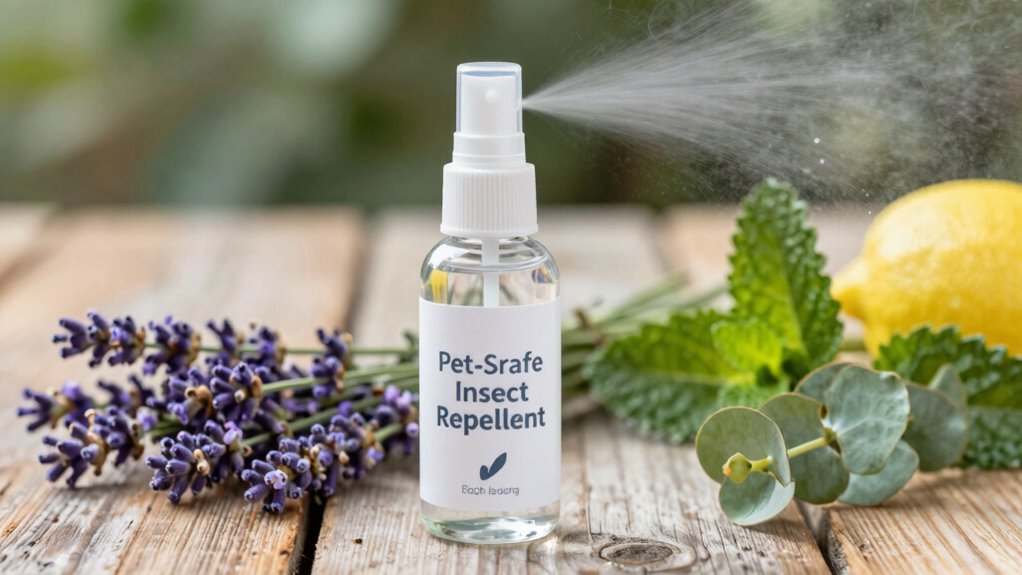

To keep your pets safe, avoid insect repellents with chemicals like DEET, permethrin, or pyrethroids, as these can cause skin irritations or health issues. Instead, opt for natural options like citronella, eucalyptus, or neem oil, but be cautious with essential oils—they can be toxic to pets. Use products labeled ‘pet-safe’ and consult your vet for the best choices. For more tips on staying safe, continue exploring reliable natural remedies and precautions.
Key Takeaways
- Avoid synthetic chemicals like DEET, permethrin, and pyrethroids, which can cause adverse reactions in pets.
- Steer clear of essential oils such as citrus, tea tree, and pennyroyal, as they are toxic to dogs and cats.
- Use pet-safe products labeled ‘vet-approved’ or specifically formulated for pets to ensure safety.
- Consider natural alternatives like citronella, eucalyptus, or neem oil in diluted forms, with veterinary guidance.
- Always read ingredient labels carefully and consult with a veterinarian before applying any repellents to pets.

When it comes to protecting your pets from pesky insects, choosing a pet-safe insect repellent is vital. Many commercial repellents contain chemicals that can pose risks to your furry friend’s health, so it’s important to understand which ingredients to avoid. Chemical concerns are common with traditional insect repellents, as ingredients like DEET, permethrin, and pyrethroids have been linked to adverse reactions in pets, including skin irritations, neurological issues, and even toxicity. If you’ve ever worried about exposing your pet to harsh chemicals, exploring natural remedies can be a safer alternative. Natural remedies often rely on plant-based ingredients like citronella, eucalyptus, or neem oil, which tend to be gentler on your pet’s skin and less likely to cause harmful side effects. These options can be just as effective in repelling insects without the safety concerns associated with synthetic chemicals.
However, not all natural remedies are automatically safe, so it’s vital to do your research. Some essential oils, for example, while natural, can be toxic to dogs and cats if used improperly. Citrus oils, tea tree oil, and pennyroyal are known to be harmful, so you should avoid applying these directly to your pet’s skin or using them in diffusers around your home. Instead, look for formulations specifically designed for pets or create your own natural repellent with safe ingredients. Diluted apple cider vinegar or diluted witch hazel are options some pet owners swear by, but even these should be used with caution and in moderation. Always consult your veterinarian before trying any new remedy to confirm it’s appropriate for your pet’s species, age, and health condition. Additionally, understanding safe ingredient guidelines can help you select the best products for your pet’s protection.
In addition to avoiding certain ingredients, choosing products labeled as ‘pet-safe’ or ‘vet-approved’ can help reduce risks. Many natural remedies are available in pet-specific formulations, giving you peace of mind that you’re making a safer choice. Remember, your goal is to prevent insect bites while keeping your pet healthy and comfortable. Carefully reading labels and understanding what ingredients are in your chosen repellent is vital. While natural remedies offer a promising alternative to chemical-laden products, they still require responsible use. By steering clear of harmful chemicals and opting for safer, pet-friendly options, you can effectively protect your four-legged friends from insects without compromising their health.
Frequently Asked Questions
Are Natural Insect Repellents as Effective as Chemical Ones?
Natural insect repellents can be effective, but their natural efficacy often varies depending on the ingredients used and the insect species. When you compare them to chemical repellents, they may offer shorter-lasting protection or less potency. However, many people prefer natural options for safety reasons. If you choose natural repellents, reapply more frequently, and always test for skin sensitivity. Ultimately, assess your comfort level with their effectiveness versus chemical alternatives.
How Often Should Pet-Safe Repellents Be Reapplied?
You should reapply pet-safe repellents every 2 to 4 hours for maximum protection, as research shows effectiveness decreases over time. Keep in mind, environmental considerations like humidity and outdoor activity can influence application frequency. If your pet is swimming or sweating, reapply sooner. Always follow the product label instructions, and consult your vet if you’re unsure, to guarantee your pet stays protected without overexposure.
Can Insect Repellents Be Used Indoors Safely Around Pets?
You should avoid using insect repellents indoors around pets unless they’re specifically labeled as safe for indoor insect control and following pet safety protocols. Always read the product instructions carefully and guarantee proper ventilation during application. Keep pets out of the treated area until it’s completely dry. When in doubt, consult your veterinarian to confirm that the product is safe for your pets and suitable for indoor use.
What Signs Indicate a Pet Has Had a Reaction to a Repellent?
Ever wonder if your pet’s acting unusually after repellent application? Look for pet allergy symptoms like itching, swelling, or difficulty breathing. These signs might indicate a reaction or insecticide poisoning. If you notice drooling, vomiting, tremors, or lethargy, seek veterinary care immediately. Recognizing these signs early can prevent serious health issues. Always monitor your pet closely after using any insect repellent to keep them safe and healthy.
Are There Specific Repellents for Different Types of Pests?
Yes, you can find species-specific repellents tailored for different pests. These pest-targeted formulas are designed to effectively deter specific species like fleas, ticks, mosquitoes, or flies. Using a targeted repellent guarantees you’re addressing the right pest without unnecessary chemicals, reducing potential risks to your pet. Always read labels carefully to select the right product for your pet’s needs, and consult your vet if you’re unsure.
Conclusion
Now that you know which ingredients to avoid and safer alternatives, you can protect your pets without risking their health. Isn’t it worth choosing products that keep pests at bay while keeping your furry friends safe? Always read labels carefully and opt for pet-friendly options. By making informed choices, you create a safer environment for everyone. After all, aren’t your pets’ health and happiness worth a little extra effort?