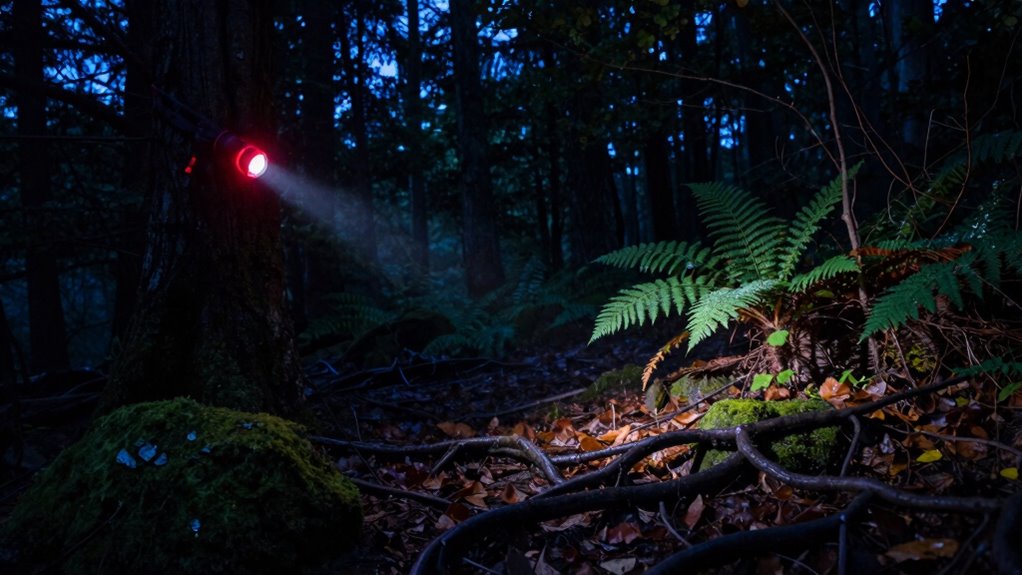

To avoid blinding yourself during night foraging, switch your headlamp to its red-light mode. This preserves your dark adaptation, helps you see clearly, and reduces glare that can cause eye strain. Keep the beam slightly downward and avoid shining into others’ eyes or wildlife. Choose a headlamp with adjustable red-light settings and reliable battery life for extended use. If you want to master this technique, keep exploring how to optimize your gear and approach.

Get garden gear delivered free with Prime
- Fast, free delivery on millions of items
- Prime Video, Amazon Music and more included
- Member-only deals all year
Key Takeaways
- Switch your headlamp to red light before entering dark areas to preserve night vision.
- Position the red beam slightly downward to prevent glare and improve terrain visibility.
- Use adjustable brightness settings to tailor light intensity for different foraging tasks.
- Avoid shining the light directly into eyes or wildlife to minimize disturbance and maintain safety.
- Choose a lightweight, rechargeable headlamp with dedicated red-light mode for extended, comfortable use.
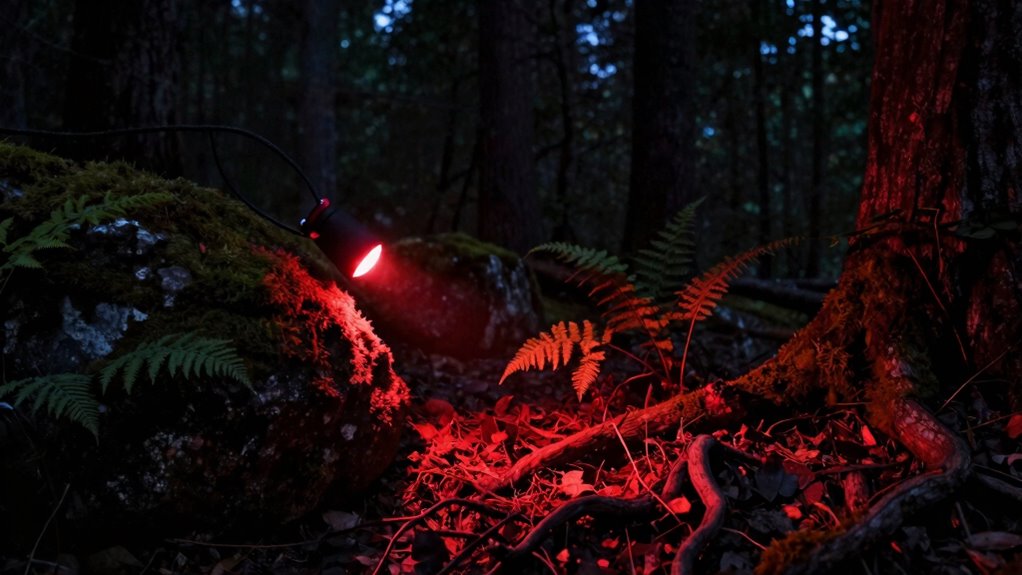
The headlamp red-light technique is a simple but effective method to preserve your night vision while maintaining visibility in dark environments. When you’re out foraging, camping, or steering at night, using red light offers significant advantages. Unlike bright white light, red light benefits your eyes by minimizing the dilation of your pupils, which helps you see in the dark without overexposing your eyes to harsh illumination. This way, your night vision stays sharp, and you can keep an eye on your surroundings without the need to repeatedly adjust to bright flashes. Red light also reduces glare and eye strain, making it easier to scan the terrain or read maps comfortably. This technique is especially useful when you want to remain discreet or avoid disturbing wildlife, as red light doesn’t carry the same intensity as white light and tends to be less noticeable from a distance. Utilizing light pollution awareness can also enhance your experience by minimizing environmental impact.
When it comes to headlamp selection, choosing the right model becomes essential. Not all headlamps are created equal, and selecting one with a dedicated red-light mode can make your night activities more efficient. Look for a headlamp with adjustable brightness levels and a simple switch to toggle between white and red lights. Many modern headlamps feature multiple red-light modes—some with different intensities or beam shapes—giving you flexibility depending on your needs. It’s also wise to opt for a lightweight, comfortable headlamp with a reliable battery life, so you won’t be distracted or left in the dark unexpectedly. Rechargeable models are often more convenient and eco-friendly, but traditional batteries can work well too if you prefer a straightforward setup. Consider headlamps with a lock or flicker mode to prevent accidental activation, which can be especially handy during storage or transport.
Using the red-light technique effectively depends on your headlamp selection. Once you have a suitable device, you can switch to red light before entering the dark, preserving your night vision and avoiding the temporary blindness that white light causes. Position the headlamp so the beam is angled slightly downward—this prevents the light from shining directly into your eyes or others’. You’ll find that with consistent use, you’ll get better at adjusting your headlamp’s settings quickly, optimizing your visibility while keeping your eyes protected. Whether you’re foraging in the woods, setting up camp, or steering through a trail, the headlamp red-light method offers a smart, practical way to see clearly without sacrificing your ability to see in the dark.
Frequently Asked Questions
Can Red Light Damage Your Night Vision Over Time?
Red light generally doesn’t damage your night vision over time because it preserves your light adaptation. Unlike bright white lights, red light minimizes strain on your eyes and helps maintain eye health by preventing unnecessary stress. You can use red headlamps repeatedly without worrying about long-term damage, allowing you to comfortably forage at night with your night vision intact. Just avoid prolonged exposure to intense, direct red light to protect your eyes.
How Long Can You Safely Use a Red Light During Night Foraging?
You can safely use a red light for about 30 minutes to an hour during night foraging, following safety guidelines. Red light preserves your night vision and minimizes eye strain, but extended use might cause some vision issues over time. To stay safe, take regular breaks, avoid shining the light directly into your eyes, and switch to low or no light periods if needed. Always prioritize your comfort and safety.
Is Red Light Effective for Reading Maps or GPS Devices?
Think of red light as your quiet lighthouse in the dark. It’s highly effective for red light map reading and GPS navigation benefits, allowing you to see details without disturbing your night vision. You can comfortably use it to decipher maps or follow GPS routes, as the gentle glow minimizes glare and eye strain. This way, you stay alert and oriented, making your night foraging safer and more efficient.
Do All Headlamps Have a True Red-Light Mode?
Not all headlamps have a true red-light mode. When shopping, check the headlamp features to guarantee it offers a dedicated red light setting, as some only have a red filter over white LEDs, which can vary in red light brightness. A true red-light mode provides consistent illumination without blinding your night vision. This feature is essential for night foraging, ensuring you see clearly without impacting your ability to see in darkness.
How Does Red Light Affect Nocturnal Animal Behavior?
Red light minimizes disturbance to nocturnal animal behavior by reducing their alertness and helping with predator avoidance. When you use red light, animals are less likely to perceive you as a threat, allowing you to observe them more naturally. Unlike bright white light, red light doesn’t disrupt their natural activities or increase their predator awareness, so you can explore the night without causing unnecessary stress or alerting animals to your presence.
Conclusion
Using the headlamp red-light technique isn’t just about avoiding blindness; it’s about respecting your night environment and fellow explorers. Some say it’s just a myth that red light preserves night vision, but many swear by its effectiveness. Whether you believe it or not, giving red light a try can make your night adventures safer and more enjoyable. After all, isn’t preserving your natural night vision worth a little extra effort?
Fall yard work Picks
leaf blowers
As an affiliate, we earn on qualifying purchases.