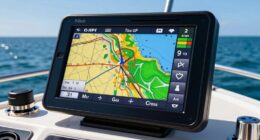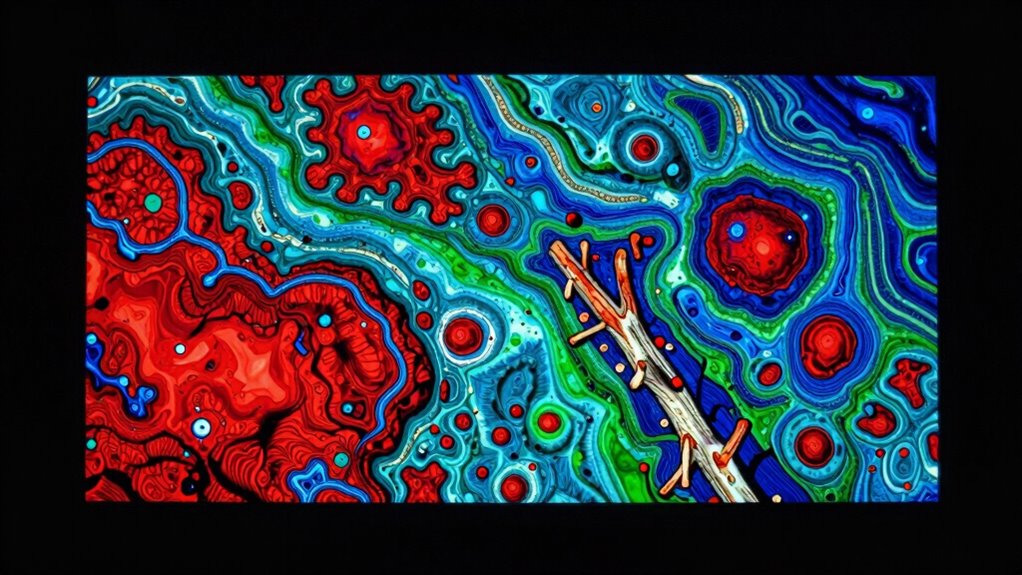

Side imaging sonar helps you visualize underwater structures clearly, like a map rather than a mystery. It scans broad areas around your boat, revealing fish schools, vegetation, and underwater features in real-time. This technology makes identifying cover and contours easier, so you can target your fishing spots more effectively. By understanding these detailed images, you’ll gain better insight into fish habitats. Keep exploring how this powerful tool can transform your fishing strategy and success.
Key Takeaways
- Side imaging sonar visualizes underwater structures in a map-like format, making it easier to interpret compared to traditional mystery-like images.
- It scans broad lateral areas, providing detailed views of the bottom, vegetation, and fish habitats similar to reading a landscape map.
- Understanding sonar images allows anglers to identify key features such as drop-offs, rocks, and cover spots, simplifying navigation.
- Interpreting these images quickly helps in strategic decision-making, turning complex data into clear, actionable insights.
- Advanced technology and data integration support better habitat recognition, enabling users to read underwater environments like familiar maps.

Side imaging sonar is a powerful tool that revolutionizes how anglers and boaters explore underwater environments. It gives you a detailed, real-time view of what’s happening beneath and around your boat, making it easier to locate fish species and understand their behavior. Unlike traditional sonar, which provides a narrow, straight-ahead view, side imaging uses advanced sonar technology to scan broad areas to each side of your vessel. This wide coverage means you can see submerged structures, vegetation, and fish schools that might be hidden from view with conventional fish finders. With this technology, you’re no longer fishing blindly; instead, you’re reading an underwater map that reveals hidden features and fish habitats with remarkable clarity.
Side imaging sonar provides a real-time, detailed underwater view that reveals structures and fish habitats with remarkable clarity.
When you’re out on the water, understanding how fish species behave and where they congregate is essential to success. Side imaging sonar displays a detailed image of the underwater landscape, which helps you identify specific structures like rocks, sunken trees, or drop-offs that attract various fish species. You’ll see the contours of the bottom, the presence of cover, and even individual fish schools, often distinguished by their size and shape. As you interpret these images, you start to recognize patterns—such as where certain fish like bass, walleye, or crappie tend to hide or feed. This instant visual feedback allows you to adjust your tactics, whether that’s changing bait, depth, or location, to target the fish most likely to bite.
The key to maximizing your success with side imaging sonar lies in understanding how this sonar technology creates its images. It emits sound waves to each side of your boat, then processes the returning echoes to generate a detailed, almost photographic view of the underwater environment. Unlike traditional sonar, which might only show a simple depth reading or a few targets, side imaging provides a detailed lateral perspective that makes it easier to identify fish species and their habitats. This technology isn’t just about finding fish; it’s about understanding their environment, their hiding spots, and their movement patterns. With practice, you’ll learn to interpret sonar images quickly, turning raw data into actionable insights that improve your chances of a successful catch.
Additionally, advances in European cloud innovation ensure that data from your sonar devices can be stored, analyzed, and shared securely and efficiently, enhancing your overall fishing experience. In essence, side imaging sonar transforms your approach from guesswork into a strategic game of exploration and discovery. It turns the underwater world into a familiar landscape, where fish species and their preferred habitats become visible and understandable. By harnessing this advanced sonar technology, you gain a competitive edge, making your fishing trips more productive, enjoyable, and efficient. It’s like reading an underwater map that guides you directly to the fish, rather than stumbling around in the dark.
Frequently Asked Questions
How Does Side Imaging Sonar Compare to Traditional Fish Finders?
Side imaging sonar offers clear advantages over traditional sonar by providing detailed, wide-angle views of underwater structures and fish habitats. Unlike traditional fish finders that give a narrow, downward view, side imaging reveals a broader area, making it easier to locate fish and navigate structures. The main differences are in coverage and clarity, allowing you to see more detail and plan your fishing strategy more effectively.
What Are the Best Settings for Different Water Conditions?
When it comes to adjusting your side imaging sonar, you’ve got to tune it to your water conditions. For clear water, increase sensitivity to catch detailed structures, but dial it down in murky water to reduce clutter. Pay attention to temperature sensitivity, as it affects fish behavior and sonar response. Remember, the right settings depend on water clarity and temperature; experiment to find what works best and keep your readouts sharp.
Can Side Imaging Sonar Detect Underwater Structures at Great Depths?
Yes, side imaging sonar can detect underwater structures at great depths, especially in deep water where traditional sonar might struggle. You’ll notice detailed structural features, as the high-resolution images reveal even subtle changes on the bottom. To optimize your detection of deep water structures, adjust your settings for increased sensitivity and lower frequency, which penetrate deeper and provide clearer structural detail in challenging conditions.
How Accurate Is Side Imaging Sonar in Identifying Fish Species?
Think of side imaging sonar as your underwater detective. While it’s great at spotting fish, it’s not perfect for fish identification or species accuracy. You might get a good idea if it’s a bass or a carp, but nailing down exact species can be tricky. It’s a helpful tool, but for precise fish identification, you’ll want to combine it with other methods like visual cues or angler experience.
What Maintenance Is Required to Keep the Sonar Functioning Properly?
To keep your sonar working well, regularly clean the transducer to prevent dirt and debris from affecting image quality. Check and maintain your battery by charging it fully and inspecting for corrosion or damage. Also, make certain all connections are secure and free of corrosion. Proper maintenance, including cleaning and battery care, helps extend your sonar’s lifespan and ensures accurate readings when you’re out on the water.
Conclusion
So, next time you’re out fishing, don’t just cast blindly—trust your side imaging sonar. It’s funny how a device that looks like a high-tech map can turn your mystery-filled fishing trip into a straightforward adventure. Instead of guessing what’s beneath, you’re reading like a pro. Ironically, what once felt like decoding a secret code now feels like reading a simple map. Happy fishing—your secret weapon has just made everything a little easier!