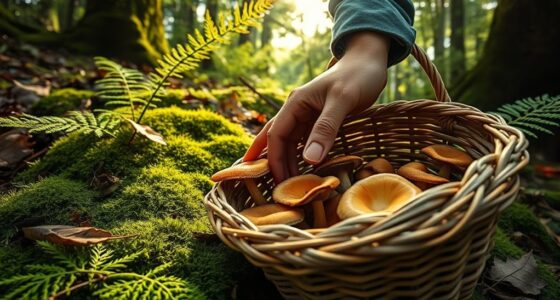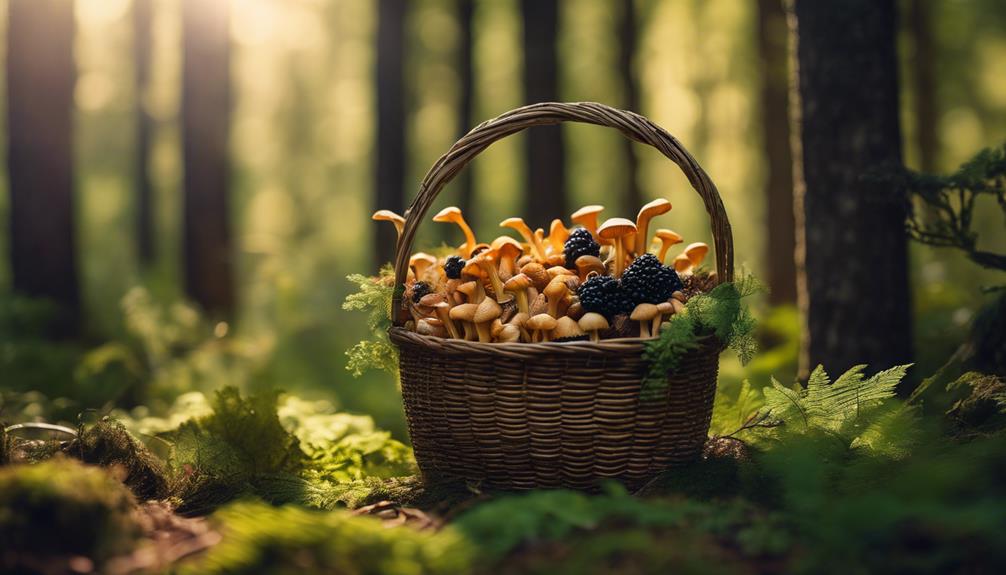
To keep effective foraging journals and specimen logs, record details like date, location, weather, and time of collection. Take clear photos from multiple angles and sketch key features. Note texture, color, smell, and any markings. Track preservation methods and outcomes, noting how they affect the specimen over time. Record how you use each harvest and storage conditions. Maintaining detailed notes enhances your skills and supports responsible foraging—if you continue, you’ll find even more ways to improve your practice.
Key Takeaways
- Record detailed information such as date, location, weather, and time for each foraging trip.
- Take clear, multi-angle photographs and create sketches highlighting distinctive features of specimens.
- Log preservation methods used and note their effects on specimen quality over time.
- Document specimen condition at collection and usage notes, including recipes or medicinal preparations.
- Organize entries regularly to analyze patterns, improve identification skills, and support sustainable foraging.

Keeping detailed records of your foraging activities is vital for tracking your progress and guaranteeing sustainable harvesting. By maintaining a thorough journal or specimen log, you create a valuable resource that helps you learn from each outing and refine your skills. When documenting your foraging trips, start by noting the date, location, weather conditions, and time of day. These details provide context that can influence what you find and how you identify edible plants or fungi. As you gather specimens, take clear, close-up photographs from multiple angles, which aid in proper identification tips later on. Including sketches can also be useful, especially if you’re honing your identification skills or working with unusual species.
Keeping detailed foraging records helps refine skills and promote sustainable harvesting.
Accurate identification tips are essential for safe foraging. Record distinctive features such as leaf shape, color, size, smell, and texture. Note any unique markings, gills, or spore patterns if you’re collecting fungi. These details help you distinguish edible species from lookalikes that may be toxic. When it comes to preservation techniques, document how you process and store each specimen. For example, note whether you dry, freeze, or pickle your finds, and specify the methods used. This not only helps you track which preservation techniques work best for certain plants or fungi but also builds a reference for future reference. If you experiment with different methods, record the outcomes, including how long the preserved items last and any changes in flavor or texture.
Your logs should also include notes on the condition of each specimen when collected, such as ripeness or maturity. This information can influence both identification tips and preservation techniques, helping you learn the best times for harvesting. Additionally, if you’re experimenting with culinary or medicinal uses, document recipes, preparation steps, and results. This ongoing record enables you to refine your foraging practices and discover the most effective ways to use your finds.
Furthermore, understanding storage conditions for your specimens can significantly impact their longevity and quality, making detailed notes on temperature, humidity, and light exposure crucial. Consistently updating your foraging journal or specimen log enhances your knowledge and confidence. Over time, you’ll notice patterns—perhaps certain species are only available during specific seasons or under particular weather conditions. This insight allows you to plan future foraging trips more effectively. By maintaining thorough, organized records, you create a personalized reference that helps guarantee your foraging remains sustainable and enjoyable. Ultimately, these detailed logs become a trusted guide, supporting your growth as a responsible and informed forager.
Frequently Asked Questions
How Often Should I Update My Foraging Journal?
You should update your foraging journal regularly, ideally after each outing, to guarantee accurate plant identification and seasonal recording. Frequent updates help you track changes over time and improve your identification skills. By recording details immediately, you minimize errors and capture seasonal variations. Whether daily or weekly, consistent journaling keeps your notes current, making it easier to recognize patterns, identify plants accurately, and enjoy sustainable foraging.
What’s the Best Way to Organize Specimen Logs?
You should organize your specimen logs with clear labeling standards, including date, location, and specimen type, to keep everything consistent. Use digital backups to safeguard your data and make retrieval easier. Keep physical logs in labeled folders or binders, and regularly update your digital copies. This way, your records stay organized, accessible, and protected against loss, ensuring you can easily reference or share your specimens whenever needed.
How Do I Prevent Mold or Decay in Stored Specimens?
Mold prevention is key to maintaining specimen preservation, and a simple coincidence highlights this—keeping specimens dry prevents mold and decay. Store your specimens in airtight containers with silica gel packs or desiccants to absorb moisture. Avoid exposure to direct sunlight and humid environments. Regularly check and clean storage areas, ensuring good airflow. By controlling moisture and environmental conditions, you safeguard your specimens from mold and decay effectively.
Can Digital Logs Replace Physical Journals Effectively?
Yes, digital logs can effectively replace physical journals if you utilize digital backups and app integration. You can easily organize, search, and update your foraging data on your device. Plus, with regular backups, you’ll avoid losing information due to damage or decay. Using apps designed for logging, you can streamline your record-keeping, making it more accessible and efficient while still maintaining detailed, accurate records of your specimens.
How Should I Handle Sensitive or Protected Plant Data?
When handling sensitive plant data, you should prioritize plant protection and ethical documentation. For example, if you’re tracking rare orchids, keep detailed logs secure and restrict access. Use encrypted digital files or locked physical journals to prevent unauthorized sharing. Always respect local regulations and conservation efforts, ensuring your documentation promotes conservation rather than exploitation. This approach safeguards protected species and aligns with ethical foraging practices.

WANCHI Gardening Gloves, Durable and Comfortable Women's Long Garden Gloves for Gardening Work and Yard Work, Leather Gardening Gloves for Women, Green Print (Medium)
- Versatile Gardening and Outdoor Use: Suitable for various outdoor activities and DIY work
- Long Sleeve Design: Provides arm protection and breathability
- Durable Materials: Superfiber synthetic leather for grip and abrasion resistance
As an affiliate, we earn on qualifying purchases.
Conclusion
Keeping foraging journals and specimen logs is like planting seeds for future discoveries. By recording your finds diligently, you create a roadmap that guides your curiosity and refines your skills. Stay consistent, note details clearly, and review your entries often. Think of your journal as a trusted companion on every adventure—always ready to help you learn and grow. With each entry, you build a treasure chest of knowledge, opening new paths just like a well-tended garden blooms.

WZQH Leather Work Gloves for Men or Women.Gardening,Welding,Coffee-grey L
- Material: 100% split cowhide leather with soft lining
- Protection: High abrasion, puncture, cut, and heat resistant
- Reinforced Palm: Extra protection for tough tasks
As an affiliate, we earn on qualifying purchases.