
The right outdoor plant watering system depends on three things: how many plants you’re watering, whether you need a timer, and how much setup you’re willing to do. After comparing 15 popular options, the 60FT Drip Irrigation System with Smart Water Timer stands out as the best overall pick because it pairs broad coverage with true automated scheduling at a mid-range price. Gardeners who want to go bigger should look at the 230FT kits with dual 1/2″ and 1/4″ tubing, which can handle whole-yard installs, while anyone with just a few patio pots can skip tubing entirely and grab the Carpathen kit or terracotta stakes for a fraction of the cost. The main tradeoff in this category is convenience versus reliability: solar-powered systems with USB charging (picks #1, #5, #7, #12) run without outdoor outlets but depend on sunlight, while tap-timer systems are more dependable but need a faucet connection. Keep reading for the full breakdown of what each system does well, where it falls short, and which one fits your garden.

Get garden gear delivered free with Prime
- Fast, free delivery on millions of items
- Prime Video, Amazon Music and more included
- Member-only deals all year
Complete the kit


Key Takeaways
- Solar-powered systems dominated the countdown-timer segment, but their reliability hinges on sun exposure — the USB-charging models (#5 and #12) solved this better than pure-solar units like #1.
- The biggest price-per-value break in this roundup came at the 100FT tier: kits like the 2026-Upgrade copper-nozzle system delivered roughly double the coverage of 50FT kits for only a small price bump.
- Copper and brass adjustable nozzles (kits #3, #8, #9, #13) consistently outperformed plastic emitters (#2) for precision and clog resistance, making them worth the premium for drip irrigation.
- Only the two 230FT kits (#11 and #15) included 1/2″ mainline tubing — everything else relied on 1/4″ line alone, which limits flow when you run more than about 60 feet of tubing.
- The terracotta stake 6-pack (#10) is not comparable to drip systems in coverage, but it won outright for low-cost vacation watering of potted plants where no faucet or power source exists.

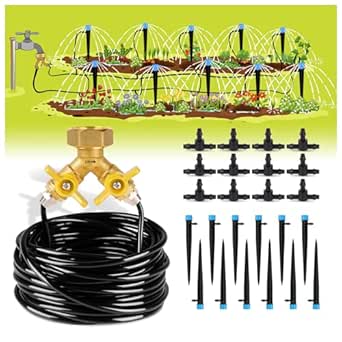


More Details on Our Top Picks
Solar Drip Irrigation System with 490 Timer Modes, 50FT Automatic Plant Watering Kit
This option stands out for pairing true automation with genuine flexibility — 490 timer modes means you can dial in schedules for everything from thirsty tomatoes to drought-tolerant herbs on the same system. Unlike the HIRALIY kit, which relies entirely on your faucet being open, this unit runs on a solar panel with USB backup, so it keeps watering during a power outage or when you’re away from a spigot. The IP67-rated housing also gives it a durability edge over purely passive drip kits. The tradeoff is complexity: with 50 feet of tubing and a programmable controller, first-timers may spend an afternoon on setup, and the 15-plant ceiling limits it for larger beds.
Pros:- 490 programmable timer modes allow near-custom scheduling per season
- Dual solar and USB charging keeps the system running year-round
- IP67 waterproof rating suits exposed outdoor installations
- Water-saving drip delivery reduces waste compared to sprinklers
Cons:- Setup has a real learning curve for irrigation newcomers
- Capped at 15 plants, which is tight for ambitious container gardens
Best for: Balcony and patio gardeners with 10-15 potted plants who want hands-off, scheduled watering without depending on a hose bib
Not ideal for: Owners of large in-ground beds — the 15-plant limit and 400 ml/min flow rate won’t keep up with a full vegetable garden
- Hose Length:50 feet
- Watering Modes:Timer, Humidity, Manual
- Charging Options:Solar & USB
- Water Flow Rate:400 ml/min
- Waterproof Rating:IP67
- Plant Capacity:Up to 15 potted plants
- Control Type:Programmable digital timer
- Item Weight:1.01 kg
Our verdict“If you want one system that automates a container garden reliably in any season, this is the most complete package in the lineup.”
HIRALIY 50ft Drip Irrigation Kit Plant Watering System with Adjustable Emitters
For buyers who already have a faucet and just need water delivered where it matters, this kit makes the most sense for the money. There’s no timer, battery, or solar panel to fail — it’s water pressure-driven, which means fewer parts to maintain than the Solar Drip Irrigation System with 490 Timer Modes, but also no scheduling unless you add your own controller. The brass splitter is a genuine differentiator at this price; compared with the 100FT copper-nozzle kit, whose fittings are all plastic, rust-free metal at the connection point prevents the most common leak point. Twelve adjustable emitters is modest, though, so gardeners with dense plantings may run out of outlets quickly.
Pros:- Brass splitter resists rust and leaks at the faucet connection
- Adjustable emitters let you tune flow per plant
- Straightforward assembly with an included manual and installation video
- Low price with no electronics to fail or recharge
Cons:- No timer or automation of any kind
- 12 emitters and 50 feet of tubing fall short for larger gardens
Best for: Budget-conscious gardeners with small flower beds or raised beds who can water on a manual schedule
Not ideal for: Travelers or busy owners who need unattended automatic watering — there’s no timer included
- Tubing Length:50 ft
- Tubing Diameter:8x5mm
- Number of Emitters:12
- Splitter Material:Brass (no rust)
- Power Source:Water pressure-driven
- Control Type:Adjustable flow
- Features:Leak-resistant, push-fit and threaded fittings
Our verdict“The smart pick if you want dependable drip delivery for under the cost of an automated system and don’t mind turning the tap yourself.”
2026-Upgrade 100Ft 1/4″ Garden Watering System with 24 Pcs 360° Adjustable Copper Nozzles
Double the tubing of the HIRALIY kit and twice the emitters of most 50-foot systems, this option is built for buyers whose priority is covering more ground without buying expansion parts. The 24 bendable copper nozzles are the standout: unlike fixed emitters, they can be angled toward specific plants, which matters in mixed beds where a one-size spray wastes water on paths and leaves. Tool-free, quick-connect assembly also makes it friendlier to assemble than the 60FT system with Smart Water Timer, whose programmable head unit adds a layer of setup complexity. The honest tradeoff is durability — plastic connectors throughout mean this kit may need fitting replacements after a season or two of sun exposure.
Pros:- 100 feet of tubing and 24 nozzles cover far more plants than typical 50-ft kits
- Bendable 360° copper nozzles direct water exactly where plants need it
- Tool-free quick-connect assembly speeds up installation
- Everything needed arrives in a single box
Cons:- All-plastic connectors may degrade under UV exposure over time
- No stated water pressure compatibility, so low-pressure taps may underperform
Best for: DIY gardeners with medium-sized raised beds or greenhouses who want maximum emitter coverage in one box
Not ideal for: Gardeners who need automation — this is a passive system with no timer, battery, or scheduling
- Hose Length:100 feet
- Tubing Size:1/4 inch
- Nozzles:24 pcs, 360° adjustable copper
- Assembly:Tool-free, quick-connect
- Material:Plastic tubing and fittings
- Suitable For:Gardens, lawns, greenhouses, raised beds, outdoor plants
Our verdict“The best choice when coverage per dollar matters more than automation or premium fittings.”
60FT Drip Irrigation System with Smart Water Timer
This model is better suited to buyers who want faucet-powered irrigation with genuine smart features baked in. The timer’s rain delay and child lock put it a step above the Solar Drip Irrigation System with 490 Timer Modes in practical weather intelligence — skipping a cycle after rainfall saves both water and overwatered roots, something raw timer counts can’t do. Build quality is the other differentiator: solid brass connectors and UV-resistant tubing mean this kit should outlast the plastic-heavy 100FT copper-nozzle system by a season or more. You pay for that in both price and friction — batteries aren’t included, and the timer instructions assume some familiarity with irrigation controllers, so complete beginners may find the learning curve steeper than expected.
Pros:- Fully programmable timer with rain delay and child lock
- Brass connectors and UV-resistant tubing built for multi-season outdoor life
- Adjustable 360° sprayers tune coverage per zone
- 120FT of total kit contents handles varied garden layouts
Cons:- Batteries for the timer are not included
- Controller setup is confusing for first-time irrigation users
Best for: Serious gardeners with faucet access who want durable, programmable watering with weather-aware scheduling
Not ideal for: Casual container gardeners without an outdoor spigot — the timer needs tap pressure and batteries to function
- Coverage:60FT main run, 120FT total kit
- Timer:Fully programmable with rain delay and child lock
- Connectors:Solid brass metal
- Tubing:UV-resistant
- Sprayers:360° rotating, adjustable flow
- Power:Battery-operated timer (batteries not included)
Our verdict“Worth the premium if you want a set-and-forget faucet system that won’t need fittings replaced after one summer.”
Solar Automatic Drip Irrigation System with Timer and USB Charging
At 33 feet of hose and 1.4 pounds, this is the lightweight of the automated group — and that’s its whole appeal. Compared with the 50-foot Solar Drip Irrigation System with 490 Timer Modes, it trades scheduling depth for simplicity: fewer modes, less tubing to route, and a 2200mAh battery that runs up to a month between charges. That makes it a strong fit for a small balcony cluster or a handful of indoor plants near a window, where a 50-foot kit would be overkill. The manual instructions are thinner than they should be, so expect some trial and error on first programming. And like all solar-dependent systems, a string of cloudy days will eat into that battery life faster than the specs suggest.
Pros:- Compact and lightweight enough for balconies and indoor use
- Solar plus USB charging with up to a month of battery life
- Simple preset-interval timer avoids overwhelming setup
- Leak-resistant inline design with all parts included
Cons:- Battery life varies noticeably with weather and watering frequency
- Setup instructions are vague for beginners
Best for: Apartment dwellers and small-space gardeners with a few plants who want simple automatic watering
Not ideal for: Gardeners with more than a dozen plants or sprawling beds — 33 feet of tubing runs out fast
- Hose Length:10 meters (33 feet)
- Power Source:Solar and USB
- Battery Capacity:2200mAh
- Battery Runtime:Up to 1 month per charge
- Style:Inline drip
- Features:Automatic watering, digital timer, programmable, leak resistant
- Item Weight:1.4 pounds
Our verdict“The right pick when you need basic automation for a small plant collection and a bigger system would be wasted capacity.”
Carpathen Drip Irrigation System Kit for Garden Watering, 100 ft
Most drip kits in this roundup assume you’re watering scattered pots or a wide lawn, but the Carpathen 100 ft kit is built around a specific job: keeping up to three raised beds reliably hydrated. The split design — 50 feet of mainline feeding 50 feet of drip tubing — mirrors how an actual raised bed garden is plumbed, which the MIXC 1/4″ kit can’t replicate since it lacks a dedicated mainline. The vortex and spray emitters give two distinct delivery styles in one package, letting you soak root zones and mist leafy greens from the same system.
The tradeoff is hands-on tuning. Emitters need manual adjustment before the coverage is right, and first-timers may find the assembly steeper than the quick-connect fittings on the Bluepro kit. Still, for vegetable growers who want durable, UV-resistant tubing that survives multiple seasons, this pick makes the most sense.
Pros:- Complete kit with mainline, drip line, emitters, and fittings included
- UV-resistant tubing holds up to year-round outdoor exposure
- Two emitter types allow both root soaking and overhead spray
- Efficient delivery reduces water waste and utility bills
Cons:- Coverage caps out at three garden beds before you need expansion parts
- Emitters require manual tuning to dial in per-plant flow
- Installation learning curve is steeper than quick-connect competitors
Best for: Vegetable gardeners with 1-3 raised beds who want a season-proof, expandable drip setup
Not ideal for: Balcony or container gardeners — the mainline-plus-drip architecture is overkill and oversized for potted plants
- Mainline Tubing:50 ft
- Drip Tubing:50 ft
- Emitters:10 vortex + 20 spray
- Maximum PSI:45 PSI
- Max Output per Emitter:60 gallons/hour
- Capacity:Up to 3 raised garden beds
- Material:UV-resistant durable plastic
- Includes:Connectors, couplers, end plugs, instructions
Our verdict“Buy this if you run a small raised bed vegetable garden and want a purpose-built system that lasts; skip it for containers or balconies.”
Solar Drip Irrigation System for 10 Potted Plants with Smart Timer and Low Water Alarm
Where most kits in this lineup are dumb pipes that depend on you turning the faucet, this solar drip system brings genuine autonomy to container watering. The 12 preset schedules — from twice daily to every three days — plus a low water alarm mean it can run a vacation unattended, something the Carpathen kit simply cannot do without adding a separate timer. The 2400mAh battery with USB backup is a smart hedge against cloudy weeks, a weakness that plagues comparable solar units like the 49ft Solar Drip Kit for 15 Potted Plants.
The catch is scale. Ten pots over 32 feet of tubing is the ceiling here, so anyone with beds or a lawn should look at the Bluepro 200 ft kit instead. Setup also takes patience since routing tubing neatly across a balcony or patio isn’t a five-minute job. But for hands-off container care, this option stands out for its safety net of alarms and scheduling.
Pros:- True automation with 12 watering schedules and no outlet required
- Low water alarm prevents pump damage and dried-out plants
- Solar power with USB backup covers cloudy stretches
- Compact control box suits balconies and indoor spaces
Cons:- Solar performance drops without adequate direct sunlight
- Hard capacity limit of 10 pots and 32 feet of tubing
- Initial setup and tubing routing can frustrate first-time users
Best for: Balcony and patio gardeners with around 10 potted plants who travel and want fully unattended watering
Not ideal for: Yard or raised bed gardeners — the 10-pot, 32 ft capacity is far too small for landscape use
- Capacity:10 potted plants
- Hose Length:32 ft
- Battery:2400mAh
- Watering Schedule:12 presets, twice daily to every 3 days
- Low Water Alarm:Yes
- Power:Solar with USB charging
- Waterproof Rating:IP44
- Control Box:210 x 130 x 50mm
Our verdict“This is the pick for container gardeners who want set-and-forget automation with built-in safeguards; it’s the wrong tool for anything beyond a small patio.”
MIXC 1/4″ 100Ft Drip Irrigation System with Adjustable Brass Nozzles & Bendable Rods
The MIXC 100 ft kit solves a problem most drip kits ignore: getting water exactly where a plant needs it. The bendable rods let you aim each of the 16 brass nozzles at a specific stem or container, which is far more precise than the fixed sprays in the HIRALIY 50ft kit or the fixed-grid approach of larger sets. Compared with the Bluepro 200 ft kit, MIXC trades coverage for control — half the tubing, half the nozzles, but quicker assembly thanks to quick-connect fittings across its 74 pieces.
Be realistic about density, though. MIXC itself rates the system at roughly 8 rods per 50 feet for good pressure, meaning a full 100-foot run stretches performance thin. And while brass nozzles outclass plastic, the rest of the fittings are plastic and won’t age as gracefully as the Carpathen’s UV-resistant components. For greenhouses and mixed container gardens where aim matters more than acreage, this model is better suited than most.
Pros:- Bendable rods allow nozzle-by-nozzle aim adjustment
- Brass nozzles resist clogging better than plastic equivalents
- Quick-connect fittings make assembly genuinely fast
- 74-piece kit covers diverse layouts with one purchase
Cons:- Effective density tops out around 8 rods per 50 feet before pressure suffers
- Plastic connectors and tubing are less durable than premium kits
- Large-area configurations get complicated quickly
Best for: Greenhouse and container growers who need to aim water precisely at individual plants rather than blanket an area
Not ideal for: Anyone covering a large lawn or long hedge line — pressure limits cap you at about 16 well-spaced nozzles
- Hose Length:100 ft
- Tubing Diameter:1/4 inch
- Total Pieces:74
- Nozzles:16 adjustable brass
- Maximum Pressure:60 psi
- Key Features:Adjustable nozzles, bendable rods, quick-connect fittings
- Material:Plastic with brass nozzles
Our verdict“Choose MIXC when precision matters more than raw coverage; pick a longer kit like Bluepro when square footage is the priority.”
Bluepro Drip Irrigation System 200FT 1/4″ Upgrade Garden Sprinkler Kit with Adjustable Copper Nozzles
When the job is blanketing a full garden rather than pampering a handful of pots, the Bluepro 200 ft kit is the most capable option in this batch. Doubling the tubing of the MIXC kit and packing 32 adjustable copper nozzles, it can cover lawns, greenhouses, and mixed beds from one faucet. The four flow modes — fine mist, gentle drip, steady stream, and wide spray — mean one system can mist seedlings and soak shrubs simultaneously, a versatility the narrower Carpathen emitter set can’t match.
The tradeoffs are time and exposure. Configuring 32 nozzles across 200 feet takes an afternoon of patient tuning, not minutes. And those copper nozzles, while durable and clog-resistant, are visibly valuable — in unsecured front yards or community gardens they can walk away. For homeowners with a fenced yard and a big watering footprint, this pick makes the most sense despite the setup investment.
Pros:- 200 ft of tubing and 32 nozzles handle large properties in one kit
- Four flow modes suit everything from misting to deep soaking
- Copper nozzles resist corrosion and clogging
- Water-saving design cuts consumption by up to 70%
Cons:- Full configuration across 200 feet demands real setup time
- Copper nozzles are attractive targets for theft in exposed areas
Best for: Homeowners with large yards, greenhouses, or multiple beds who need maximum coverage from a single system
Not ideal for: Small patios and renters — it’s expensive, oversized, and overpowered for a few containers
- Tubing Length:200 ft
- Tubing Diameter:1/4 inch
- Nozzles:32 adjustable copper
- Flow Modes:Fine mist, gentle drip, steady stream, wide spray
- Connector Type:Quick-connect
- Water Savings:Up to 70% reduction
- Construction:Weatherproof, long-term outdoor use
Our verdict“If you’re watering a genuinely large space and can invest an afternoon in setup, Bluepro delivers the most coverage per dollar; smaller spaces should stick with MIXC or a solar kit.”
Plant Watering Devices 6 Pack Terracotta Vacation Plant Waterer Stakes
Not every watering problem needs 200 feet of tubing and a timer. These terracotta stakes handle the simplest scenario — keeping a handful of plants alive while you’re away — for the price of a coffee. Screw a bottle onto each stake, insert it, and the clay slowly releases water as soil dries, a passive mechanism with no batteries, timers, or plumbing to fail. Compared with the solar-powered 10-pot drip system, there’s nothing to program and nothing that stops working on a cloudy day.
The limitations are just as clear. Release rate varies with soil, sun, and bottle angle, so you must test each stake before a trip rather than trusting it blind. Terracotta also arrives fragile — cracked stakes in shipping are a known issue. And six stakes cover six plants, period. For a two-week vacation with a modest plant collection, this option stands out for simplicity; for anything ongoing or larger, it’s the wrong category of tool.
Pros:- No power, timers, or plumbing required — truly passive operation
- Works with most standard bottles, making refills cheap and easy
- Reusable season after season for both indoor and outdoor plants
- Extremely low cost per plant compared with drip systems
Cons:- Terracotta breaks easily in shipping and handling
- Water release rate is inconsistent and varies with conditions
- Requires trial runs before relying on it for a trip
Best for: Travelers with a small number of indoor or outdoor plants who need a zero-maintenance, low-cost vacation backup
Not ideal for: Gardeners with many plants or long absences — six stakes with variable flow can’t scale or be scheduled
- Material:Terracotta
- Stake Length:6.3 inches
- Weight per Stake:3.52 oz
- Pack Size:6 stakes
- Power Source:None — passive clay dispersion
- Use Case:Vacation and interval watering, indoor/outdoor
Our verdict“Buy these as an inexpensive insurance policy for a few plants over a short trip; buy a real drip system if watering is a daily need, not an occasional one.”
230FT Drip Irrigation System for Garden with 40 Nozzles & Emitters, Includes 1/2″ & 1/4″ Tubing and Fittings
Most kits in this roundup top out at 60 feet of coverage, but this option stretches to 230 feet of combined tubing, making it the clear choice for anyone watering a full vegetable garden or multiple beds from one faucet. The dual 1/2″ main line and 1/4″ drip line setup mirrors the Carpathen 100 ft kit in architecture but nearly doubles the reach, and the 40-piece nozzle assortment (stream, vortex, and misting) lets a single system serve thirsty tomatoes and delicate ferns at the same time.
The tradeoff is scale: unlike the 49ft Solar Drip system, there’s no automation or power source here, so you’ll need a separate timer or a willingness to manually run the water. Beginners may find the multi-zone layout fiddly on day one.
Pros:- 230 ft of combined tubing covers far more ground than most kits
- 40 nozzles across three spray types suit mixed plantings
- Up to 70% water savings versus overhead watering
- Quick-connect fittings mean no tools required
Cons:- No timer or automation included, unlike solar options in this guide
- Multi-zone setup is genuinely complex for first-timers
- Plastic fittings may degrade after repeated sun exposure
Best for: Owners of large or multi-zone gardens who need 150+ feet of coverage from a single spigot
Not ideal for: Small patios or balcony gardeners — the sheer tubing length is overkill and hard to store
- Main Line Length:33 ft
- Drip Line Length:197 ft
- Nozzles & Emitters:40 total (10 stream, 10 vortex, 20 misting)
- Hose Diameter:1/2″ and 1/4″
- Maximum Pressure:10 bar
- Material:Durable plastic
- Automation:None included
Our verdict“Buy this if you’re covering a big garden and already own or plan to add a water timer; skip it for small spaces.”
49ft Solar Drip Irrigation System with USB Charging for 15 Potted Plants
This kit solves a problem most drip systems in this roundup ignore: watering plants that aren’t near a faucet. Because it runs on a solar panel with USB backup charging, it works on balconies, patios, and greenhouses where the pressure-based 60FT Copper Nozzle kit simply can’t reach without a hose connection. It’s purpose-built for up to 15 potted plants, with adjustable emitters and an included filter to keep the pump from clogging.
Compared with the Solar Drip Irrigation System with 490 Timer Modes, this one trades scheduling flexibility for simplicity, and the 49-foot length is modest. Solar charging also depends on placement — a shaded balcony means relying on the USB fallback more often than you’d like.
Pros:- Works without a faucet, ideal for balconies and patios
- Solar power with USB fallback for cloudy stretches
- Adjustable emitters plus a filter for customized, clog-free watering
- Straightforward DIY install suited to non-plumbers
Cons:- 49 ft length limits it to container-scale setups
- Solar panel needs real sun exposure to hold a charge
- Included instructions can be thin for first-time installers
Best for: Balcony and patio gardeners with potted plants far from an outdoor spigot
Not ideal for: Large in-ground gardens — 49 feet and low pump flow can’t cover rows of beds
- Length:49 ft
- Power Source:Solar powered with USB charging
- Battery Capacity:2200mAh
- Waterproof Rating:IP44
- Plant Capacity:Up to 15 potted plants
- Best For:Potted plants, gardens, greenhouses, patios
Our verdict“This is the pick for container gardeners who lack a hose spigot but want automated watering without wiring anything.”
60FT Drip Irrigation Kit with 19 360° Copper Nozzles
For the price of a few bags of mulch, this 60-foot kit delivers 19 adjustable copper nozzles that spray a full 360 degrees — a coverage pattern the smaller HIRALIY 50ft kit can’t match with its standard emitters. The copper nozzles are the real story: unlike the all-plastic heads on cheaper kits, they resist mineral buildup and cracking, which means fewer mid-season replacements.
Where it falls short is scope and smarts. The 60FT Drip Irrigation System with Smart Water Timer costs a bit more but adds automation this kit lacks entirely, and anyone expanding past 60 feet will need to buy extra fittings. This is a manual, mid-sized system done well rather than a feature-rich one.
Pros:- Copper nozzles outlast plastic heads and resist clogging
- 360° adjustable spray covers wide root zones evenly
- Quick-connect fittings make installation genuinely tool-free
- Conserves up to 70% water compared with sprinklers
Cons:- No timer or automation of any kind
- Expanding beyond 60 ft requires purchasing additional fittings
Best for: Budget-minded gardeners with a mid-sized bed or greenhouse who don’t need automation
Not ideal for: Vacation travelers or forgetful waterers — with no timer, everything depends on you turning the faucet
- Hose Length:60 feet
- Nozzles:19 adjustable 360° copper nozzles
- Total Pieces:46
- Material:Copper, POM, Polypropylene (PE)
- Fittings:Quick-connect
- Automation:None included
Our verdict“The best cost-to-coverage ratio in this roundup for gardeners who water on their own schedule.”
50FT Drip Irrigation Kit with Brass Misting Nozzles and Adjustable Spray
What separates this kit is its 12 brass misting nozzles with three adjustable spray modes — mist, spray, and soak — which makes it the go-to for seedlings, ferns, orchids, and greenhouse crops that hate a hard stream of water. The 60FT Copper Nozzle kit covers more area, but its 360° sprays are heavier-handed; here, the mist mode delivers gentle, even moisture that won’t flatten young transplants. Brass construction also means the nozzles won’t rust or corrode, a real advantage over plastic emitter heads after a humid summer.
The compromises are familiar: 50 feet caps coverage at one or two raised beds, the plastic tubing is the weakest link long-term, and larger layouts will need extra three-port connectors.
Pros:- Three spray modes (mist, spray, soak) suit different plant needs
- Brass nozzles resist rust, corrosion, and clogging
- Leak-resistant fittings keep water pressure consistent
- Well-rounded accessory pack includes buckles, ties, and end plugs
Cons:- Plastic tubing is the durability weak point over multiple seasons
- Only 12 nozzles — larger setups need add-on fittings
Best for: Greenhouse growers and raised-bed gardeners with delicate plants that need fine mist coverage
Not ideal for: Gardeners watering deep-rooted shrubs or large lawns — misting doesn’t deliver volume efficiently
- Length:50 ft
- Nozzles:12 brass misting nozzles
- Spray Modes:3 adjustable modes
- Nozzle Material:Brass
- Connectors:12 three-port connectors
- Extras:Faucet connector, 2 end plugs, 20 hose buckles, 10 cable ties
Our verdict“Choose this over broader kits when gentle, adjustable misting matters more than raw coverage.”
230FT Drip Irrigation System for Garden with 38pcs Adjustable Copper Nozzles & Emitters
This is the 230FT system with 40 nozzles taken up a notch: the emitter mix adds copper nozzles alongside the vortex, stream, and misting heads, giving you the corrosion resistance of the 60FT Copper Nozzle kit at four times the coverage. The upgraded 1/2-inch main line handles higher water pressure, which matters if you’re running long runs or splitting into multiple zones — thinner 1/4″-only systems like the Bluepro 200FT kit lose pressure toward the end of the line.
It’s still a bare-bones package in one sense: no timer, no automation, and the documentation on exactly which connectors are included is vague, so plan a hardware-store run. The complexity is real, too — this is a system for gardeners who want to design zones, not plug and play.
Pros:- Copper and adjustable emitters combine durability with customization
- 1/2″ tubing sustains pressure across long runs and multiple zones
- 230 ft total coverage rivals anything in this roundup
- Tool-free quick-connect setup once the layout is planned
Cons:- No timer included despite the premium price
- Unclear documentation on included connectors risks missing parts
- Plastic fittings may not survive harsh winters
Best for: Serious gardeners building a multi-zone setup who want metal nozzles and pressure-rated tubing throughout
Not ideal for: First-time drip irrigators — 230 feet of layout with mixed emitter types is a weekend project, not an afternoon
- Main Line Length:33 ft
- Drip Line Length:197 ft
- Tube Diameter:1/2 inch
- Number of Emitters:38 pcs
- Nozzle Types:Vortex, stream, misting, copper
- Material:Plastic, copper
- Applications:Garden, greenhouse, lawn, raised bed
Our verdict“The most capable bare kit here for large, customized gardens — if you bring your own timer and patience.”
How We Picked
My ranking logic starts with coverage per dollar, because drip kits range from 49 feet of tubing to 230 feet and the pricing doesn’t scale linearly. I then weighed automation capability — a system with a programmable timer ranks higher than a manual kit of equal size, since automation is the whole reason most buyers move from a hose to a system. Nozzle and emitter quality came next: copper and brass adjustable nozzles resist mineral clogging and let you tune flow per plant, which plastic emitters simply can’t match over a season.
Finally, I factored in setup difficulty, power requirements, and expandability. Solar kits earn points for running off-grid but lose points if they lack USB backup charging, since a cloudy week can stop watering entirely. Kits that include both 1/2″ mainline and 1/4″ distribution tubing scored higher for expandability because 1/4″-only systems choke flow on long runs. Products are ordered so the top-ranked picks balance all four factors, while lower-ranked picks are still excellent — just built for narrower situations like small patios or single raised beds.
Factors to Consider When Choosing Outdoor Plant Watering Systems
Before picking a specific kit, it helps to understand the structural choices that shape every outdoor watering system purchase. These are the factors that separate a system you’ll forget about from one you’ll be fiddling with all summer.Tubing Size Determines Your Ceiling, Not Your Floor
The single most misunderstood spec in this category is tubing diameter. Nearly every budget kit ships with 1/4″ tubing only, which works fine up to roughly 60 feet of total run — beyond that, water pressure drops and the emitters at the end of the line barely drip. The 230FT kits with 1/2″ mainline plus 1/4″ branches exist precisely because of this physics: the fat mainline carries water across the yard, and thin branches deliver it to plants. A common mistake is buying a cheap 50FT kit, having success, then trying to extend it with 100 more feet of 1/4″ line and wondering why the far beds went dry. If there’s any chance you’ll expand, either buy the dual-diameter kit now or plan to retrofit a 1/2″ line later. Buyers with small gardens, on the other hand, shouldn’t pay extra for mainline they don’t need.
Solar Power Is Freedom — With an Asterisk
Solar-powered systems solve a real problem: most patios and garden beds don’t have an outdoor outlet, and running extension cords to a drip timer is ugly and sometimes unsafe. But solar introduces its own failure mode. A panel mounted in shade, or a stretch of overcast weather, can leave a pure-solar system dead in the water — literally — during the exact week you’re on vacation. That’s why I favor the models with USB backup charging, which let you top up the battery before a trip and guarantee weeks of runtime regardless of weather. When comparing solar kits, look at battery capacity and timer flexibility (some offer hundreds of preset cycles) rather than panel size alone. If your watering zone does have a faucet with reliable sun nearby, a tap-mounted timer will almost always be the more set-and-forget choice.
Nozzle Material Matters More Than Nozzle Count
Kit listings love to advertise nozzle counts — 19, 24, 38, 40 — but the material of those nozzles predicts your long-term satisfaction far better than the number. Copper and brass nozzles resist the mineral buildup and algae clogging that plague plastic emitters, especially in areas with hard water. Adjustable metal nozzles also let you tune output per plant, so a thirsty tomato gets a heavy drip while a succulent gets a barely-there trickle — all from the same kit. Plastic emitters work acceptably in their first season, and a kit like the HIRALIY is genuinely fine if you’ll drain and store it each winter. What you should avoid is assuming all nozzles are interchangeable consumables: replacing clogged plastic emitters every summer adds cost and hassle that erases the upfront savings of a cheaper kit.
Match the System Type to Your Plants, Not Your Ambitions
Drip emitters, misting nozzles, and terracotta stakes deliver water in fundamentally different ways, and mismatching them to your plants is the most common setup error. Drip emitters soak root zones slowly, which suits vegetables, shrubs, and containers. Misting nozzles (like those in the 50FT brass misting kit) humidify foliage, which is great for ferns, seedlings, and greenhouse propagation but can encourage fungal disease on tomatoes and roses. Terracotta stakes work on a completely different principle — gravity-fed wicking from a bottle — and only make sense for a handful of potted plants during short absences. A buyer who waters dense flower beds will be frustrated by a potted-plant kit, and someone with ten patio pots will waste money on a 200-foot system. Before shopping, sketch where your plants are and how they drink.
Timers: Presets Versus True Programming
“Timer” appears in many of these product names, but the sophistication behind that word varies enormously. Some solar kits offer fixed preset cycles — water every X hours for Y minutes — which covers most basic needs but can’t handle things like watering more at dawn than midday, or pausing after rain. Smarter units let you set specific intervals, durations, and even delay starts, which matters if you have new seedlings that need frequent shallow watering. Rain-delay capability is the feature most often missing from budget kits and most often regretted later, since an unadjusted system will happily drown your garden during a wet week. My advice: if you live somewhere with unpredictable summer rain, treat a programmable or at least easily-adjustable timer as a requirement, not a bonus. Preset-only timers are best for predictable, dry-summer climates.
The Hidden Costs: Fittings, Filters, and Replacement Parts
What a kit doesn’t include often costs more than what it does. Check whether your kit ships with a filter, because sediment in tap water is the number-one killer of fine nozzles, and an inline filter costs little when bundled but is annoying to source separately. Fittings are the other quiet expense: T-connectors, end caps, and stakes get lost, stepped on, and cracked, and kits that include spares save you mid-season trips to the hardware store. Also consider pressure — some kits assume garden-hose pressure and underperform on low-pressure rain barrels, while a few solar kits include their own pumps and actually prefer standing water sources. Finally, look at whether replacement tubing and emitters from the same brand are easy to find; a system is only as sustainable as its spare parts supply.
Frequently Asked Questions
Can a solar watering system keep my plants alive during a two-week vacation?
Yes, but only if you pick the right model and position it correctly. Pure-solar units need a panel in direct sun for several hours daily; if your patio is shaded, the battery will drain and watering stops mid-trip. The USB-chargeable solar kits in this roundup are the safer bet for absences, because you can fully charge the battery before leaving and rely on solar merely as a top-up. Before your trip, run the system for a full week on its timer schedule and check the soil moisture daily — if the plants look dry on day five at home, they’ll be worse after ten days away. Also water deeply by hand right before you leave so the system starts from a wet baseline rather than a deficit.
Is a 50FT kit enough for a raised-bed vegetable garden?
For a single standard 4×8 raised bed or two small beds, a 50FT kit is usually plenty, since 50 feet of tubing can loop through 15–25 plants with drip emitters at each one. The trouble starts with multiple beds spaced across a yard: connecting them means long runs of 1/4″ tubing, and flow drops noticeably past about 60 feet of total line. If you have three or more beds, or beds more than 30 feet from the faucet, step up to a 100FT kit or one of the 230FT systems with 1/2″ mainline. You can always cap unused emitters, but you can’t conjure pressure you don’t have. Budget-minded gardeners sometimes buy two 50FT kits and run them off a hose splitter, which also gives you independent zones for beds with different watering needs.
Are terracotta watering stakes a real alternative to a drip system?
They’re a real alternative for a narrow use case: a small number of potted plants during absences of one to three weeks. Terracotta stakes work by wicking water from an attached bottle as soil dries, so they’re self-regulating and need no power, timers, or plumbing — that’s genuinely clever engineering. The limitations are just as real, though. Each stake covers exactly one pot, output is modest (fine for herbs and medium houseplants, insufficient for a large tomato in summer heat), and you need a bottle for every stake. If you have more than about eight pots, or anything water-hungry, the per-pot cost and labor of stakes climb past a small solar drip kit. My take: stakes are a supplement or a stopgap, not a system.
Why do some emitters drip fine while others on the same line barely flow?
This almost always comes down to one of three causes: pressure loss along the line, partial clogging, or emitters set to different flow rates. On long runs of 1/4″ tubing, the emitters nearest the faucet get more pressure than the ones at the far end — the fix is shortening the line, upgrading to a 1/2″ mainline, or closing down the early emitters so water reaches the end. Clogging is more likely with plastic emitters and unfiltered water; an inline filter costs a few dollars and prevents most of it. If your kit has adjustable nozzles, someone (possibly you, during setup) may have simply dialed some of them nearly shut. Start troubleshooting at the far end of the line, because that’s where low pressure and low flow reveal themselves first.
Should I drain my drip system before winter?
If you live anywhere with freezing temperatures, yes — trapped water expanding inside tubing, timers, and fittings is the leading cause of cracked systems that fail on first use the following spring. Disconnect the timer or pump first, since these hold water in internal chambers and are the most expensive parts to replace. Blow out or shake out the tubing, open all end caps, and store nozzles and small fittings in a bag so they don’t get lost. Timers and solar units should come indoors entirely; lithium batteries degrade fast in freezing sheds. The tubing itself can often stay in place over winter if fully drained, though rolling it up and storing it extends its life, since UV exposure slowly embrittles the plastic. Twenty minutes of fall maintenance routinely adds years to a kit’s lifespan.
Conclusion
After comparing all 15 systems, the right choice comes down to your garden’s size and your tolerance for setup. For best overall, the 60FT Drip Irrigation System with Smart Water Timer earns the top spot with its balance of coverage, true scheduling, and reasonable price. The best value pick is the Carpathen 100FT kit, which delivers large-kit coverage at small-kit pricing. For a premium whole-yard install, the 230FT dual-tubing system with 40 nozzles is the most capable setup here. Beginners should start with the HIRALIY 50FT kit — its adjustable emitters make learning the system forgiving, and it’s cheap enough that a mistake doesn’t sting. For specific needs: patio-pot gardeners off the grid should grab the 49FT solar kit with USB charging for 15 plants, greenhouse growers will love the 50FT brass misting kit, and anyone heading out for a two-week trip with a handful of pots can’t beat the simplicity of the terracotta stake 6-pack. Whatever you pick, size up slightly rather than down — the most common regret in this category isn’t overbuying, it’s running out of tubing one bed short of the finish line.
Columbus Day / Indigenous Peoples' Day Picks
long weekend sales
As an affiliate, we earn on qualifying purchases.