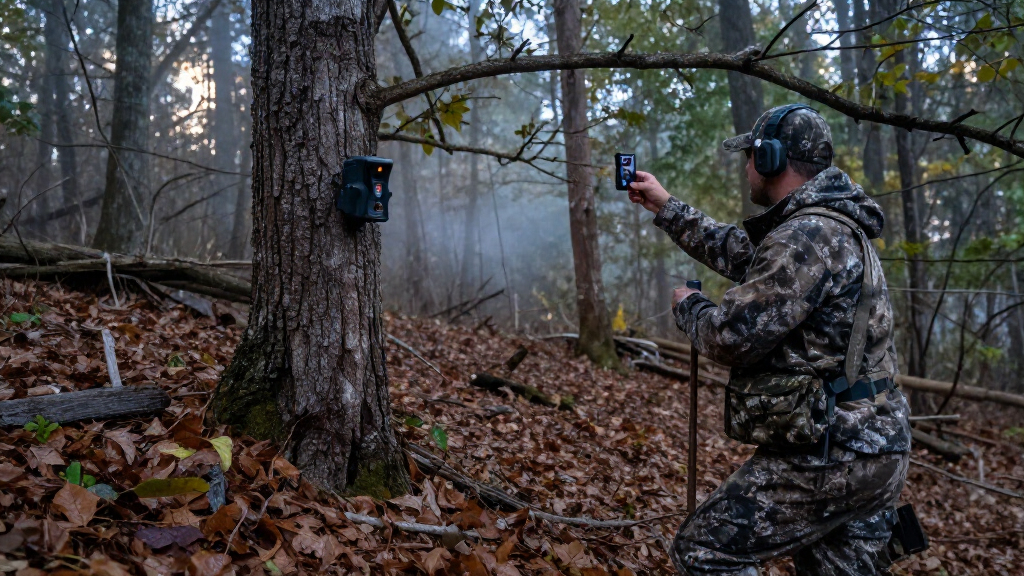
TL;DR

Get garden gear delivered free with Prime
- Fast, free delivery on millions of items
- Prime Video, Amazon Music and more included
- Member-only deals all year
A hunting article published Oct. 31, 2026, ranks 15 places to hunt during the whitetail rut, including funnels, ridge benches, doe bedding edges, water and field-based food sources. The recommendations are general tactics, not a report of verified success rates; local deer movement, wind, terrain and hunting pressure can change which spots are useful.
A hunting article published Oct. 31, 2026, ranks 15 potential stand locations for hunters targeting whitetail deer during the peak rut, from familiar travel funnels to less obvious cover, water and food sources. The list offers tactical guidance rather than evidence that any one location will produce a deer: conditions, pressure and local movement all affect results.
The article, credited to Tom Torget, says the peak rut can be difficult because mature bucks may focus on a doe in a small patch of cover, away from areas hunters consider traditional habitat. It argues that hunters should consider both conventional stand locations and less-obvious spots where bucks may travel or hold a doe. The article provides a ranked list, but no data comparing the success rates of the locations.
Its first recommendations are funnels and pinch points, where terrain narrows deer movement, and the edges of doe bedding areas. Funnels can draw heavy hunting pressure, particularly on public or shared land. For bedding-area edges, the article advises hunters to arrive before daylight and sit downwind, where a buck may scent-check for does; it also points to covered routes between bedding areas as possible travel paths.
Several recommendations focus on hill-country terrain: upper- and lower-third ridge benches, leeward ridge lines and saddles. The article suggests upper benches may be useful in the morning, while lower benches can be worth considering later as air and scent move downhill. Other listed options include overgrown fields, isolated water sources and productive crop fields or food plots near bedding cover. The supplied source cuts off during its discussion of food sources, so it does not provide the full wording for all 15 ranked entries.
FIELD GUIDE · PEAK RUT · OCTOBER 31, 2026
The 15 Best Spots To Hunt During The Peak Of The Whitetail Rut
A ranked set of stand-location ideas, from terrain funnels to secluded cover and food. Think of them as places to evaluate: local deer movement, wind, terrain and hunting pressure shape what may work.
The spots named in the available source
The supplied article text does not include all 15 entries. These are the stand-location ideas it names or describes; no missing ranked items are inferred here.
Funnels & pinch points
Terrain that narrows travel into a confined route can focus movement—and hunter attention.
Doe bedding edges
Consider the fringe and covered routes between bedding areas; the article advises arriving before daylight and sitting downwind.
Upper ridge benches
The article suggests these may be worth considering for morning movement.
Lower ridge benches
Potentially relevant later, as air and scent move downhill, according to the article.
Leeward ridge lines
A terrain-and-wind feature included among the listed stand-location ideas.
Saddles
A break between higher points that may provide a route through ridge terrain.
Overgrown fields
Cover-rich open ground is one of the less traditional locations named in the text.
Isolated water sources
Water appears in the recommendations alongside cover, travel routes and food.
Crop fields & food plots
Productive food sources near bedding cover are mentioned before the supplied text cuts off.
A location is a starting point
Rut movement can be unpredictable. The article describes bucks searching for does and sometimes pushing one into secluded cover, but that account is illustrative—not a measured rule about deer behavior.
Match the setup to conditions
Assess recent sign, access, wind direction, time of day, terrain and where deer actually bed or travel on the property.
Account for pressure
Funnels can attract many hunters, especially on public or shared land. A familiar pinch point may be disturbed or overhunted.
Read the ground
Check current sign, bedding cover and likely travel routes.
Check wind & access
Consider scent movement and how quietly you can reach the stand.
Weigh pressure
Look for signs of disturbance and account for other hunters.
Verify locally
Review current regulations and property-specific conditions.
What the ranking cannot establish
The available material presents an author’s tactical recommendations. It does not show that a particular location produces better hunting outcomes.
The source does not explain how the 15 locations were ordered.
No supporting field data, harvest rates or success-rate comparisons are provided.
The supplied text stops during its discussion of food sources, before all entries and qualifications appear.
No state, property, weather pattern or deer population is specified.
Movement and usefulness can change with habitat, wind, time of day and hunting pressure.
The locations should not be read as a promise of an encounter or harvest.
The essentials at a glance
What is the development?
A hunting article published October 31, 2026, presents 15 potential stand locations for the peak whitetail rut. It is seasonal guidance, not a scientific study or a report of hunting results.
Does it show these spots increase success?
No. The supplied text includes recommendations but no outcome data or comparison among locations.
Why be cautious about funnels?
They can concentrate deer travel, but their visibility and perceived usefulness may also draw hunters and increase pressure.
What should hunters do next?
Evaluate local sign, wind, access and pressure, and check the hunting regulations that apply to the specific location.
How Stand Choice Shapes Rut Hunts
The list matters to hunters because rut activity can be unpredictable: a buck’s movements may be driven by its search for a receptive doe rather than by the feeding areas or routes hunters expect. Considering cover, terrain and scent movement can give hunters more options than setting up only at a well-known funnel or field edge.
Those options are not guarantees. The article itself warns that heavily used funnels can be pressured or overhunted. A location that looks promising on a map may be less useful if other hunters have disturbed it, if the wind carries a hunter’s scent toward deer, or if local conditions shift where deer bed and travel. The practical takeaway is to treat the ranking as a set of places to evaluate, not a universal recipe.
Popular right now

KitchenAid Classic Series 4.5-Quart Tilt-Head Stand Mixer, Onyx Black

De'Longhi Dinamica Plus Fully Automatic Espresso Machine

Dyson Ball Animal 3 Upright Vacuum
As an affiliate, we earn on qualifying purchases.
The Peak Rut’s Moving Targets
The rut is the period when whitetail breeding activity influences deer movement. The source describes bucks cruising for does and sometimes pushing a doe into secluded cover, where a pair may remain for 24 to 48 hours. That scenario is presented as an illustrative account, not a measured finding about how long deer generally stay in one place.
The recommendations combine terrain-based ambush points with places that offer food, water or bedding cover. Their usefulness can vary by property and time of day. For example, the article links upper ridge benches to morning movement and lower benches to later movement, while also advising attention to wind and hunting pressure. It does not identify a particular state, property, weather pattern or deer population to which the ranking is tailored.
“The rut-hunting playbook isn’t as small as some might believe.”
— Tom Torget, article author
What the Ranking Cannot Establish
The source does not explain how the 15 locations were ranked, provide field data, or compare harvest rates. It also does not include the complete text of the list: the supplied material ends partway through the section on field-based food sources. The remaining entries, and any qualifications attached to them, cannot be confirmed from the available text.
It is also unclear which hunting jurisdictions or local conditions the advice is intended to cover. Deer behavior and legal rules differ by location, and the source does not specify dates, regulations or whether particular methods are suitable for every property. The listed spots should not be read as a promise of an encounter or harvest.
Apply the Advice Locally
Hunters considering these locations can compare them with recent sign, access routes, wind direction and evidence of pressure on the specific property. The article recommends factoring in time of day and terrain, including the potential difference between morning and evening movement, rather than treating every listed stand as interchangeable.
No follow-up study, additional data or next publication is identified in the source. The immediate next step for readers is to verify local hunting regulations and assess conditions on the ground before choosing a stand; the supplied article does not establish which location will perform best in any particular hunt.
Key Questions
What is the news development?
A hunting article published Oct. 31, 2026, presents a ranked set of 15 places to consider during the peak whitetail rut. It is seasonal guidance, not a newly released scientific study or a report of hunting results.
Which locations are included in the available source?
The supplied text names funnels and pinch points, doe bedding-area fringes, ridge benches, leeward ridges, saddles, overgrown fields, water sources and field-based food sources. The source text ends before the complete 15-item list is available.
Does the article show that these spots increase success?
No success-rate data or comparison is provided. The locations are the author’s recommendations, and their usefulness may depend on local deer movement, wind, habitat and hunting pressure.
Why does the article warn about funnels?
Funnels narrow deer travel into confined routes, making them attractive stand sites, but the article says they can also draw many hunters. On public or shared land, that pressure may make a familiar spot less productive.
What remains unknown about the ranking?
The available text does not explain the ranking method, provide supporting field data or include all 15 entries. It also does not specify a particular region or property, so readers cannot tell how closely the recommendations fit their local conditions.
Source: outdoorlife.com