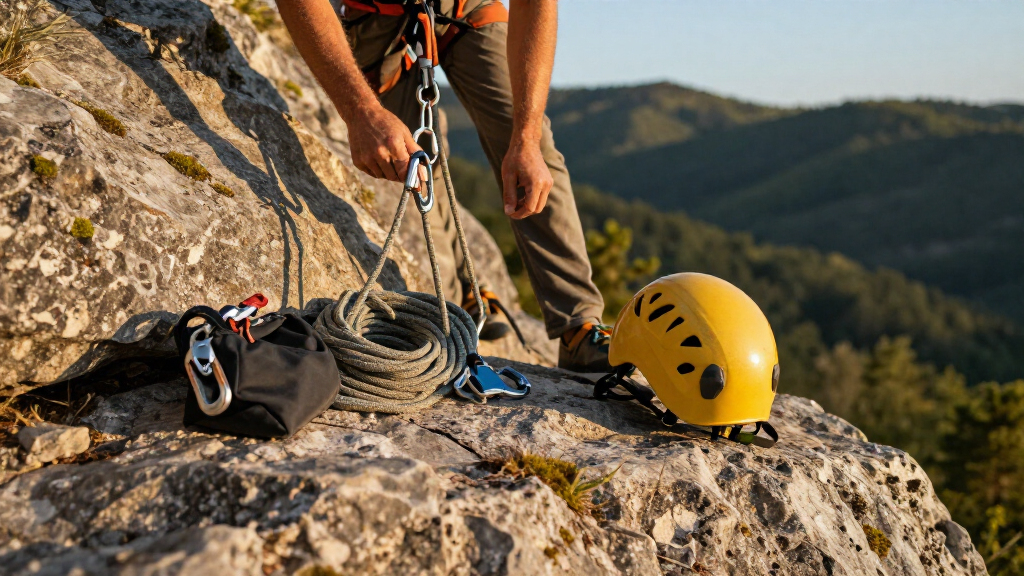
The best climbing safety gear depends entirely on what you are climbing: a full-body fall-protection kit like the TT TRSMIMA Fall Protection Kit makes the most sense for roofing and work-at-height, while the USA Made Steel Core Flip Line stands out for arborist work where positioning matters more than fall arrest. For budget-conscious buyers, the XBEN Thicken Climbing Harness delivers solid comfort at an entry price. The main tradeoff in this category is between certified gear built for specific applications and cheaper multipurpose kits that cut corners on hardware and padding. I ranked these 15 products by certification, load rating, comfort, and whether they actually suit the climb they claim to. Keep reading for the full breakdown of which kit fits your situation.

Get garden gear delivered free with Prime
- Fast, free delivery on millions of items
- Prime Video, Amazon Music and more included
- Member-only deals all year
Complete the kit


Key Takeaways
- Certification was the biggest differentiator in this lineup: only the FresKaro carabiners (UIAA 25KN) and KINGTLE slings (CE2008/EN566) carry formal climbing certifications, while most budget harness kits rely on generic ANSI-style claims or none at all.
- Fall-arrest kits and tree-climbing kits are not interchangeable — the Meyoppm 100FT lifeline kit fills the roofing/work-at-height role, while steel-core fliplines like the USA Made 5/8-inch model are purpose-built for arborist positioning.
- Steel-core fliplines dominated the premium positioning category because wire cores hold their shape on spikes and resist saw damage, making them worth the extra cost over the Meyoppm rope flipline for anyone doing removals.
- Budget harnesses (XBEN, HandAcc, Half Body models) trade away load ratings and padding thickness for price — fine for occasional zipline or supervised climbing, but the wrong choice for daily work at height.
- Climbing spikes emerged as the most application-restricted gear in the roundup: both the RANLOVE and generic spike sets damage living trees and should be reserved for removals or utility work, never recreational tree climbing.
| XBEN Thicken Climbing Harness |  | Best Budget Harness for Beginners | Material: High-strength polyester | Weight Capacity: 300 KG | Breaking Strength: 15 KN | VIEW LATEST PRICE | See Our Full Breakdown |
| Meyoppm Steel Wire Core Flipline 1/2″ x 16′ Tree Climbing Flip Line Kit |  | Best Flipline for Tall Trees | Length: 16 ft | Diameter: 0.5 inches | Breaking Strength: 20 kN / 4,400 lbs | VIEW LATEST PRICE | See Our Full Breakdown |
| Steel Core Flip Line Kit for Tree Climbing, 5/8 in x 12 ft – USA Made Adjustable Arborist Positioning Lanyard |  | Best Premium Flipline Kit | Length: 12 ft (144 inches) | Diameter: 5/8 inch | Construction: 16-strand polyester braid over 1/4-inch 7×19 galvanized steel aircraft cable | VIEW LATEST PRICE | See Our Full Breakdown |
| TRSMIMA 50ft Roofing Safety Rope Fall Protection Harness Lanyard Kit |  | Best Fall Protection System | Length: 50 ft | Rope Diameter: 0.55 inches, braided 100% polyester | Max Weight Capacity: 310 lbs | VIEW LATEST PRICE | See Our Full Breakdown |
| Trsmima Safety Belt with Adjustable Lanyard and Updated Waist Pad |  | Best Positioning Belt for Work-At-Height Comfort | Material: Polyester with alloy steel buckle | Waist Fit: 30-48 inches | Lanyard Length: 34-59 inches, adjustable | VIEW LATEST PRICE | See Our Full Breakdown |
| Tree Climbing Spikes Gear Set with Safety Belt and Lanyard |  | Best Complete Arborist Starter Kit | Claw Material: Stainless steel | Strap Material: Cowhide | Belt Material: High-strength polyester | VIEW LATEST PRICE | See Our Full Breakdown |
| TT TRSMIMA Safety Harness Fall Protection Kit – Full Body Roofing Harness |  | Best ANSI-Certified Fall Arrest Harness | Safety Standard: ANSI/ASSE Z359.11-2014 | Adjustment Points: 4 | Waist Range: 30.7-51 inches | VIEW LATEST PRICE | See Our Full Breakdown |
| Half Body Safety Harness for Tree Climbing, Rock Climbing & Zipline |  | Best Budget Multi-Use Harness | Material: Polyester | Max Weight Limit: 300KG | Breaking Strength: 25KN | VIEW LATEST PRICE | See Our Full Breakdown |
| Meyoppm 100FT Vertical Lifeline Fall Protection Rope Kit |  | Best Vertical Lifeline System | Length: 100 ft | Rope Material: 100% braided polyester, low stretch | Rope Diameter: 0.55 inches | VIEW LATEST PRICE | See Our Full Breakdown |
| FresKaro UIAA Certified 25KN Auto-Locking Climbing Carabiners (3-Pack) |  | Best Auto-Locking Carabiners | Material: Aluminum | Shape: D-Shape | Certification: UIAA Certified | VIEW LATEST PRICE | See Our Full Breakdown |
| Full Body Climbing Harness – Thicken Widen Safety Belt |  | Best Full-Body Harness for Versatile Rigging | Material: Polyester webbing with aluminum hardware | Waist Circumference: 33.5 – 49.2 inches | Leg Ring Range: 23.6 – 29.5 inches | VIEW LATEST PRICE | See Our Full Breakdown |
| KINGTLE 18mm Nylon Climbing Sling Runner, 23KN (2-Pack) |  | Best Anchor Slings for Building a Safety System | Material: Nylon | Width: 18mm (0.7 in) | Thickness: 2.5mm (0.1 in) | VIEW LATEST PRICE | See Our Full Breakdown |
| Hunter Safety System Quick-Connect Tree Strap (3-Pack) |  | Best for Treestand Hunters | Brand: Hunter Safety System | Weight Capacity: 300 pounds | Length: 6 feet | VIEW LATEST PRICE | See Our Full Breakdown |
| RANLOVE Tree Climbing Spikes Set – Adjustable Stainless Steel |  | Best Complete Climbing Kit for Ascent Work | Material: 304 stainless steel / carbon steel claws | Number of Pieces: 7-piece kit | Maximum Weight Capacity: 280 lbs | VIEW LATEST PRICE | See Our Full Breakdown |
| HandAcc Adjustable Thickened Safety Climbing Harness |  | Best Value All-Round Harness | Material: Quick-dry polyester | Certification: CE Certified | Weight: 2.2 lbs | VIEW LATEST PRICE | See Our Full Breakdown |
| climbing safety gear | Material |
|---|---|
| XBEN Thicken Climbing Harness | High-strength polyester |
| Meyoppm Steel Wire Core Flipli | High-strength nylon over steel wire core |
| Steel Core Flip Line Kit for T | — |
| TRSMIMA 50ft Roofing Safety Ro | — |
| Trsmima Safety Belt with Adjus | Polyester with alloy steel buckle |
| Tree Climbing Spikes Gear Set | — |
| TT TRSMIMA Safety Harness Fall | Polyester |
| Half Body Safety Harness for T | Polyester |
| Meyoppm 100FT Vertical Lifelin | — |
| FresKaro UIAA Certified 25KN A | Aluminum |
| Full Body Climbing Harness | Polyester webbing with aluminum hardware |
| KINGTLE 18mm Nylon Climbing Sl | Nylon |
| Hunter Safety System Quick-Con | — |
| RANLOVE Tree Climbing Spikes S | 304 stainless steel / carbon steel claws |
| HandAcc Adjustable Thickened S | Quick-dry polyester |
More Details on Our Top Picks
XBEN Thicken Climbing Harness
For someone just getting into climbing or needing an occasional-use harness, the XBEN Thicken Climbing Harness covers the basics without demanding a big investment. The 300 KG weight capacity and 15 KN breaking strength mean the structural margins are genuinely there, and the reinforced belay loop plus alloy buckles feel more substantial than typical entry-level gear. Compared with the Trsmima Safety Belt, this is a true sit harness with leg loops, which distributes weight far better when you’re hanging or rappelling rather than just positioning yourself. The tradeoff is fit: the one-size design starts around a 32-inch waist, so smaller climbers and teens may find it impossible to cinch down safely. It’s also a half-body design, so anyone working at height over edges or doing steep roofing would be better served by a full-body kit like the TRSMIMA Fall Protection Kit.
Pros:- High 300 KG capacity with 15 KN breaking strength for real safety margin
- Adjustable one-size design fits most adults and is easy to share among family members
- Reinforced belay loop and thickened webbing distribute weight comfortably
- 12-month warranty with full money-back guarantee
Cons:- Minimum waist fit around 32 inches excludes smaller users
- Half-body design offers less support and fall protection than a full-body harness
Best for: Beginner rock climbers, rappellers, and recreational tree climbers who want an affordable adjustable sit harness for occasional use
Not ideal for: Slender or young climbers under a 32-inch waist, and workers needing fall-arrest-rated full-body protection on job sites
- Material:High-strength polyester
- Weight Capacity:300 KG
- Breaking Strength:15 KN
- Certification:ASTM Certified
- Back Strap:25 inches
- Leg Straps:Adjustable from 6-7 inches up to 22 inches
- Care:Wipe clean
Our verdict“A sensible starter harness for casual climbers who need solid rated gear at entry-level cost, as long as the waist sizing works.”
Meyoppm Steel Wire Core Flipline 1/2″ x 16′ Tree Climbing Flip Line Kit
When the tree is big and the trunk is wide, reach matters more than anything, and this 16-foot Meyoppm flipline delivers it. The steel wire core keeps the lanyard stiff enough to flip up thick stems without collapsing, while the nylon outer layer keeps handling comfortable — the same principle behind the shorter ProClimb 12-ft Flip Line Kit, but with four extra feet for larger diameter trunks and doubled wraps. The triple-lock carabiner adjuster and swivel snap make one-handed repositioning realistic once you’re settled in the tree, and the 20 kN breaking force gives plenty of headroom over body weight plus gear. The cost of that length and steel core is weight: at 4 pounds, this is noticeably heavier on the saddle than a rope-based lanyard like the Trsmima Safety Belt’s adjustable version, and the nylon sheath will eventually show wear from bark friction.
Pros:- 16-foot length wraps large trunks and allows doubled positioning wraps
- 20 kN (4,400 lb) breaking strength from the steel wire core
- Triple-lock carabiner adjuster and swivel snap enable smooth one-handed length changes
- Rigid steel core flips easily over rough bark and stubs
Cons:- Heavy at 4 pounds compared with rope-core lanyards
- Nylon outer layer wears over time with heavy bark contact
- Steel core is unsafe near electrical lines
Best for: Arborists and hunters climbing large-diameter trees who need a long, rigid, easily adjustable positioning lanyard
Not ideal for: Those working near power lines (steel core conducts electricity) or climbers who prioritize lightweight saddle setups
- Length:16 ft
- Diameter:0.5 inches
- Breaking Strength:20 kN / 4,400 lbs
- Material:High-strength nylon over steel wire core
- Hardware:Alloy steel with triple-lock buckle and swivel snap
- Weight:4 lbs
- Color:Orange
Our verdict“The pick when trunk diameter is the limiting factor — long, stiff, and strong, at the price of carrying extra weight.”
Steel Core Flip Line Kit for Tree Climbing, 5/8 in x 12 ft – USA Made Adjustable Arborist Positioning Lanyard
This ProClimb flip line kit from U.S. Rigging Supply is the more refined take on the steel-core lanyard. Where the Meyoppm 16-ft flipline wins on raw reach, this one wins on handling: the 16-strand polyester braid over galvanized 7×19 aircraft cable grips better underhand, resists cuts, and stays manageable in cold or wet conditions where slicker sheaths get sketchy. The 5/8-inch diameter is easier on the hands during long climbs, and the included aluminum mini rope grab, carabiner, and snap hook make it a complete, ready-to-rig positioning system — not just a lanyard you have to outfit separately. Being USA-made also means consistent quality control that imported equivalents can’t always match. The honest tradeoffs: 12 feet limits you to smaller stems than the Meyoppm, the steel core rules out any electrical work, and the random carabiner color is a small annoyance for a kit at this level.
Pros:- 16-strand polyester over galvanized aircraft cable offers low stretch, cut resistance, and superior grip
- All-in-one kit includes aluminum mini rope grab, carabiner, and snap hook
- USA-made construction with consistent quality control
- 5/8-inch diameter is comfortable for extended handling
Cons:- 12-foot length limits use on large-diameter trunks
- Steel core is unsafe near electrical lines
- Replacement carabiner color is selected at random
Best for: Serious arborists and frequent climbers who want a complete, USA-made positioning kit with superior grip and durability
Not ideal for: Climbers working near electrical lines, or budget buyers who only climb occasionally and don’t need premium hardware
- Length:12 ft (144 inches)
- Diameter:5/8 inch
- Construction:16-strand polyester braid over 1/4-inch 7×19 galvanized steel aircraft cable
- Includes:Aluminum mini rope grab, carabiner, aluminum snap hook
- Color:Orange
- Country of Origin:USA
Our verdict“The best-built flipline in this lineup — buy it if you climb often and value grip and completeness over maximum reach.”
TRSMIMA 50ft Roofing Safety Rope Fall Protection Harness Lanyard Kit
This is the only product in this batch built as a complete fall-arrest system rather than a single component, and that distinction matters. The 50-foot braided polyester lifeline paired with an anti-panic locking rope grab, shock absorber, and twin self-locking snap hooks meets ANSI Z359.1, which is the standard you actually need for legal fall protection on a roof. Compared with the Trsmima Safety Belt, which is a positioning belt, this kit is designed to catch a fall: the shock pack limits arresting force to roughly 900 lbs, protecting your body from the trauma of a sudden stop. It’s not self-contained though — you’ll need a rated full-body harness and a compliant anchor point, which adds cost beyond the box. The 310 lb weight limit also excludes some larger workers, so check that number honestly before ordering.
Pros:- Meets ANSI Z359.1 fall protection standards with anti-panic locking rope grab
- Shock absorber caps average arresting force at ~900 lbs to reduce injury
- 50 ft of heavy-duty braided polyester with reinforced sewn terminations
- Self-locking steel snap hooks rated at 5,000 lbs tensile strength
Cons:- 310 lb maximum user weight excludes heavier workers
- Requires separate compatible harness and anchor point
- Rope length must be confirmed against worksite height before purchase
Best for: Roofers, gutter cleaners, and maintenance workers who need an ANSI-compliant vertical lifeline system for fall arrest
Not ideal for: Workers over 310 lbs, or anyone expecting a complete kit — a rated harness and anchor are required separately
- Length:50 ft
- Rope Diameter:0.55 inches, braided 100% polyester
- Max Weight Capacity:310 lbs
- Rope Grab Breaking Strength:3,600 lbs
- Shock Absorber Breaking Strength:5,000 lbs (22.2 kN)
- Average Arresting Force:900 lbs
- Standard:ANSI Z359.1
Our verdict“The right choice when a fall is actually possible — proper certification and shock absorption beat simpler belts for any roof work.”
Trsmima Safety Belt with Adjustable Lanyard and Updated Waist Pad
For jobs where you’re leaning into position rather than falling — electrician work, construction steel, gutter jobs — the Trsmima Safety Belt gets the ergonomics right. The EVA foam waist pad is the standout: compared with the XBEN Thicken Harness, which relies on thick webbing alone, this belt spreads pressure across a padded, breathable panel that stays tolerable through a full shift. The 34-59 inch adjustable lanyard with self-locking hooks on both ends and dual side D-rings make repositioning straightforward, and the 5,070 lb tensile strength with an alloy steel buckle gives solid confidence for support work. What it isn’t is fall arrest: a waist belt concentrates arrest forces dangerously, so for roof-edge work you should step up to the TRSMIMA 50ft Fall Protection Kit instead. The 30-48 inch waist range also leaves out larger framers.
Pros:- EVA foam waist pad provides breathable comfort over long workdays
- 5,070 lb tensile strength with rust-resistant alloy steel buckle
- Adjustable 34-59 inch lanyard with self-locking hooks at both ends
- 12-month refund or replacement warranty
Cons:- Waist fit limited to 30-48 inches
- Hand wash only care requirement
- Not rated for fall arrest — positioning use only
Best for: Electricians, construction workers, and tradespeople who need comfortable all-day positioning support with hands-free stability
Not ideal for: Anyone at risk of a free fall — a waist belt is positioning gear, not a fall-arrest system, and shouldn’t replace a full-body harness
- Material:Polyester with alloy steel buckle
- Waist Fit:30-48 inches
- Lanyard Length:34-59 inches, adjustable
- Max Tensile Force:22,540 N (5,070 lbs)
- Attachment Points:2 side D-rings with double self-locking hooks
- Care:Hand wash only
- Warranty:12 months refund or replacement
Our verdict“A comfortable, well-padded positioning belt for tradespeople who lean and hold all day — just don’t mistake it for fall protection.”
Tree Climbing Spikes Gear Set with Safety Belt and Lanyard
Most safety gear in this roundup covers a single function, but this set bundles spikes, belt, lanyard, flip rope, straps, and gloves into one package — the main reason it earns a spot. Compared with the RANLOVE Tree Climbing Spikes Set, this kit pulls ahead for newcomers because there is no piecemeal sourcing of mismatched components. The stainless steel claws and cowhide straps hold up to regular bark contact, and the adjustable design accommodates a range of leg sizes. The tradeoff is honesty about skill: spikes demand practiced technique before any serious height, and hardware needs a tension check before every climb. Compared with the Meyoppm Flipline Kit, the included steel-core flip rope is serviceable but less refined as a dedicated positioning tool.
Pros:- All-in-one kit removes the guesswork of matching separate components
- Wear-resistant stainless steel claws grip reliably on hardwood bark
- Adjustable cowhide straps fit a wide range of leg sizes
- Includes gloves, replacement hardware, and hex wrench for maintenance
Cons:- Requires real technique practice before climbing at height
- Screws and spikes must be inspected and retightened before every use
Best for: Beginning arborists and property owners who want a full spikes-and-belt setup in one purchase
Not ideal for: Rock climbers and gym users — spikes damage trees and rock and are irrelevant to that discipline
- Claw Material:Stainless steel
- Strap Material:Cowhide
- Belt Material:High-strength polyester
- Adjustability:Fits various leg sizes
- Anti-Slip Feature:Anti-slip studs and pedals
- Included Items:Spikes, safety belt, lanyard, foot and ankle straps, gloves, replacement screws, hex wrench
Our verdict“Buy this if you are starting tree work from scratch and want one box to cover positioning, belt, and spikes — skip it if you already own a dedicated flipline and harness.”
TT TRSMIMA Safety Harness Fall Protection Kit – Full Body Roofing Harness
This is the only full-body option in the roundup with explicit ANSI/ASSE Z359.11-2014 fall-arrest certification, which is exactly what separates it from the Half Body Safety Harness and the XBEN Thicken Climbing Harness — both prioritize climbing comfort over jobsite compliance. Four adjustment points, side D-rings for work positioning, and a ventilated waist pad translate into all-day comfort when you are spending hours on a pitched roof. The included 2m lanyard keeps the kit usable out of the box, though roofers working long ridgelines may want to pair it with the Meyoppm 100FT Vertical Lifeline for real mobility. The tradeoff: this is strictly a work harness. It is heavier and less flexible than sport harnesses, and smaller-framed users may struggle to dial in the fit.
Pros:- ANSI/ASSE Z359.11-2014 certified for legitimate fall-arrest compliance
- Side D-rings allow hands-free work positioning
- Ventilated waist padding reduces fatigue during long shifts
- Four adjustment points dial in fit across a wide waist range
Cons:- Fit works best on medium-to-large body types
- Included 2m lanyard limits mobility on large roof planes
- Hand wash only adds maintenance friction for daily jobsite use
Best for: Roofers, framers, and contractors who need certified fall-arrest protection for OSHA-regulated work
Not ideal for: Rock climbers and hikers — this harness is not designed or certified for dynamic climbing loads
- Safety Standard:ANSI/ASSE Z359.11-2014
- Adjustment Points:4
- Waist Range:30.7-51 inches
- Chest Range:31.5-47.3 inches
- Weight Capacity:130-310 pounds
- Lanyard Length:2 meters
- Material:Polyester
Our verdict“This pick makes the most sense for anyone whose employer or insurer requires certified fall protection — sport climbers should look elsewhere in this roundup.”
Half Body Safety Harness for Tree Climbing, Rock Climbing & Zipline
Where the TT TRSMIMA Roofing Harness is built around jobsite compliance, this half-body option trades certification paperwork for versatility and value. A 300KG weight limit and 25KN breaking strength comfortably exceed what most buyers in this price bracket need, and the 20-to-45-inch waist range spans kids through adults — rare flexibility compared with the HandAcc Adjustable Harness. The breathable mesh-lined waist and leg loops make long hangs more tolerable, and quick-adjust buckles speed up gear-up time. The honest tradeoff: it is not certified for indoor or gym climbing, so gym members will be turned away at the desk. It also carries only one gear hook, which limits organization compared with harnesses sporting multiple attachment points.
Pros:- 300KG weight limit and 25KN breaking strength provide generous safety margin
- Wide size range fits kids through adults
- Breathable mesh lining keeps long sessions comfortable
- Quick-adjust buckles make sharing between users fast
Cons:- Not certified for indoor or gym climbing
- Single gear hook limits equipment-carrying capacity
- Hand wash only
Best for: Backyard ziplines, occasional outdoor climbing, and families needing one harness that fits everyone
Not ideal for: Gym and indoor climbers — the lack of gym-recognized certification means most facilities will not allow it
- Material:Polyester
- Max Weight Limit:300KG
- Breaking Strength:25KN
- Waist Size:20-45 inches (min 15 inches)
- Leg Size:18-30 inches (min 10 inches)
- Certification:CE Certified (not for indoor climbing)
Our verdict“A sensible budget pick for casual outdoor and zipline use across the whole family — not the right choice if your gym checks certifications.”
Meyoppm 100FT Vertical Lifeline Fall Protection Rope Kit
A harness without an anchor system only solves half the fall-protection problem, and this 100-foot lifeline fills that gap better than the shorter TRSMIMA 50ft Roofing Kit for anyone working long ridge runs or tall trunks. The anti-panic auto-locking rope grab is the standout: it engages even if the user instinctively holds it open during a fall, a genuine failure point on cheaper grabs. The internal energy absorber quietly does the physics work of turning a lethal fall into a survivable one. Tradeoffs are real, though — at 9 pounds, this is the heaviest item in the roundup’s rope category, and the sealed PVC sleeve on the shock absorber means you cannot visually inspect the absorber without destroying the packaging, which safety-conscious users may find frustrating.
Pros:- ANSI certified for professional fall protection
- Anti-panic rope grab locks even when held open during a fall
- Internal shock absorber cushions fall forces automatically
- Low-stretch braided polyester with reinforced, abrasion-resistant sewn ends
Cons:- Heavy at 9 pounds for transport between job sites
- Sealed absorber sleeve prevents visual inspection of the energy absorber
Best for: Roofers and tree workers who need full-height mobility along long vertical work lines
Not ideal for: Day hikers and casual users — the weight and length are overkill for short anchor points or occasional backyard use
- Length:100 ft
- Rope Material:100% braided polyester, low stretch
- Rope Diameter:0.55 inches
- Weight Capacity:310 lbs
- Rope Grab Breaking Strength:3,600 lbs
- Snap Hook Tensile Strength:5,000 lbs
- Certification:ANSI certified
- Weight:9 pounds
Our verdict“Buy this if your work takes you up long vertical lines where a 50-foot rope runs out — it is the mobility pick, not the lightweight pick.”
FresKaro UIAA Certified 25KN Auto-Locking Climbing Carabiners (3-Pack)
Every rope and harness in this roundup eventually depends on a carabiner, and this three-pack earns its place with UIAA certification and a 25kN major-axis rating — the credential that separates real climbing hardware from hardware-store clips. Compared with budget non-certified carabiners, the keylock nose genuinely matters: it stops the gate from snagging on slings like the KINGTLE 23KN Sling Runners when you are building anchors mid-route. The one-handed twist lock re-engages the instant you release it, which becomes second nature — but the learning curve is real, and beginners fumbling the twist motion mid-climb is the honest drawback. At 2.01 ounces each, they add almost nothing to a pack. Just note the 0.66-inch gate opening is tight for thick rescue ropes and bulky anchor points.
Pros:- UIAA certified with a strong 25kN major-axis rating
- Keylock nose prevents snagging on slings and rope
- One-handed auto-locking gate re-locks instantly on release
- Featherweight at 2.01 oz each — 3-pack covers a full anchor setup
Cons:- Twist-lock operation takes practice to use smoothly under stress
- 0.66-inch gate opening is tight for thick ropes or bulky anchor points
Best for: Climbers and riggers building out a certified rack of connectors for anchors, rappel, and rescue work
Not ideal for: Total beginners still learning gate mechanics — fumbling an auto-lock mid-climb adds risk rather than removing it
- Material:Aluminum
- Shape:D-Shape
- Certification:UIAA Certified
- Major Axis Strength:25kN (5,621 lbs)
- Cross-Load Strength:7kN
- Gate Opening:0.66 inches
- Weight:2.01 oz each (165 g total)
- Quantity:3 pieces
- Warranty:One year
Our verdict“The connector pick for anyone whose safety chain depends on certified hardware — just practice the twist gate at ground level before trusting it on a route.”
Full Body Climbing Harness – Thicken Widen Safety Belt
Most harnesses in this roundup, like the HandAcc Adjustable Harness, are sit-style or half-body designs that rely on you staying upright. This option goes further with a true full-body build and five binding rings, which means it stays safe even when you’re inverted — a real advantage for SRT rope technique, rescue training, or any scenario where a waist-only harness would let you tumble. The ASTM certification and 22 KN breaking strength put it in credible territory compared with uncertified budget harnesses elsewhere in this guide. Padding is genuinely thickened and widened, so long hangs feel less punishing than on leaner models. The tradeoff is real, though: a 220-pound maximum capacity is the lowest in this batch, and the sizing runs toward larger frames.
Pros:- Five binding rings support inverted and multi-directional work
- Thickened, sweat-absorbent waist pad for long sessions
- ASTM certified with 22 KN breaking strength
- Universal sizing spans a wide range of waist and leg measurements
Cons:- 220-pound weight capacity is the lowest among harnesses here
- Requires supplemental safety devices for full fall protection
Best for: Tree climbers, rescue trainees, and aerial workers who need inversion-safe rigging points and all-day padding
Not ideal for: Climbers over 220 pounds or anyone doing gym climbing, where the bulk and ring count are overkill
- Material:Polyester webbing with aluminum hardware
- Waist Circumference:33.5 – 49.2 inches
- Leg Ring Range:23.6 – 29.5 inches
- Maximum Weight Capacity:220 pounds
- Breaking Strength:22 KN
- Certification:ASTM 1772
- Binding Rings:5
Our verdict“This pick makes the most sense for technical climbers who hang, invert, or work at height for hours and need a harness built for angles, not just straight rappels.”
KINGTLE 18mm Nylon Climbing Sling Runner, 23KN (2-Pack)
A harness without a solid anchor is decoration, and that’s where these CE2008/EN566 certified slings earn their spot. Compared with the Hunter Safety System Tree Strap, which is a single-purpose 6-foot tether, these runners come in 30cm, 60cm, and 120cm lengths so you can build anchors around trees, bolts, or roof beams at whatever height the job demands. The 23 KN (5,170 lb) breaking strength with bar-tack stitching and overlapped 5cm joints means fraying won’t quietly erode your margin of safety, and the -4°F to 176°F temperature range covers winter alpine starts and hot rooftop work alike. The honest weakness: nylon sheds strength when saturated, so wet-canopy arborists may prefer a dyneema alternative despite the higher cost.
Pros:- 23KN breaking strength with reinforced bar-tack stitching
- Certified to CE2008 and EN566 international standards
- Heat-sealed edges and overlapped joints resist fraying
- Three length options plus a 36-month warranty
Cons:- Nylon loses some strength when wet versus dyneema
- Only two color options, limiting rack organization
Best for: Climbers and at-height workers building custom anchors who want certified, multi-length runners in one purchase
Not ideal for: Frequent wet-climate climbers who need dyneema’s wet-strength retention, or anyone wanting color-matched racks — only green and orange are offered
- Material:Nylon
- Width:18mm (0.7 in)
- Thickness:2.5mm (0.1 in)
- Length:60cm (23.6 in)
- Breaking Strength:23KN (5,170 lbs)
- Certification:CE2008, EN566
- Temperature Range:-4°F to 176°F
- Pack Quantity:2
Our verdict“This option stands out as the anchor-building backbone of a safety kit — buy it for the certification and length choice, not the color palette.”
Hunter Safety System Quick-Connect Tree Strap (3-Pack)
Where the KINGTLE slings are general-purpose anchors, this strap solves one specific problem extremely well: staying attached from the moment your boots leave the ground. The quick-connect carabiner lets a hunter clip in while climbing up to a stand, and the weave-through buckle keeps slack pulled tight against the trunk so nothing dangles in front of a bow or rifle at full draw. Leaving the 6-foot straps in the tree all season means fewer trips hauling gear up and down. The 300-pound capacity is adequate for most hunters, though it can’t match the 22-25 KN harness ratings elsewhere in this roundup — this is a positioning strap for hunters, not a fall-arrest system for roofers or arborists.
Pros:- Clips in immediately for ground-to-stand protection
- Weave-through buckle keeps straps clear for shots at any angle
- Can be left installed all season
- Three-pack covers multiple stand locations
Cons:- Not rated as a certified fall-arrest system for industrial work
- Correct initial installation height is required to be effective
Best for: Treestand hunters who want set-and-forget straps on multiple stands across a property
Not ideal for: Rock climbers, roofers, or arborists who need certified fall-arrest ratings and adjustable anchor lengths
- Brand:Hunter Safety System
- Weight Capacity:300 pounds
- Length:6 feet
- Included Components:3 tree straps with quick-connect carabiners
- Color:Black
- Care Instructions:Hand wash only
Our verdict“Compared with generalist slings, this model is better suited to hunters who value instant connection and shooting clearance over technical certifications.”
RANLOVE Tree Climbing Spikes Set – Adjustable Stainless Steel
Everything else here protects you once you’re up; this set gets you up. The 2-gear carbon steel claws adjust to different bark textures, which gives it an edge over fixed-spike sets like the Tree Climbing Spikes Gear Set also featured in this guide, and the bundle includes a protective belt, foot straps, ankle belts, and gloves — a full kit rather than hardware alone. The 280-pound capacity pairs sensibly with the full-body harness above for a complete tree-work setup. Two honest caveats: at 4.15 kg, your legs will feel it on long climbs, and spiked gaffs scar tree bark, which matters for anyone working on ornamental or production fruit trees rather than removals.
Pros:- 2-gear carbon steel claws adapt to varying bark structures
- Complete kit includes belt, straps, and gloves
- Adjustable foot and ankle straps for a secure fit
- Handles fruit picking, hunting, survival, and aerial work
Cons:- Steep learning curve for first-time climbers
- Gaffs damage bark on every ascent
- Heavy at 4.15 kg for extended climbs
Best for: Arborists, orchard workers, and hunters who need a complete spiked-ascent kit in one purchase
Not ideal for: Beginners with no coaching — spikes demand practiced technique — and anyone climbing trees where bark damage is unacceptable
- Material:304 stainless steel / carbon steel claws
- Number of Pieces:7-piece kit
- Maximum Weight Capacity:280 lbs
- Item Weight:4.15 kg
- Sport Type:Climbing, hunting
- Color:Silver, black
Our verdict“This pick makes the most sense for practiced climbers who want a ready-to-work spike kit and accept the weight and bark tradeoffs that come with it.”
HandAcc Adjustable Thickened Safety Climbing Harness
For buyers who want one harness that covers rock climbing, roofing, rescue, and mountaineering without paying specialist prices, this is the strongest value in the batch. Its 25 kN breaking strength and CE certification actually edge out the full-body harness earlier in this guide (22 KN), and the waist range of 30 to 51 inches is the widest adjustment span here. At 2.2 pounds with doubled straps and thickened framing, it distributes load more comfortably than the leaner half-body harness also in this roundup. The catch is fit at the small end: slim adults and kids fall below the minimum sizing, and some climbing gyms won’t admit non-gym-specific harnesses, so check before buying if indoor sessions are part of your plan.
Pros:- CE certified with 25 kN breaking strength and 300 kg limit
- Widest adjustment range in this batch (30″-51″ waist)
- Thickened doubled straps distribute load comfortably
- Two D-rings and two gear hooks keep equipment organized
Cons:- Too large for thin individuals or small children
- May not be permitted at some climbing gyms
- Hand wash only
Best for: Multi-discipline climbers and at-height workers who want one certified, wide-fitting harness for everything from roofs to routes
Not ideal for: Slender adults and children who fall under the 30-inch waist minimum, or gym-only climbers whose facility restricts outside harnesses
- Material:Quick-dry polyester
- Certification:CE Certified
- Weight:2.2 lbs
- Breaking Strength:25 kN
- Weight Limit:300 kg
- Waist Strap Range:30″-51″ (75-130 cm)
- Leg Strap Range:20″-31″ (50-80 cm)
- Hardware:2 carbon steel D-rings, 2 equipment hooks
Our verdict“This option stands out as the do-everything harness for average-and-larger builds, beating pricier picks on rating and fit range as long as you’re not shopping for a small frame.”

How We Picked
I evaluated each piece of gear against four criteria, weighted by how much they affect real-world safety. First, certification and load rating: UIAA, CE, and EN certifications carry more weight than marketing claims, and I flagged every product whose strength numbers could not be verified against a known standard. Second, application fit: a roofing harness, a tree-climbing saddle, and a rock harness solve different problems, so each product was judged on whether it performs its intended job well rather than as an all-rounder. Third, build quality and hardware — steel-core construction, forged carabiners, stitching quality, and the reliability of adjustable buckles separate durable gear from gear that loosens under load.
The ranking also reflects comfort and adjustability, because harnesses that pinch or shift cause fatigue and, worse, encourage climbers to loosen them. Finally, I weighed value within each niche rather than across the whole list — a budget tree harness competes against other budget tree harnesses, not against a certified fall-arrest system. This is why the lineup is ordered roughly from complete certified systems down to niche accessories and specialty tools like spikes, which rank lower on versatility but win outright for their single purpose.
Factors to Consider When Choosing Best Climbing Safety Gear
Choosing climbing safety gear is less about finding the “best” product and more about matching gear to your specific discipline, body, and frequency of use. Before buying anything on this list, work through these five factors.Know Your Discipline Before You Buy
The single most common mistake I see is buying a tree-climbing kit for roofing work, or vice versa. Fall-arrest systems (full-body harnesses with shock-absorbing lanyards and vertical lifelines) are designed to catch a fall from height and distribute impact force across your torso. Positioning gear like fliplines and tree saddles is designed to hold you in place while you work, and will not safely arrest a fall on its own. Rock-climbing harnesses are built for dynamic movement and belaying, not for hanging in one position for hours. If you buy a half-body hunting or tree harness and take a whipper off a roof, the geometry can turn a survivable fall into a serious injury. Decide what you are actually climbing first, then narrow your shopping to that category.
Certification Standards and What They Actually Mean
Gear certified to UIAA 101, EN 12277 (harnesses), EN 566 (slings), or ANSI Z359 has been batch-tested by an independent lab, which means the strength rating printed on the label reflects reality. Uncertified gear may carry impressive-sounding kilonewton numbers, but those figures are only as trustworthy as the factory producing them. For occasional supervised use, uncertified budget gear is a calculated risk some climbers accept. For anything involving real fall potential, the certification label is the cheapest life insurance you will ever buy. Check the label itself, not the product listing — listings frequently claim compliance the physical gear does not carry. One more detail: carabiners and slings have distinct standards from harnesses, so a kit with one certified component is not a certified kit.
Full-Body vs. Half-Body Harnesses
A full-body harness keeps you upright after a fall, which matters because suspended unconsciousness in a waist-only harness can restrict breathing within minutes. Half-body and seat harnesses are cheaper, more comfortable for positioning work, and standard in hunting and arborist contexts where you stay attached and conscious. But if there is any chance of a free fall — roofing, scaffolding, unprotected ledges — the full-body design is non-negotiable. Fit matters as much as type: a full-body harness sized wrong can slide up under impact and cause internal injury, so check the weight range and torso adjustability before ordering. Suspension trauma straps are a worthwhile add-on if you will ever work alone at height, since hanging motionless after a caught fall is dangerous in its own right.
Rope, Flipline, and Connector Choices
The connective gear is where budget kits quietly cut costs. Steel-core fliplines cost more than rope versions but hold their arc when you flip them up a trunk and will not be severed by a chainsaw — a genuine lifesaver during removals. For lifelines, look at the diameter, sheath material, and whether a rope grab and shock absorber are included; a bare rope with no energy absorption transfers full fall force to your body. Carabiners should be auto-locking, not screw-gate, if you will be handling them with gloved or tired hands. Slings rated to EN 566 with stitched (not tied) construction are the standard for anchors. A useful rule: spend proportionally more on the gear that catches you and less on the gear that merely holds you.
When to Pay More — and When Not To
Pay more when failure consequences are high: daily professional use, solo work at height, saw handling, or any climb above 15 feet where rescue would be slow. Premium buys you certified batch testing, thicker padding, better buckles, and hardware that survives years of UV and abrasion exposure. Skip the premium tier when you climb occasionally under supervision, at low height, or in a top-rope setting where backups exist — a mid-range certified harness will do the same job. Spikes deserve special mention: even the best set will girdle and potentially kill a living tree, so buy them only for removals, utility work, or dead trees. Finally, budget for a helmet and a gear-inspection habit; the most expensive harness in this roundup is worthless after a single hard catch if you never check the stitching.
Frequently Asked Questions
Can I use a tree-climbing harness for roofing fall protection?
No, and this distinction matters more than any other in this category. Tree-climbing harnesses and fliplines are positioning equipment — they hold you in place while you work, but they are not built to arrest an uncontrolled fall or to keep you upright afterward. A roofing fall in a waist-only tree harness can invert you or concentrate impact force on your spine and pelvis. For roof work, you need a full-body harness with a shock-absorbing lanyard and an anchor point rated for fall arrest, like the TT TRSMIMA or TRSMIMA lifeline kits in this roundup. The reverse is also true: a bulky fall-arrest harness is miserable for all-day tree work and lacks the side attachment points arborists need.
Is a steel-core flipline really worth the extra cost over a rope flipline?
It depends on whether a chainsaw is part of your work. A steel-core flipline holds its shape so you can flip it up the trunk one-handed, stays rigid around the tree for stable positioning, and — most importantly — will not be instantly severed if your saw kisses the line. Rope fliplines like the Meyoppm kit are lighter, cheaper, and perfectly adequate for pruning, inspection climbs, and hunting setups where no saw is involved. If you do removals or run a saw while aloft, the steel core is not an upgrade, it is the safe baseline. Occasional climbers who stay away from saws can save the money and spend it on a better harness instead.
Do climbing spikes damage trees, and can I use them recreationally?
Yes, spikes wound trees — each puncture creates an entry point for decay and disease, and on thin-barked species repeated spiking can genuinely kill the tree. Professional arborists follow a general rule: spikes only for removals, dead trees, or utility work where the tree is coming down anyway or already lost. For recreational climbing, pruning, or research climbs, rope-and-saddle technique (footlocking or ascending a stationary line) reaches the same canopy without the damage. In this roundup, both the RANLOVE set and the generic spike kit are excellent at their job, but that job is narrow. If your goal is to enjoy and revisit living trees, skip spikes entirely and put the budget toward a good saddle and throw line.
How much should I trust the weight and strength ratings on budget harnesses?
Treat uncertified ratings as optimistic until proven otherwise. A harness listing “300 kg” or a carabiner claiming “30KN” without a UIAA, CE, or EN mark has not been independently verified, and quality control on budget production runs can vary batch to batch. The practical approach: check the physical label on arrival for a standard number, inspect stitching for clean bar tacks at every load-bearing loop, and retire anything with loose threads, off-gassing odors, or buckles that slip under body weight. Certified gear like the FresKaro carabiners and KINGTLE slings costs only modestly more and removes the guesswork. For low-risk, supervised use a budget harness is defensible; for anything with real fall potential, the certified option is the only responsible choice.
What gear do I actually need as a beginner tree climber on a budget?
Start with three items rather than a full kit: a comfortable saddle (the XBEN or a half-body harness covers entry-level needs), a certified carabiner set, and a way up — either a flipline for spikes-free technique or a simple throw line and ascent line. Add a helmet before anything else on the wishlist; head injuries happen on the ground from falling deadwood more often than from falls. Resist the bundled spike kits as a first purchase, since beginner technique is safer on rope anyway and spikes limit which trees you should ethically climb. Total damage for a safe starter setup is far lower than most people expect, and each piece can be upgraded individually as your technique improves.
Conclusion
Mapping these 15 products to buyer types closes the decision loop. For best overall, the TT TRSMIMA Full Body Fall Protection Kit stands out because certified-style full-body protection plus a complete lifeline system covers the highest-consequence scenarios in one purchase. The USA Made Steel Core Flip Line Kit is my best premium pick for arborists — American manufacturing, saw-resistant construction, and positioning performance the rope flipline cannot match. For best value, the TRSMIMA 50ft Roofing Kit bundles harness, rope, and lanyard at a price occasional users can justify, while the XBEN Thicken Harness wins the budget-harness niche on padding and adjustability.
Beginners should start with the XBEN or the Half Body Harness paired with FresKaro’s certified carabiners — cheap, safe, and upgrade-friendly. Specific needs break down cleanly: hunters should grab the Hunter Safety System tree straps, anchor builders the KINGTLE certified slings, rope-access workers the Meyoppm 100FT lifeline kit, and removal crews only the RANLOVE or generic spike sets. Whatever you choose, match the gear to the discipline, verify the certification label on the physical product, and inspect stitching and hardware before every climb.
Halloween Picks
halloween
As an affiliate, we earn on qualifying purchases.