
When foraging wild edibles, it’s crucial to accurately identify plants, as many have toxic look-alikes, like poison hemlock or wild carrots. Rely on detailed guides, workshops, and expert advice to avoid misidentification. Proper preparation, such as cooking, soaking, or fermenting, can neutralize toxins, but some plants require specific techniques. Always wash and handle wild foods carefully. If you want to learn how to safely distinguish and process wild edibles, there’s a lot to contemplate.
Key Takeaways
- Properly identify wild edibles using detailed guides, workshops, and expert cross-referencing to avoid dangerous look-alikes.
- Many wild plants contain toxins that require specific processing methods like boiling, soaking, or fermenting to neutralize.
- Always wash wild foods thoroughly to remove dirt, bugs, and potential pesticide residues before consumption.
- Confirm plant safety with experienced foragers or local experts, especially when uncertain about identification or preparation.
- Understand that some toxins are heat-resistant; proper processing is essential to ensure wild edible safety.
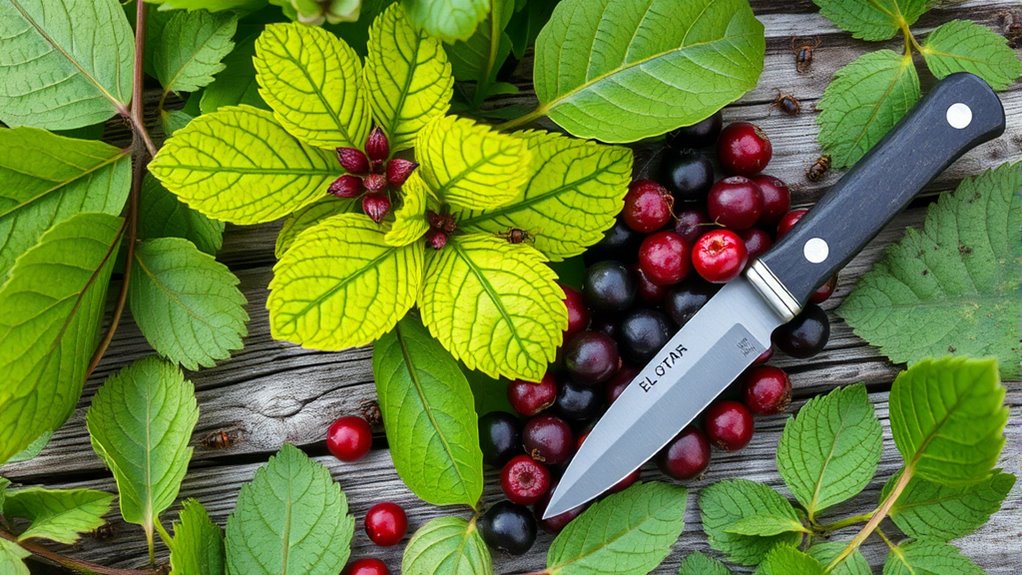
Have you ever wondered if foraging for wild edibles is safe? It’s a common question among beginners and seasoned foragers alike. The truth is, wild foods can be incredibly rewarding, but they also come with risks—especially when it comes to poisonous look-alikes. Many edible plants have toxic twins that resemble the real thing so closely that misidentification can lead to serious health issues. For example, wild carrots and poison hemlock look alike in early growth stages, and mistaking one for the other could be deadly. To avoid this, you need to learn how to distinguish safe plants from their dangerous counterparts accurately. This involves studying detailed identification guides, attending foraging workshops, and always cross-referencing multiple sources before harvesting.
Identifying safe wild edibles is crucial to avoid deadly look-alikes like poison hemlock and wild carrots.
Once you’ve identified a safe plant, you must consider safe preparation techniques. Simply eating wild edibles raw isn’t always advisable, as some contain toxins that can be neutralized through proper processing. For instance, certain wild greens or roots might have bitter compounds or toxins that are rendered harmless only through cooking, soaking, or fermenting. Boiling or steaming can reduce or eliminate some harmful substances, but it’s essential to follow trusted recipes and guidelines for each plant. Not all toxins are destroyed by heat, so understanding which preparation methods are effective is essential. Sometimes, multiple steps—such as soaking in salt water or drying—are necessary to make the plant safe for consumption.
Proper handling and preparation are your best defenses against potential poisoning. Always wash wild edibles thoroughly to remove dirt, bugs, or residual pesticides. When in doubt about a plant’s safety, it’s better to err on the side of caution and discard it rather than risk illness. Remember, even a small mistake in identification or preparation can have serious consequences. If you’re new to foraging, consider consulting experienced foragers or local experts who can guide you through the process. Never consume a plant based solely on a single identification source; multiple confirmations are essential.
In short, the key to safe wild edibles lies in understanding poisonous look-alikes and mastering safe preparation techniques. By taking the time to learn properly, you protect yourself from potential toxins and enjoy the bounty of nature responsibly. With patience, education, and attention to detail, you can turn foraging into a safe, rewarding activity that connects you with the natural world.
Frequently Asked Questions
How Can I Identify Edible Wild Plants Safely?
To identify edible wild plants safely, focus on accurate plant identification by comparing features like leaves, stems, and flowers with trusted guides. Pay close attention to habitat considerations, as many edible plants grow in specific environments. Always double-check your findings, avoid plants with similar toxic lookalikes, and consider consulting local experts. When in doubt, don’t consume a plant until you’re completely certain it’s safe to eat.
Are There Seasonal Risks for Toxin Levels?
Like the tide, seasonal toxin fluctuations ebb and flow, so timing your harvest matters. Toxin levels in wild plants can rise or fall depending on the season, making certain times riskier. To stay safe, focus on ideal harvest timing—usually during specific growth stages—and avoid plants during peak toxin periods. Staying aware of these seasonal risks helps you enjoy foraging without the danger of unexpected toxins lurking in your harvest.
Can Cooking Remove All Toxins From Wild Edibles?
Cooking can help with detoxification and toxin breakdown in some wild edibles, but it doesn’t eliminate all toxins. Heat may reduce certain harmful compounds, yet some toxins are heat-resistant or become more concentrated. You should always research specific plants, as cooking alone isn’t a guarantee of safety. Proper preparation, identification, and understanding toxin levels are essential to ensure you enjoy wild edibles safely.
What Are the First Signs of Poisoning From Wild Plants?
You’ll notice the first signs of poisoning from wild plants through symptoms like nausea, vomiting, stomach cramps, dizziness, or diarrhea. Recognizing these early symptoms is vital for plant toxicity awareness. If you experience any of these, stop consuming the plant immediately and seek medical help. Rapid symptom recognition can prevent severe health issues, so always stay alert to how your body reacts after foraging and consuming wild edibles.
Are There Any Age Restrictions for Consuming Wild Edibles?
You might think wild edibles are fair game for everyone, but age restrictions and legal considerations do exist. Minors should never forage without supervision, and some regions have laws banning certain plants for safety reasons. So, before you get carried away, check local regulations and consider the legal considerations. It’s ironic how something so natural can come with rules—reminding you that safety and legality always take priority over impulse.
Conclusion
Remember, knowledge is power when it comes to foraging. Always verify the safety of wild edibles before consuming, as toxins can hide in seemingly harmless plants. Proper processing reduces risks, but never rely solely on visual cues. As the saying goes, “Better safe than sorry.” By staying informed and cautious, you can enjoy wild foods without jeopardizing your health. Trust in preparation and respect nature’s complexities to forage safely.