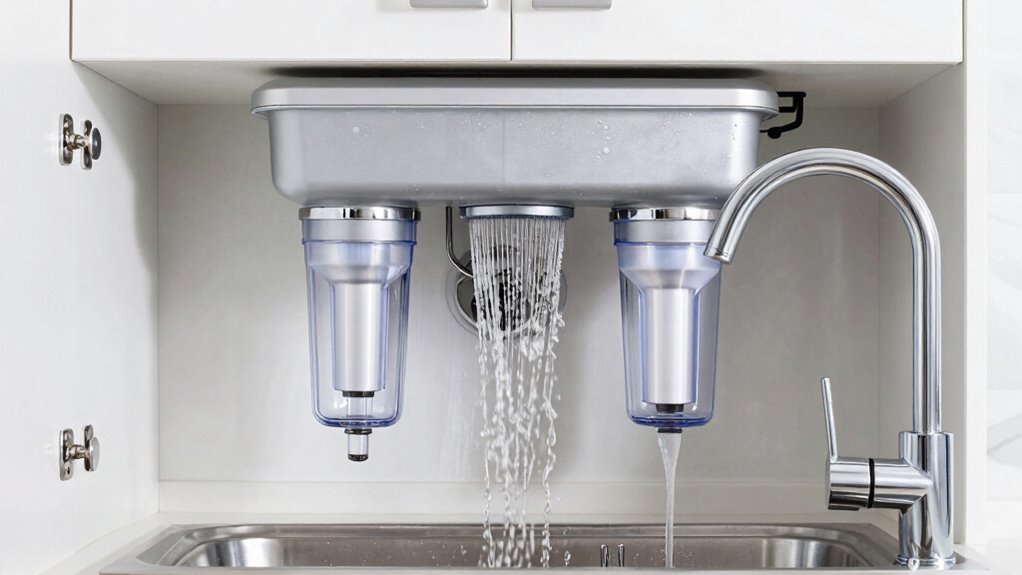

Whole-house filtration systems treat water at your main line, providing clean water to all fixtures and appliances, but they require a larger investment and more maintenance. Point-of-use filters are easier to install and target specific areas, like your drinking fountain or shower, often at a lower cost. Your choice depends on whether you want extensive coverage or focused filtration for certain needs. Keep exploring to find out which option suits your home best.

Get garden gear delivered free — and shop member deals
- Fast, free delivery on millions of items
- Access to Prime Big Deal Days deals on October 6–7
- Prime Video, Amazon Music and more included
Key Takeaways
- Whole-house systems treat water at the main line for comprehensive coverage, while point-of-use filters target specific fixtures or drinking water.
- Whole-house systems require higher initial costs and maintenance, whereas point-of-use filters are easier and cheaper to install and maintain.
- Whole-house systems improve overall water quality, reduce fixture buildup, and extend appliance life; point-of-use filters focus on specific needs like drinking or cooking water.
- Regular filter replacement is essential for both, but whole-house systems demand more complex maintenance.
- The choice depends on household water quality concerns, maintenance preferences, and budget considerations.
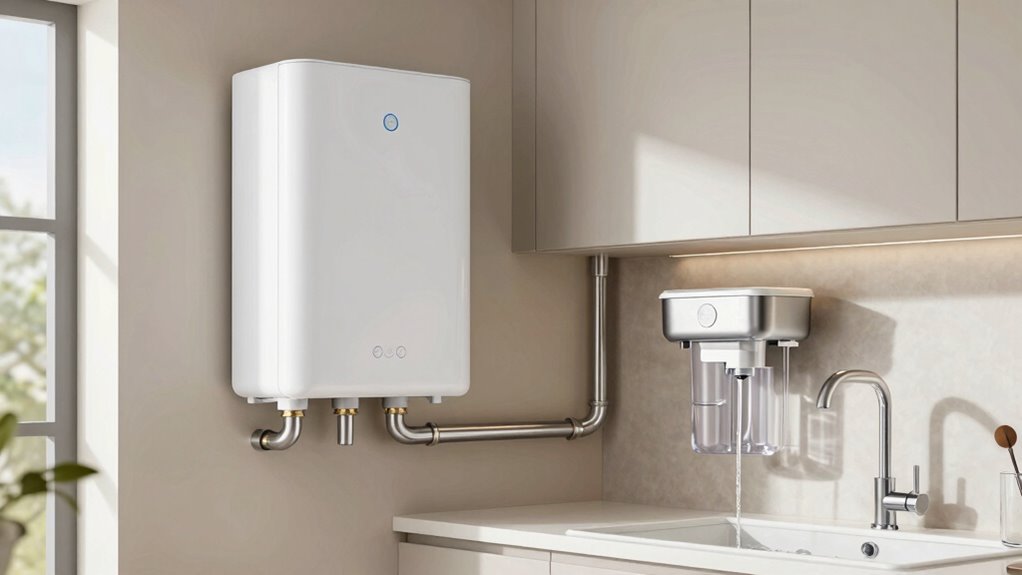
When it comes to guaranteeing clean, safe water in your home, choosing the right filtration system is vital. Both whole-house filtration systems and point-of-use filters can improve your water quality, but they serve different purposes. Whole-house systems are installed at the main water line, treating water before it reaches any fixture. This means every tap, shower, and appliance benefits from cleaner water, which is especially useful if you’re concerned about contaminants like chlorine, sediment, or heavy metals affecting your entire household. On the other hand, point-of-use filters are attached directly to a single faucet or showerhead. They’re ideal if you want to target specific water sources, such as drinking water or cooking water, and generally require less initial investment.
Choosing between whole-house and point-of-use filters depends on your water quality needs and maintenance preferences.
The key difference lies in coverage and water quality. Whole-house systems provide thorough filtration, guaranteeing that the water entering your home is of higher quality across all outlets. This can reduce buildup on fixtures and appliances, extend their lifespan, and improve your overall water experience. However, these systems often require more complex filter maintenance, including regular replacement of filters and occasional system checks. It’s essential to stay on top of filter maintenance to keep the system functioning efficiently and maintain ideal water quality. Ignoring maintenance can lead to clogged filters, decreased water flow, and diminished filtration effectiveness, ultimately compromising water safety. Additionally, understanding water filtration technology can help you make more informed decisions about which system best suits your needs.
Point-of-use filters are generally easier to install and maintain. You can replace their cartridges quickly, often with minimal tools or expertise. They’re perfect for targeting specific needs, like removing lead or chlorine from drinking water, or reducing bacteria in shower water. Because these filters are used only at selected outlets, their maintenance is less frequent but equally important. Regular filter replacement ensures that the filtration media remains effective at improving water quality and preventing the buildup of contaminants that could affect your health. Furthermore, considering filter lifespan can help you plan your maintenance schedule and choose a system that aligns with your household’s water usage.
Deciding between the two depends on your specific needs. If you want consistent, whole-home water quality and are willing to invest in maintenance, a whole-house filtration system is a solid choice. If your primary concern is drinking water or specific fixtures, point-of-use filters offer a flexible, affordable solution. Either way, understanding the importance of regular filter maintenance helps you get the most out of your system, ensuring your water stays clean, safe, and enjoyable for years to come.
whole house water filtration system
As an affiliate, we earn on qualifying purchases.
As an affiliate, we earn on qualifying purchases.
Frequently Asked Questions
How Often Do Whole-House Filters Need Maintenance?
You should perform maintenance on your whole-house filter every 6 to 12 months, depending on your water quality and usage. Regularly checking the filter’s condition guarantees peak performance and extends its lifespan. In areas with heavy sediment or contaminants, more frequent replacements might be necessary. Staying on top of maintenance frequency helps prevent pressure drops and keeps your water clean, ensuring your whole-house filtration system works efficiently for years to come.
Can Point-Of-Use Filters Remove All Contaminants?
Point-of-use filters primarily target specific contaminants, but they can’t eliminate all impurities. While they excel at removing certain chemicals, sediments, or bacteria, their limitations mean some pollutants might slip through. You’ll find that filter limitations exist because these filters are designed for particular contaminants. So, if you’re seeking extensive contaminant removal, relying solely on point-of-use filters might not suffice—you may need supplementary filtration methods.
What Is the Average Cost Difference Between Both Systems?
The cost comparison between whole-house filtration and point-of-use filters varies widely. Whole-house systems typically cost between $1,000 and $5,000, including installation, while point-of-use filters generally range from $50 to $300. You should consider your budget considerations carefully, as whole-house systems offer all-encompassing coverage but require a higher upfront investment. Point-of-use filters are more affordable but target specific faucets or appliances.
Are There Specific Contaminants Better Suited for One System?
You’ll find that some contaminants, like chlorine and sediment, are better addressed by whole-house filters due to their broad coverage and higher filter efficacy. Conversely, point-of-use filters excel at targeting specific contaminants such as lead, pesticides, or bacteria, thanks to their specialized media. For the best protection, consider the contaminant specificity of each system, ensuring your setup effectively handles your particular water quality concerns.
How Do Installation Requirements Differ for Each Filter Type?
You’ll find that installation procedures differ markedly between whole-house and point-of-use filters. Whole-house systems typically require more complex installation, including integration with your main water supply line and confirming compatibility considerations with your plumbing. Point-of-use filters are easier to install, often attaching directly to faucets or under sinks with minimal tools. Always check compatibility considerations for size and connection type before installation to guarantee proper functionality and ease.
point of use water filter for kitchen
As an affiliate, we earn on qualifying purchases.
As an affiliate, we earn on qualifying purchases.
Conclusion
Choosing between whole-house filtration and point-of-use filters depends on your needs, but don’t assume one is always better. While whole-house systems offer extensive coverage, point-of-use filters give targeted purification, often at a lower cost. If you’re worried about maintenance, know that both options require regular upkeep. Ultimately, assess your water quality and lifestyle to decide which fits best—considering that combining both can provide the cleanest, safest water for your home.
As an affiliate, we earn on qualifying purchases.
As an affiliate, we earn on qualifying purchases.
Fall yard work Picks
leaf blowers
As an affiliate, we earn on qualifying purchases.